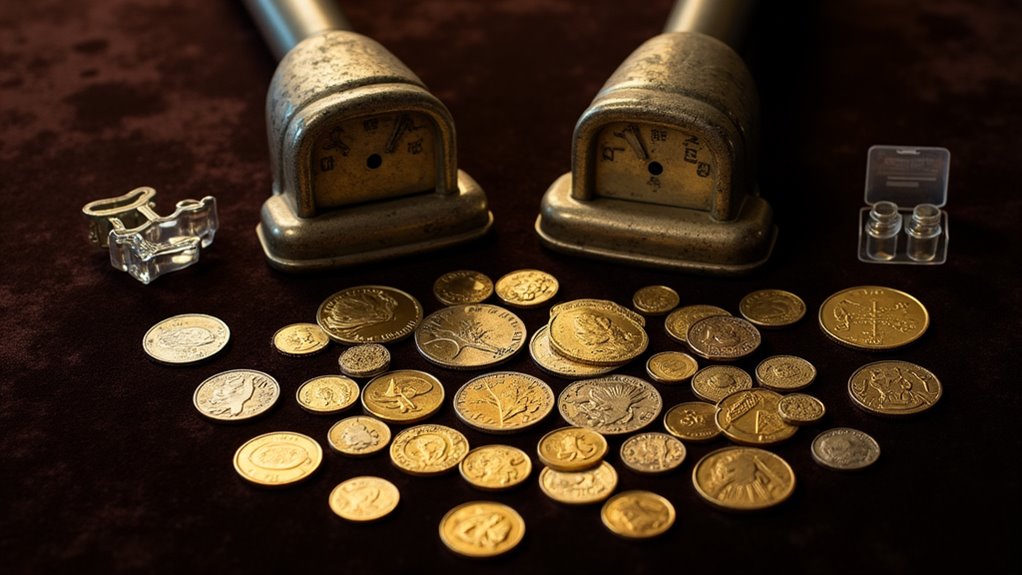
Gold’s influence on European economic growth has been nothing short of legendary. From its historical role backing national currencies to its current status as a financial stabilizer, the yellow metal remains Europe’s favorite economic safety net. Central banks maintain massive reserves – we’re talking 4% of GDP on average – while Germany and France lead the pack with their gold hoards. The precious metal continues serving as Europe’s trusted bouncer during market meltdowns, and there’s way more to this glittering story.

While economists often debate the merits of modern monetary systems, gold’s magnetic pull on the global economy remains undeniable – and downright fascinating. Europe’s historical romance with the yellow metal has shaped centuries of economic development, particularly during the era of the gold standard when national currencies were literally worth their weight in gold. This system wasn’t just some fancy financial fashion – it was the backbone that kept European economies standing tall and proud.
The shift away from the gold standard in the mid-20th century (starting with France’s dramatic exit in 1936) didn’t dim gold’s lustre one bit. If anything, it made the metal even more intriguing as a hedge against economic chaos. When markets go bonkers and currencies start doing the cha-cha, gold typically struts its stuff, showing off its safe-haven status like a peacock in mating season.
European central banks aren’t just casual gold admirers – they’re serious collectors, maintaining reserves that would make a dragon jealous. Countries like Germany and France keep their vaults stocked at around 4% of GDP, while others like Poland and Austria have been on a shopping spree to reach similar levels. Its not just about looking pretty either – these reserves help stabilize currencies faster than you can say “economic meltdown.” Additionally, the rising importance of gold in central bank strategies reflects its enduring value in financial planning. Gold has proven to be an effective inflation hedge in various economic climates, further solidifying its role in financial strategies. In fact, many investors consider gold to be a reliable safeguard against currency risk and market volatility.

The impact of gold on trade and investment is nothing to sneeze at. European nations have mastered the art of using their gold reserves to attract foreign investment and maintain their economic street cred. The metal’s stability makes it a reliable player in portfolio diversification, though sometimes it can be as unpredictable as a cat on a hot tin roof when it comes to price swings.
Gold’s role in maintaining financial system stability is perhaps its most vital performance. Like a seasoned bouncer at an exclusive club, it keeps things under control when markets get rowdy. During banking crises, it prevents liquidity shortages and serves as a reliable backup plan when everything else goes south. Its actually kind of impressive how this ancient metal continues to outperform newer financial instruments in times of stress.
The relationship between gold and European economic growth isn’t just about numbers in a spreadsheet – it’s about confidence, stability, and long-term resilience. When inflation starts creeping up like an unwanted house guest, gold typically shows its true colors as a wealth preserver. Central banks know this all too well, which is why they continue to treat their gold reserves like precious family heirlooms, albeit ones that can actually save their economies when things get rough. Moreover, central bank policies significantly influence gold prices, reflecting the intricate connection between monetary strategies and economic stability.
Frequently Asked Questions
How Did Gold Counterfeiting Affect Medieval European Trade Relationships?
Gold counterfeiting wreaked absolute havoc on medieval European trade relationships.

The circulation of fake coins shattered merchant trust, forcing traders to waste precious time authenticating every single piece.
Cross-border commerce took major hits as foreign merchants flat-out rejected coins from regions with dodgy reputations.
Some trading hubs literally collapsed, while others thrived based on their currency’s trustworthiness.
Talk about a medieval mess – it basically turned international trade into a high-stakes game of “spot the fake”!
What Alternative Precious Metals Competed With Gold in European Markets?
Several precious metals challenged gold’s dominance in European markets.

Silver led the pack, serving as a popular medium of exchange and industrial metal.
Platinum emerged as an important player in automotive catalysts, while palladium’s value skyrocketed due to its essential role in emission-control technologies.
Rhodium, though super-expensive and rare, carved out its niche in specialized industrial applications.
Each metal’s unique properties and industrial demands shaped their competitive positions against gold.
Did Gold Mining Practices in Europe Influence Colonial Expansion?
Gold mining practices in Europe considerably influenced colonial expansion by providing the technical expertise and economic model later used in the colonies.

European powers, already skilled in extraction methods, sought to replicate their success abroad. The establishment of mining outposts became a blueprint for broader colonial control, while European mining techniques were brutally imposed on indigenous territories.
This knowledge transfer shaped how colonizers approached resource exploitation globally.
How Did Gold Transportation Methods Evolve Across Medieval European Trade Routes?
Medieval gold transport underwent dramatic shifts as trade routes expanded.
Initially relying on basic horse-drawn carts, merchants gradually adopted iron-shod wheels and stronger draught horses for heavier loads.
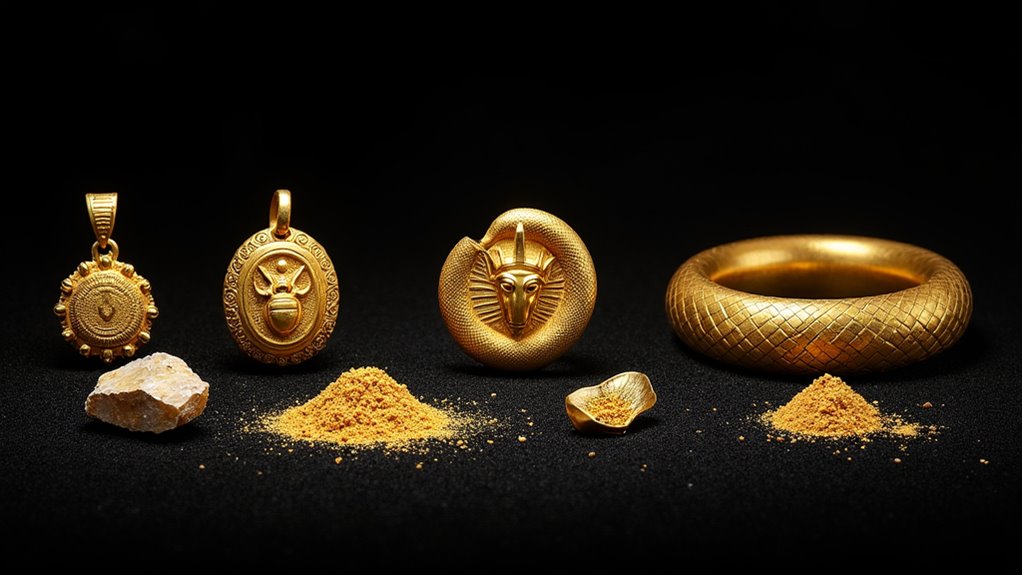
Maritime routes through the Mediterranean became crucial arteries, while trans-Saharan caravans brought African gold northward.
The introduction of stone bridges and better-organized convoy systems revolutionized overland transport, though pesky pirates kept everyone on their toes along sea routes.
What Role Did Religious Institutions Play in European Gold Circulation?
Religious institutions were absolute powerhouses in medieval European gold circulation.
Churches and monasteries basically functioned as medieval banks, hoarding massive gold reserves from donations and offerings. They’d redistribute wealth through construction projects, charity, and loans – talk about medieval economic influencers!

These institutions created extensive trading networks, linking different regions through religious artifacts and relics.
Plus, they gave political legitimacy to rulers who “donated” gold their way.