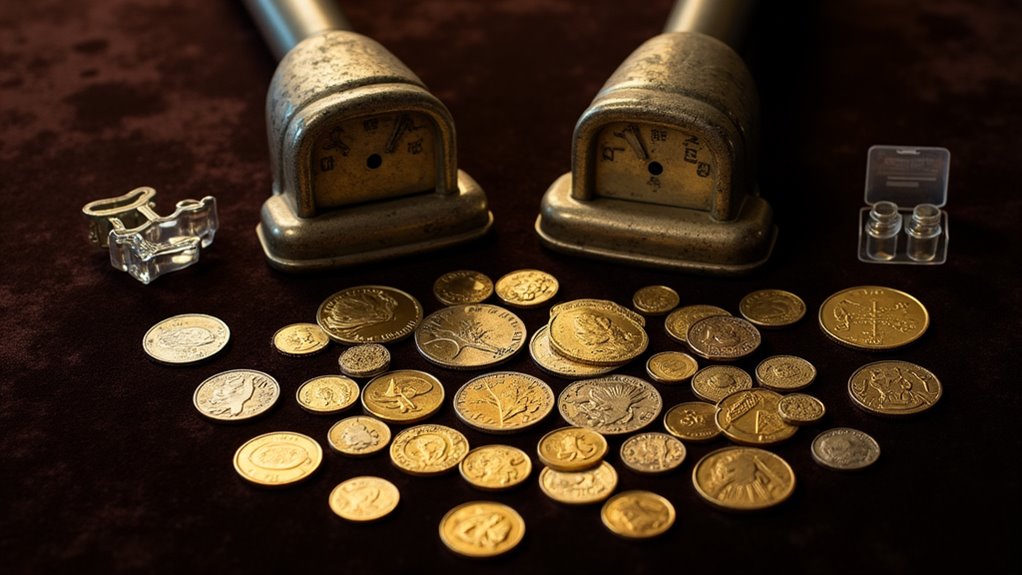
Gold reigns supreme in traditional dance, dazzling audiences while carrying deep cultural weight. From South Asian classical dancers adorned in gold-threaded saris to Greek performers sporting metallic aprons, these precious elements transform simple movements into spectacular displays under stage lighting. Traditional techniques like zari embroidery and contemporary adaptations showcase gold’s enduring role in dance, while accessories like ghungroos add rhythm and drama. This glittering intersection of culture and performnce holds countless stories waiting to shine.

Glittering through the annals of dance history, gold has emerged as more than just a precious metal in traditional dance costumes – it’s become the beating heart of cultural expression across continents. From the intricate zari embroidery of Indian Bharatnatyam to the coin-adorned belly dance costumes of the Middle East, gold elements serve as both functional and symbolic components that elevate performances to mesmerizing heights. In many cultures, gold is viewed as a timeless symbol of wealth and status, further enhancing its allure in traditional attire. Historically, gold jewelry has been a significant marker of cultural identity and artistic expression.
The incorporation of gold in dance attire ain’t just about looking fancy (though let’s be real, it does that too). Traditional dance forms utilize gold thread, metallic fabrics, and handcrafted ornaments to create visual spectacles that practically explode under stage lighting. When dancers move, their gold-embellished costumes catch and reflect light, creating a dramatic effect that makes even the subtlest gestures pop like fireworks.
Gold in dance costumes amplifies every movement, transforming simple steps into dazzling performances through the magic of light and metallic shine.
You’d think all that glitter might be overkill, but here’s the kicker – each culture has developed its own unique relationship with the precious metal. In South Asian classical dance, gold-threaded silk saris and temple jewelry symbolize divine connection. Meanwhile, Greek dancers rock their Pontos Girl Deluxe costumes with gold aprons that scream “urban sophistication meets historical authenticity.”

And dont even get us started on those African ceremonial outfits with their status-defining gold beadwork!
The technical aspects of incorporating gold into dance costumes are seriously impressive. Craftsmen have perfected techniques like zari embroidery, gold leaf application, and metallic fabric weaving that’ve been passed down through generations. These methods create costumes that can withstand the rigors of performance while maintaining their lustrous appearance – no small feat when you’re dealing with intense choreography and hot stage lights. Additionally, the sourcing of gold can align with ethical practices that promote sustainability and fairness in the mining industry.
Perhaps the most fascinating aspect is how gold accessories have become integral to the actual performance. Take those tiny gold bells (ghungroos) in Indian classical dance – they’re not just pretty anklet decorations, they’re literally part of the rhythm section! Gold-embellished waist belts emphasize hip movements, while crowns and tiaras transform dancers into divine or royal characters faster than you can say “cultural heritage.”
Modern dance adaptations haven’t abandoned this love affair with gold either. Contemporary choreographers are finding innovative ways to incorporate traditional gold elements while pushing artistic boundaries. They’re mixing metallic fabrics with modern materials, creating hybrid costumes that honor historical significance while embracing current stage technology. Additionally, the use of gold in dance often mirrors religious art practices, illustrating a cross-cultural appreciation for the metal’s sacred symbolism.

Its a delicate balance between respecting tradition and evolving the art form, but somehow, gold manages to bridge that gap with characteristic brilliance.
Frequently Asked Questions
How Long Does Gold Plating on Dance Costumes Typically Last?
Gold plating on dance costumes typically survives 2-24 months before showing its true colors (literally).
The lifespan’s totally dependent on how thick that precious layer is – we’re talking 0.5 to 2.5 microns here, folks.
Daily performances? Watch that shine fade faster than a shooting star.

But here’s the kicker: proper maintenance and storage can stretch its glamorous life, while exposure to sweat and chemicals sends it to an early retirement.
Can Gold Elements in Traditional Costumes Cause Allergic Reactions?
Yes, gold elements in traditional costumes can definitely trigger allergic reactions, especially when they’re not pure 24k gold.
The real troublemakers? Those sneaky base metals like nickel hiding in gold-plated pieces!
Dancers often experience redness, itching, or rashes – particularly when sweating during performances.

Pure gold’s actually hypoallergenic, but most costume pieces use lower-karat alloys or synthetic alternatives that can irritate sensitive skin. Yikes!
What Alternatives Are Used When Gold Decorations Are Too Expensive?
When authentic gold decorations break the bank, performers get creative!
Metallic fabrics like lamé and sequin-studded materials create that coveted shimmer without the hefty pricetag.
Brass jewelry and gold-plated accessories step in as budget-friendly alternatives, while heat-transfer vinyl and metallic paints let costumers DIY their way to glory.
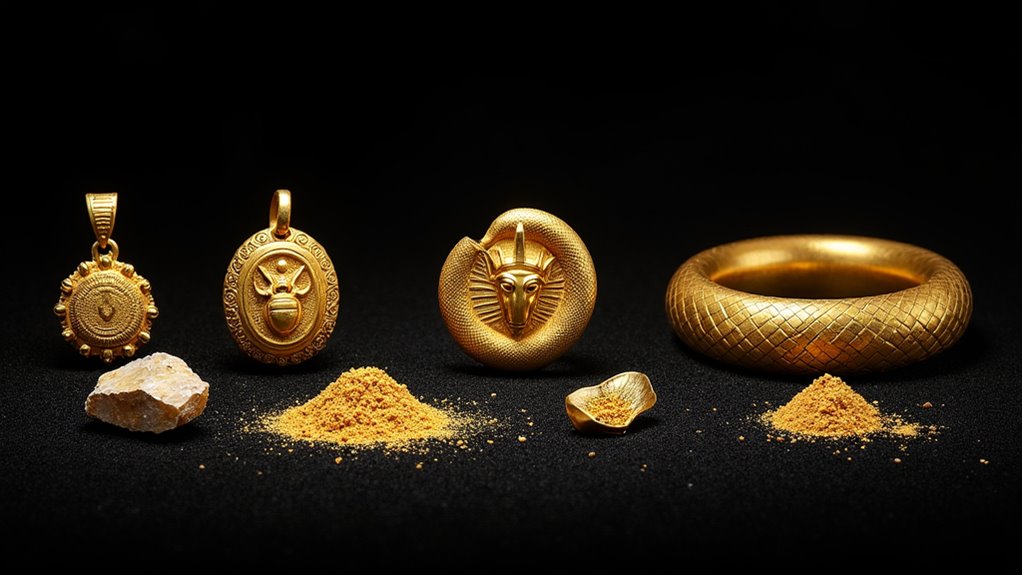
Some even opt for strategic lighting tricks to make yellow fabrics pop with that signature golden gleam.
Pretty genius, rite?
How Much Does a Gold-Adorned Traditional Dance Costume Weigh?
A fully gold-adorned traditional dance costume can weigh anywhere from 5-15 pounds total!
The heaviest components? Those stunning gold jewelry pieces and intricate embroidery work. Indian classical dancers often sport 2-4 pounds of gold jewelry alone, while European period costumes with metal lace could tip the scales at 8-12 pounds.

Modern performers frequently opt for lighter alternatives – because who wants to dance with a small fortune weighing them down?
Are There Special Cleaning Methods for Gold-Embellished Dance Costumes?
Yes, gold-embellished dance costumes require specialized cleaning methods.
Hand washing in cold water with mild detergents like Forever New or diluted Dawn Dish Soap is essential. Costumes should be turned inside-out and placed in laundry bags to protect gold details.
Spot cleaning with soft brushes works best for intricate areas. Never wring – just press gently to remove water.
Flat drying prevents damage, and proper storage in garment bags with tissue paper maintains the costume’s integrity.