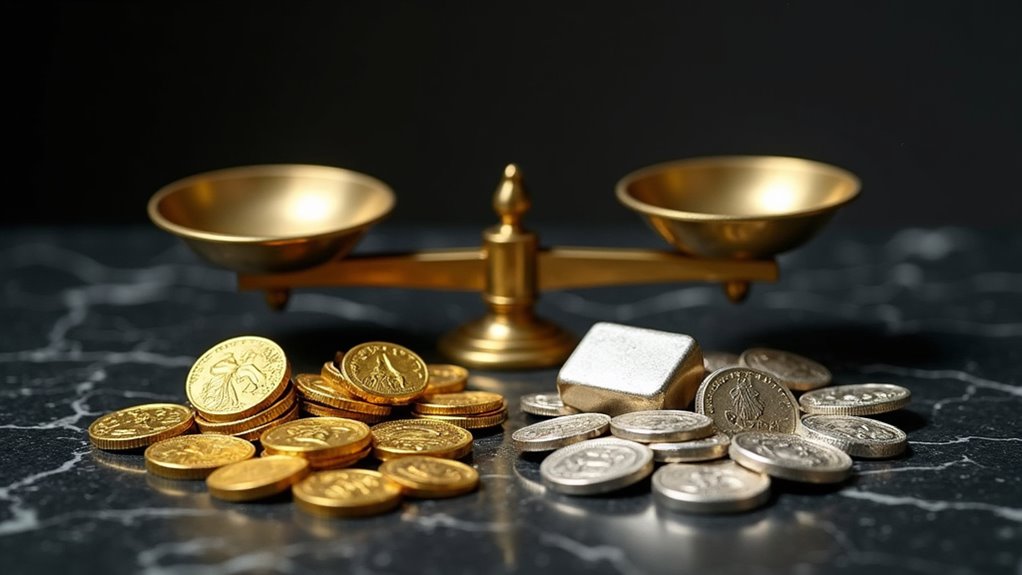

The gold-silver ratio has been on a wild ride through history, starting at a neat 12:1 in Roman times before the U.S. government tried playing fix-it with 15:1 in 1792. Things went bonkers during the Great Depression, hitting 98:1. Medieval Europe kept it stable around 10:1, but modern markets clearly dgaf – COVID-19 sent it skyrocketing to 105:1 in 2020. Today’s 71:1 suggests we’re living in interesting times, and there’s way more to this metals madness than meets the eye.

Numbers don’t lie – and the gold-silver ratio has been telling an increasingly unsettling story. As the oldest tracked exchange rate in history, this seemingly simple metric has become a harsh reflection of our economic reality. What started as a neat and tidy 12:1 ratio during the Roman Empire has morphed into something far more volatile and, quite frankly, disturbing.
Let’s get real – when governments used to fix this ratio, things were boringly predictable. The U.S. Coinage Act of 1792 set it at 15:1, and everyone played along nicely. But then the 20th century rolled in like a drunk uncle at Thanksgiving, and everything went sideways. Roosevelt’s bright idea to fix gold at $35 per ounce in 1934 was just the beginning of the chaos. By 1939, the ratio had skyrocketed to an eye-watering 98:1.
The Bretton Woods Agreement tried to bring some sanity back by pegging exchange rates to gold in 1944. Nice try, folks. When the U.S. ditched the gold standard in the 70s, it was like removing the training wheels from a bicycle being ridden by a caffeinated squirrel. The results were exactly what you’d expect – pure mayhem.
Trying to control gold prices is like trying to herd cats wearing roller skates – chaotic, unpredictable, and wildly entertaining.

Here’s where it gets interesting (or terrifying, depending on your perspective). The 20th century averaged a ratio of 47:1, which seems downright reasonable compared to recent shenanigans. The 21st century has been bouncing between 50:1 and 70:1 like a ping-pong ball in a wind tunnel. Then 2018 happened, and the ratio broke above 70:1, because apparently, we hadn’t had enough drama. Silver’s highly inelastic supply, with most production coming as a byproduct of other metal mining, only adds to the market’s unpredictability. This market volatility is often compounded by geopolitical events and shifts in investor sentiment.
But wait, there’s more! The COVID-19 pandemic said “hold my beer” and pushed the ratio to a mind-numbing 104.98:1 in 2020. That’s the kind of number that makes economists reach for their anxiety meds. The only bright spot in recent memory was 2011, when the ratio dropped to 35:1, proving that sometimes, just sometimes, sanity prevails. Medieval Europe maintained a much more stable ratio, as it only fluctuated between 9.4:1 and 12:1.
Today’s traders are playing this ratio like a game of high-stakes poker. They’re buying silver when the ratio’s high and switching to gold when it’s low, treating these precious metals like they’re trading Pokemon cards. As of March 2025, we’re sitting at 71:1 – a full 8.5% away from the long-term average of 65:1. Some optimists think we might see a return to 35:1, which would mean a 50% gain in silver prices relative to gold.
The real kicker? This isn’t just about precious metals anymore. This ratio has become a canary in the economic coal mine, signaling broader market stress and uncertainty. When industrial demand for silver collides with gold’s status as the ultimate panic room for investors, you get a perfect storm of market psychology laid bare in one simple number. And right now, that number is screaming that something’s gotta give.
Frequently Asked Questions
How Do Geopolitical Tensions Affect the Gold-Silver Price Ratio?
Geopolitical tensions send the gold-silver ratio haywire.
Gold typically steals the spotlight during crises – it’s the classic panic buy. When conflicts erupt, central banks hoard gold like it’s going outta style, pushing the ratio higher.

Meanwhile, silver gets hit with a double-whammy: supply chain disruptions mess with mining, while industrial demand takes a nosedive.
Just look at COVID-19’s chaos – ratio shot up to a crazy 125:1. Talk about market drama!
Can Seasonal Patterns Influence Fluctuations in the Gold-Silver Ratio?
Seasonal patterns absolutely drive gold-silver ratio swings.
Gold typically surges from July through February while silver shines early in the year. When industrial demand for silver peaks in Q1, the ratio often tightens.

But here’s the kicker – gold’s safe-haven appeal during year-end uncertainties can blow the ratio wide open.
Smart money watches these patterns like hawks, especially during the September slump when gold historically tanks.
What Role Do Central Bank Policies Play in Ratio Changes?
Central banks are major gold players but barely touch silver – talk about moving markets!
Their gold-hoarding sprees drive the ratio wild, especially when they go on buying binges like we’ve seen lately.

When they slash rates, both metals usually jump – but gold tends to surge harder, widening that gap.
And let’s be real: their anti-dollar diversification schemes? Always favor gold.
Face it – central banks basically treat silver like gold’s forgotten cousin.
How Does Industrial Demand for Silver Impact the Ratio?
Industrial demand is silver’s wild card – and it’s shaking up that ratio big time.
When factories and tech companies get hungry for silver, they create real-world demand that gold just can’t match.

Think about it: solar panels alone gulp down 200+ million ounces yearly.
That’s pushing the ratio lower, especially since gold mostly sits pretty in vaults.
Hard to keep silver cheap when manufacturers are scrambling for every ounce they can get their hands on.
Why Do Mining Production Rates Matter for the Gold-Silver Ratio?
Mining rates pack a serious punch when it comes to the gold-silver ratio.
Here’s the deal: gold mining’s down 7% since 2016, while silver’s dropped 8.5%.

But check this out – a 1% bump in gold mining tanks silver prices harder (3.06%) than gold prices (2.15%).
That’s some wild leverage!
Plus, with silver reserves potentially running dry by 2045 (way before gold’s 2056 deadline), these production swings are gonna keep messing with the ratio.