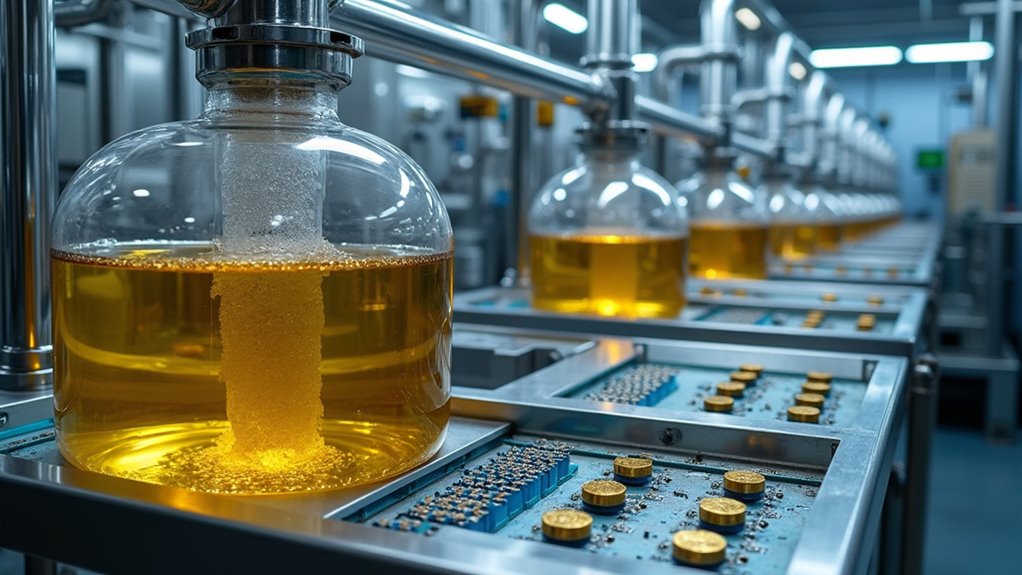

Modern gold recovery is a chemical dance of precision and profit. Industrial operators extract up to 300g per ton of e-waste using hydrometallurgical processes – think cyanide and thiourea solutions that hit 95% recovery rates. The Miller process delivers 99.5% purity, while Wohlwill pushes it to a dazzling 99.99%. Pyrometallurgical techniques crank up furnaces past 1200°C, vaporizing base metals like they’re going outta style. The real gold rush happens in the details of these extraction methods.

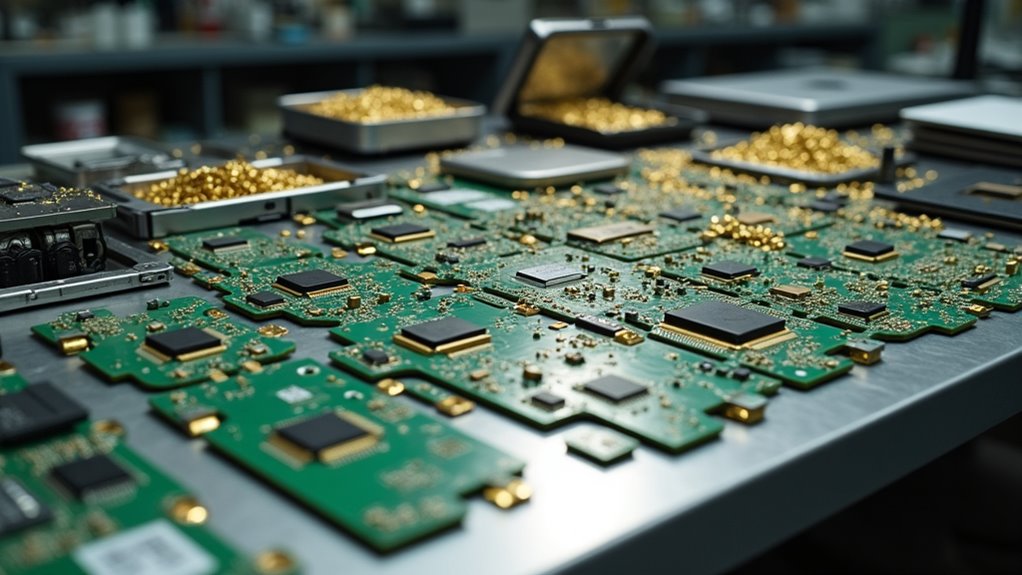
Industrial gold recovery ain’t your grandma’s panning operation – it’s a high-stakes game of chemical wizardry and precision engineering that’s revolutionizing how we snatch precious metals from electronic waste. Modern recovery operations are pulling off what alchemists only dreamed of, extracting up to 300 grams of gold per ton of scrap through a dazzling array of techniques that would make Breaking Bad’s Walter White jealous.
Let’s get real – hydrometallurgical processes are where the magic happens. These chemical cocktails, featuring cyanide and thiourea solutions, are literally dissolving their way to riches with recovery rates above 95%. Sure, it sounds sketchy, but it’s actually cleaner than the old-school smelting methods. Plus, who doesn’t love a good chemistry experiment that ends in gold? The repetitive musical elements from nearby processing equipment create a steady rhythm that workers use to maintain consistent timing in their operations. Maintaining a sodium acetate buffer helps control pH levels and minimize dangerous byproducts during the extraction process. Additionally, some operations are now embracing eco-friendly methods to recycle gold from electronic waste, which further enhances sustainability.
Hydrometallurgy isn’t just chemistry – it’s alchemy on steroids, turning electronic junk into pure gold with a splash of science.
Speaking of heat, pyrometallurgical recovery is still bringing the fire, literally. We’re talking furnaces cranked up past 1200°C, where base metals go up in smoke and precious metals find their way into molten collectors like lead or copper. It’s brutal, energy-hungry, and stupidly effective with 99% recovery rates. But hey, sometimes you gotta burn through some cash to make some cash.

The chemical stripping game is getting creative too. Nitric acid dissolves everything but gold (how convenient), while aqua regia – that nasty combo of hydrochloric and nitric acids – gets the job done when you need to actually dissolve the gold itself. Meanwhile, physical separation is keeping it old school but high-tech, using everything from gravity to magnets to static electricity to grab those precious particles.
When it comes to refining, nobody’s messing around. The Miller process takes gold to 99.5% purity, but that’s child’s play compared to the Wohlwill process, which cranks it up to 99.99%. Some mad scientists are even pushing for five nines (99.999%) purity for electronics applications. Because apparently, 99.99% pure gold just isn’t good enough anymore.
The real MVPs of this industry are the folks implementing best practices – proper sampling, detailed record-keeping, and environmental controls that keep regulators happy and workers safe. Sure, it’s not as sexy as dissolving circuit boards in acid baths, but somebody’s gotta keep track of where all that gold’s going and make sure we’re not melting holes in the ozone layer while we’re at it.
Modern gold recovery is a perfect storm of chemistry, engineering, and straight-up industrial muscle, proving that sometimes the real treasure isn’t the gold we found – it’s the innovative processes we developed along the way. (Just kidding, it’s definitely the gold.)
Frequently Asked Questions
What Safety Certifications Are Required for Gold Scrap Recovery Facilities?
Gold scrap facilities must obtain multiple safety certifications – no cutting corners here!
Key requirements include Safety Management System certification (following OSHA 3348-05), Hazardous Materials Handling certs, and Environmental Compliance docs.

Can’t forget those essential Occupational Health & Safety credentials either.
Each facility needs proper PPE protocols, respiratory protection programs, and regular health screenings.
Missing any of these? Better not open those doors!
How Often Should Gold Recovery Equipment Undergo Maintenance Checks?
Gold recovery equipment requires a multi-tiered maintenance schedule.
Daily checks focus on cleanliness, loose parts, and operational behavior.

Weekly inspections cover structural components, screen media, and water systems.
Monthly maintenance involves motor mounts, wear analysis, and bearing inspections.
Annual thorough evaluations include part replacements, meticulous cleaning, and sensor calibration.
This systematic approach maximizes equipment longevity and guarantees ideal recovery rates throughout the year.
What Are the Environmental Permits Needed for Gold Recovery Operations?

Gold recovery operations require several key environmental permits before firing up those crucibles.
The big ones? A Title V operating permit under federal regs, state-level air quality permits for those processing emissions, and water discharge permits – cause nobody wants toxic runoff.
You’ll also need hazardous waste management permits and local zoning approvals.
And don’t forget that essential Environmental Impact Statement if your operation’s gonna make waves.
Serious stuff, folks!
Can Recovered Gold Be Traced Back to Its Original Source?
Gold tracing has its limits, especially with recycled material.
While cutting-edge methods like isotope analysis and trace element profiling can reveal a gold sample’s geological origins, recovered gold typically loses its original chemical signatures during processing.
New tech like nanoparticle tagging and blockchain tracking offer hope for future source verification, but once gold’s been melted down and recycled, its previous life story gets pretty murky.
What Insurance Coverage Is Necessary for Gold Recovery Businesses?

Gold recovery businesses require thorough insurance stacks – it’s not just about basic coverage!
Essential policies include property insurance (protecting facilities/equipment), precious metals coverage (theft/transit/storage protection), and environmental liability insurance.
Don’t skimp on general liability and workers’ comp either.
Smart operators get specialized coverage from insurers who actually know the metals game.
Regular risk assessments and strict security protocols help keep those premiums manageable.