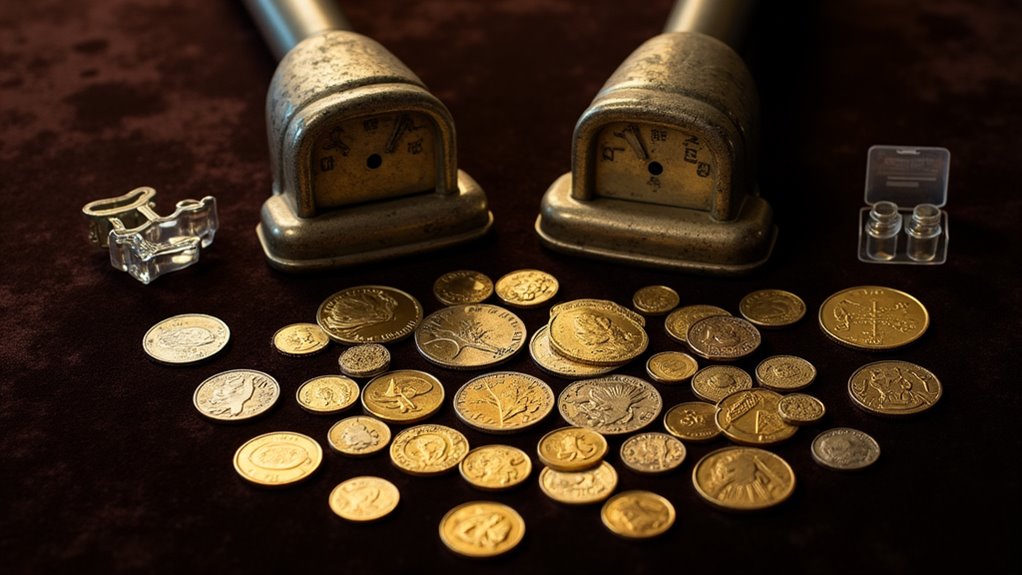
Coin grading ain’t rocket science, but it’s darn close! The Sheldon Scale (1-70) serves as the holy grail of numismatic evaluation, where even tiny differences can mean thousands in value. Third-party graders like NGC and PCGS play referee, slapping grades on coins based on strike quality, preservation, and that oh-so-crucial eye appeal. Sure, it’s partly subjective – but when a pristine MS-70 specimen hits the market, collectors loose their minds! Stick around for the juicy details that’ll make your wallet tingle.

Nearly every serious coin collector knows the heart-pounding moment when their prized possession gets professionally graded. The Sheldon Scale, ranging from 1 (Poor) to 70 (Perfect Mint State), has revolutionized how we evaluate these tiny metallic masterpieces. It’s not just about slapping a number on a coin – it’s an intricate dance of assessment that separates the merely good from the absolutely spectacular.
The grading game isn’t for the faint-hearted. Strike quality, surface preservation, luster, and that ever-elusive “eye appeal” all play significant roles in determining a coin’s grade. Think you’ve got a mint state beauty? Well, those MS-60 through MS-70 grades separate the wheat from the chaff, with perfection at 70 demanding flawlessness under 5x magnification. Talk about pressure! Grading coins accurately requires a deep understanding of professional grading standards and the nuances of coin characteristics, including how to spot fake gold coins.
Grading coins demands eagle eyes and steady nerves – where microscopic details make the difference between good and extraordinary.
Gone are the days when “Fine” or “Very Fine” cut it in the collectors’ circle. The numeric system swooped in like a knight in shining armor, adding precision where ambiguity once reigned. Now, we’re talking VF-30 instead of just “Very Fine” – because in this world, every point counts. And boy, does it count when it comes to value! The difference between MS-63 and MS-67 can mean thousands of dollars in your pocket… or someone else’s.

The big players in grading – NGC and PCGS – have become the gatekeepers of numismatic excellence. These third-party grading services don’t just slap grades on coins; they’re basically running them through the numismatic equivalent of an FBI background check. Authentication, preservation assessment, and final grading all happen before that precious piece gets sealed in its protective slab. Such grading processes ensure that the coins maintain their original condition and value over time.
But here’s where it gets really interesting – condition rarity is the secret sauce that makes collectors lose sleep. A coin might have a high mintage, but find one in pristine condition? That’s like finding a unicorn wearing a bowtie. The market responds accordingly, with prices skyrocketing for those exceptional specimens that somehow survived decades or centuries without picking up so much as a microscratch.
The challenges? They’re real, alright. Even with standardization, grading still involves human judgment. Counterfeiters are getting craftier, and don’t even get us started on altered coins. Some folks think a quick cleaning will boost their grade – spoiler alert: it won’t. It’s like trying to fix a classic painting with bathroom cleaner.
Environmental damage can also wreak havoc on coins, turning what might have been a gem into a Details Grade specimen faster than you can say “numismatic nightmare.” Additionally, understanding numismatic significance can help collectors appreciate the broader historical context of their coins.
Frequently Asked Questions
Where Can I Find Reputable Coin Dealers in My Area?
Several rock-solid resources exist for tracking down legit coin dealers nearby.
The Professional Numismatists Guild (PNG) and American Numismatic Association (ANA) maintain searchable databases of certified dealers – pretty slick stuff!

The Better Business Bureau‘s also got your back with accredited dealer listings.
Pro tip: Google Business Profiles spill the tea on local shops with reviews n’ ratings.
Just remember to verify credentials and check those customer reviews before diving in!
How Should I Properly Store My Valuable Coins at Home?
Valuable coins require precise storage to maintain their worth. A secure home safe, bolted down and hidden from view, provides the first line of defense.
Inside, coins should rest in non-PVC holders or albums away from moisture and fluctuating temps. Smart collectors use silica gel packs and keep their treasures outta direct sunlight.
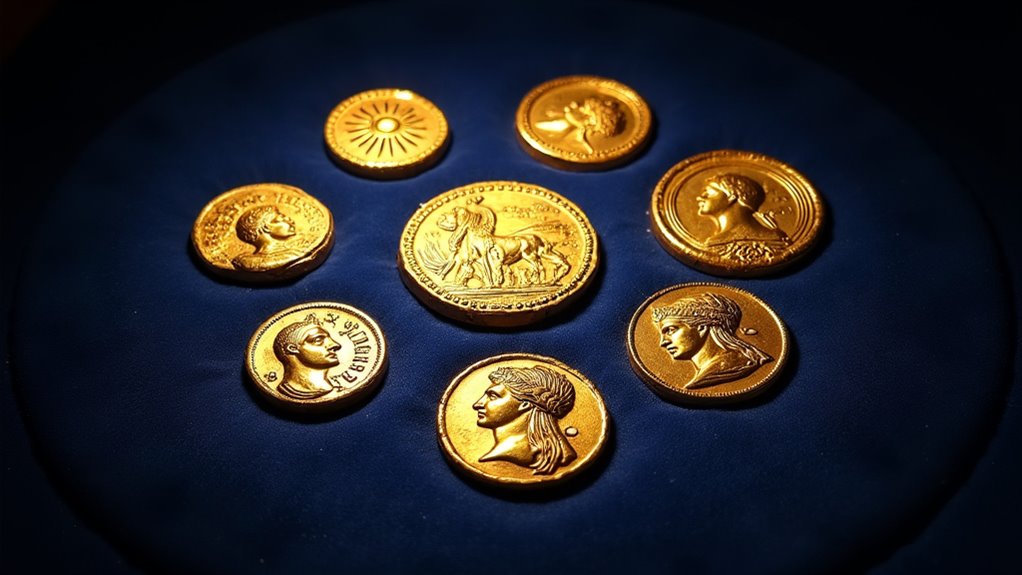
Pro tip: handle those beauties by their edges only – fingerprints are a collector’s worst enemy!
What Insurance Options Are Available for Protecting My Coin Collection?
Collectors face two main insurance paths: basic homeowners coverage (meh, limited scope) or specialized numismatic insurance (now we’re talking!).
Homeowners policies typically cap out at laughably low limits – barely enough for entry-level collections.
Meanwhile, specialized coverage brings the good stuff: agreed value protection, transit coverage, and none of that premium-hiking nonsense when filing claims.

Pro tip: collections worth over $50k absolutely need dedicated insurance. No debate their!
Can Environmental Factors Affect the Long-Term Value of My Coins?
Environmental factors absolutely wreak havoc on coin values!
Moisture’s a total nightmare, triggering corrosion that’ll tank even premium pieces.
Soil burial? Kiss that pristine surface goodbye – archaeological finds often look like they’ve been through war.

Don’t even get started on cheap PVC holders leaching chemicals onto coins!
Temperature swings are brutal too, warping metals faster than a trader’s mood during a market crash.
Smart collectors know: environment control isn’t just fancy talk – it’s survival.
Which Coin Collecting Clubs or Organizations Are Recommended for Beginners?
For rookie coin collectors, the American Numismatic Association (ANA) is the gold standard – pun intended!
Their beginner-friendly resources are unmatched, plus they’ve got this killer searchable directory of 300+ local clubs.

The Bamboo-Circle community’s also worth checking out for newbies learning the ropes.
Littleton Coin Company runs several entry-level clubs that’ll hook you up with specific interests, whether it’s nickels or dimes.
No pressure to join em’ all!