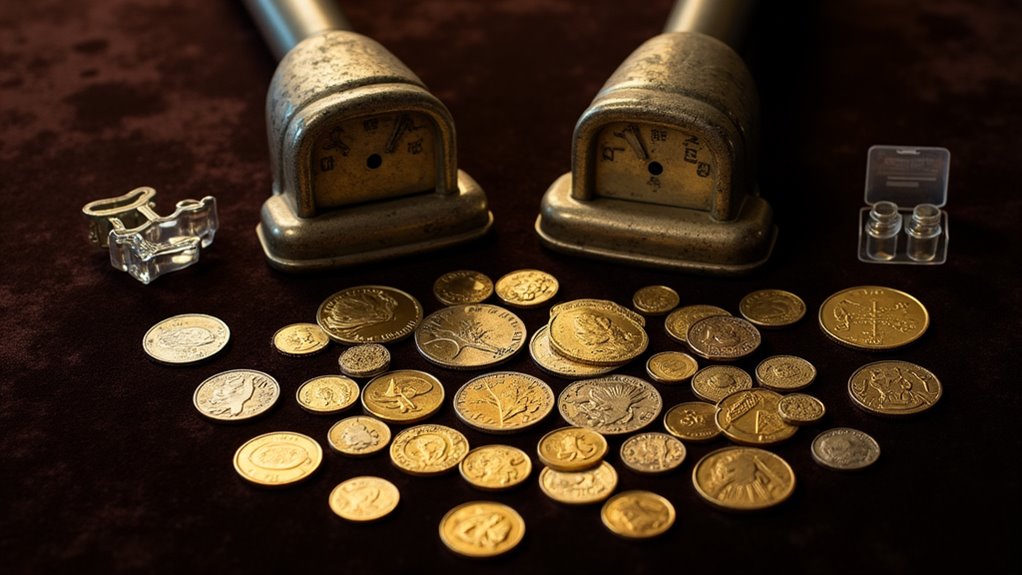
Medieval gold coins pack serious financial punch, with surviving pieces fetching five-figure sums at auction. These ultra-rare artifacts showcase religious flexing and territorial claims through intricate designs that’d make modern “flex culture” blush. Only a few hundred authentic specimens exist today – most got melted down during economic meltdowns or wars. Professional grading‘s essential, as pristine examples like the Solidus or Florin command astronomical prices. The deeper you go, the more these golden time capsules reveal.

These bad boys weren’t exactly flooding the streets, though. Economic instability and restricted minting meant that gold coins were rarer than a honest merchant in a medieval marketplace. When they did pop up, they packed some serious symbolic punch – we’re talking religious motifs, territorial flexing, and enough authority-projecting imagery to make a modern Instagram influencer jealous. The Solidus, sporting Christian imagery under Constantine the Great, can fetch upwards of $15k if it’s pristine enough to make a numismatist weep.
But here’s where it gets spicy – these coins weren’t just about looking pretty in some noble’s coin purse. The Gold Rhenish Guilder from 1429-1430 was basically Otto von Ziegenhein’s medieval equivalent of a Twitter verified checkmark. Grading services play a crucial role in determining a coin’s value based on its condition and authenticity, and many collectors rely on professional grading to ensure their investments are protected.
And dont even get us started on how these things were made – coiners were playing fast and loose with alloys, skimming a bit off the top for “processing fees,” while some sketchy characters were literally trimming the edges for extra gold (medieval problems require medieval solutions, amirite?). Gold coin production during this era was often unregulated, leading to significant variations in quality and weight.

The survival rate of these golden beauties is about as low as your chances of finding authentic street food in a tourist trap. Most got melted down during economic crises, wars, or whenever someone needed quick cash – which was basically always in medieval times.
Medieval gold coins are as rare as unicorns – most met their fate in melting pots during tough times and endless wars.
The few that survived are now commanding prices that would make a crypto whale blush. We’re talking five-figure sums for coins like the Florin, of which only a few hundred still exist. In fact, some of these coins have become the most sought-after ancient gold coins, representing a blend of artistry and history.
Today’s collectors are absolutely bonkers for these things, and for good reason. Each surviving coin is basically a time capsule of medieval flex – complete with power moves, religious showboating, and enough historical significance to fill a university lecture hall.
The value game is wild too – condition, rarity, and historical significance create a perfect storm of collectability that keeps auction houses busy and museum curators sweating. Whether it’s a pristine Solidus or a well-worn Florin, these chunks of medieval money remind us that flex culture isn’t anything new – it’s just gotten more digital.
Frequently Asked Questions
How Can I Authenticate a Medieval Gold Coin Without Professional Help?
Getting medieval with DIY coin authentication? It’s possible, but tricky!
Start with a strong magnifying glass to scrutinize those engravings – blurry details scream fake. Check the weight against historical records (medieval minters were surprisingly precise), and grab that magnet – real gold won’t stick.

UV light exposure helps too; modern materials often glow like a disco.
But here’s the kicker: nothing beats professional verification for truly valuable pieces.
What Cleaning Methods Are Safe for Preserving Medieval Gold Coins?
Medieval gold coins require delicate handling when it comes to cleaning.
Vulpex liquid soap and soft badger-hair brushes are top choices for safe dirt removal. For light oxidation, a 5-15% ammonia solution works wonders.
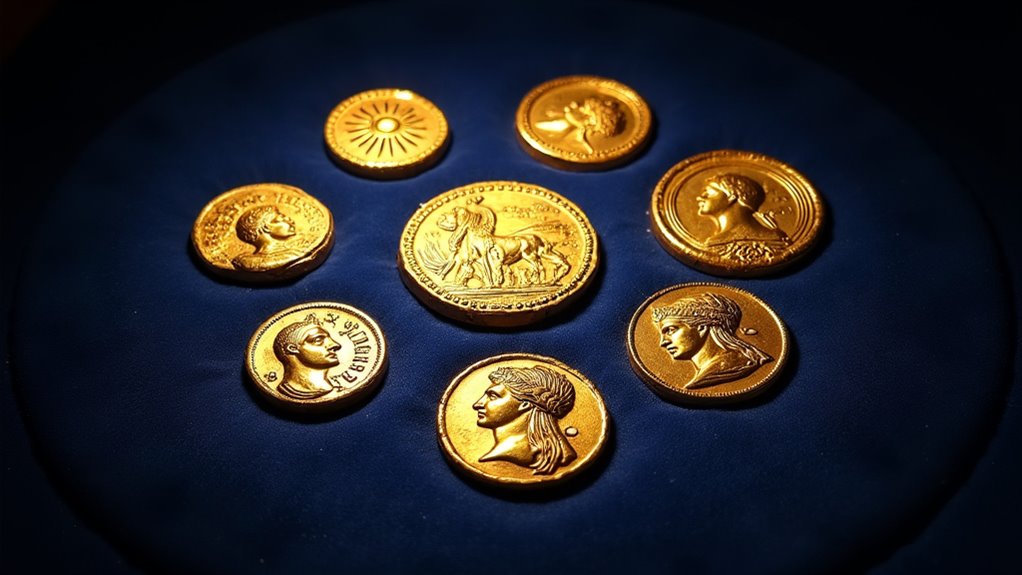
But here’s the kicker – never use bleach or ultrasonic cleaners!
After cleaning, rinse thoroughly with distilled water and dry below 100°C.
Store those beauties in airtight containers with silica gel packs to keep ’em pristine.
Where Are the Best Places to Find Medieval Gold Coins Today?
Medieval gold coins are still turning up in eastern England’s fertile fields – Norfolk and Suffolk being absolute goldmines (pun intended!).
Coastal trade routes near Venice? They’re spitting out ducats like it’s 1399.

France’s countryside keeps delivering Frankish tremisses to lucky detectorists.
But here’s the kicker – legit auction houses and verified numismatic dealers are actually where most collectors score their medieval bling nowadays.
Just skip eBay’s sketchy waters, seriously.
Which Modern Forgeries of Medieval Gold Coins Are Most Common?
The most common modern forgeries of medieval gold coins involve base metals with gold plating.
Counterfeiters favor Roman Aurei and florins, often using copper or brass cores with thin gold layers.

Fire-gilding techniques create deceptively authentic-looking pieces, while forged dies replicate period-accurate details and wear patterns.
Some clever forgers even recreate medieval minting errors.
Here’s the kicker – many replicas intentionally skip the “COPY” mark to fool collectors.
How Does Coin Storage Temperature Affect the Preservation of Medieval Gold?
Temperature control is absolutely critical for medieval gold coin preservation.
The sweet spot? 16-20°C keeps these babies stable and pristine.

When temps go wild, things get messy – warping, condensation build-up, and deteriorating storage cases spell disaster for these precious relics.
High heat’s particularly nasty, weakning protective materials and encouraging moisture that’ll eat away at any impurities.
Even pure gold ain’t immune to temperature’s cruel games – fluctuations can literally reshape thin coins over time.