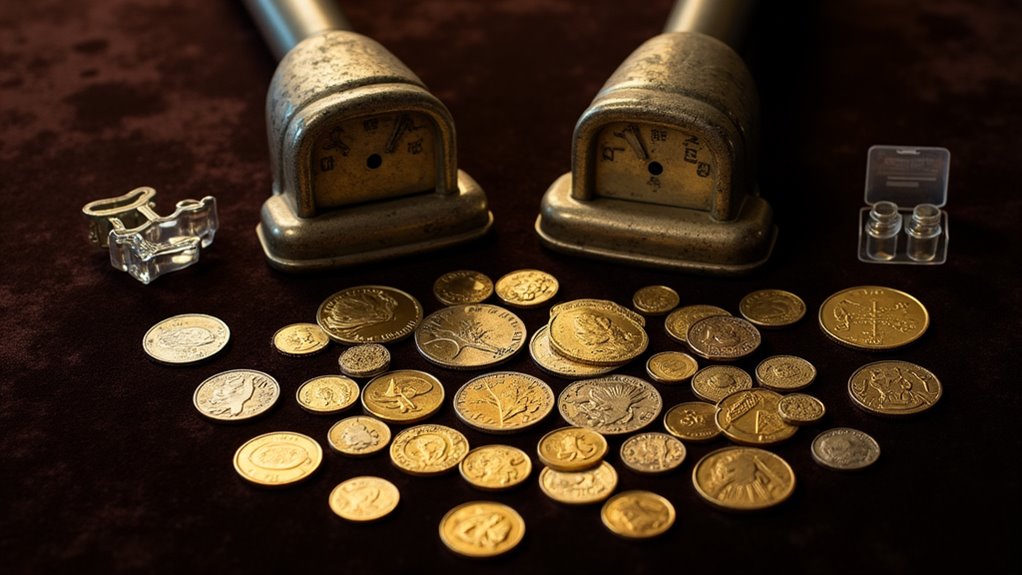
South Korean gold prices have rocketed to a jaw-dropping ₩145,116.63 per gram, leaving last year’s ₩87,280 in the dust with a meteoric 49.54% surge. The precious metal’s relentless climb from January’s ₩130,520 reflects global economic jitters, with February’s peak hitting an eleven-year high of ₩156,200. Traditional retailers are scrambling to adapt as supply shortages plague the market, while smaller gold items gain popularity among younger invstors. The golden rollercoaster shows no signs of slowing.
Gold Price South Korea

The glitter of gold just got a whole lot pricier in South Korea, with 24-karat prices soaring to a jaw-dropping ₩145,116.63 per gram. The precious metal‘s been on an absolute tear, with an ounce now commanding a whopping ₩4,504,250 – enough to make even seasoned traders do a double-take. The market’s practically screaming “show me the money!” as investors scramble to get their hands on anything that sparkles.
Looking back at the wild ride, gold prices shot up like a rocket to ₩130,520 per gram by January’s end – a mind-bending 49.54% jump from the previous year’s measly ₩87,280. But hold onto your hats, because February 11th saw prices blast through the stratosphere, hitting an eleven-year high of ₩156,200 per gram. Talk about your golden opportunities (or golden headaches, depending on which side of the trade you’re on).
The surge has thrown the traditional gold market into absolute caos – yes, chaos with a typo, because that’s exactly how messy it’s gotten. Gold bars? Good luck finding them. Retailers are pushing everything from tiny nuggets to heart-shaped trinkets, with prices bouncing between ₩150,000 and ₩200,000. Meanwhile, jewelers are watching traditional sales tank faster than a lead balloon, as customers balk at the eye-watering price tags.
Chaos reigns in Korea’s gold market as retailers scramble to sell anything that glitters, while traditional jewelry sales plummet.
South Korea’s gold scene is getting creative with its survival strategies. Smaller gold items are becoming the new hot ticket, marketed as both investment vehicles and pretty little showpieces. The classic 10 don (37.5 gram) gold bars might still be king of the trade, but they’re playing hard to get with recent supply shortages making them rarer than a calm day in the markets. This scarcity has prompted a shift towards more sustainable gold mining practices that aim to reduce ecological damage while meeting rising demand. Historically, gold has acted as a hedge against inflation, making it a sought-after asset during economic uncertainty.
Global economic jitters and inflation fears have been driving this golden rollercoaster, with the Korean won’s exchange rate adding its own special flavor to the mix. The younger crowd’s getting in on the action too, snatching up those trendy gold nuggets faster than you can say “safe-haven asset.” It’s like watching a gold rush in slow motion, except instead of prospectors with pickaxes, we’ve got millennials with smartphones buying star-shaped gold pieces.
The impact? Traditional cultural gifting practices are taking a hit, middle-income families are feeling the squeeze, and businesses are adapting faster than a chameleon in a rainbow factory. Digital platforms are popping up like mushrooms after rain, offering smaller units for those who can’t stomach the full-sized portions. Furthermore, as gold prices continue to rise, Thailand’s gold price is also experiencing fluctuations that reflect the global market trends.
The market’s fundamentally saying “adapt or die,” and South Korea’s gold scene is definitely choosing the former, even if it means reinventing centuries-old traditions one gram at a time.
Frequently Asked Questions
What Are the Tax Implications of Buying Gold in South Korea?
South Korea’s gold tax system is no joke! Investors face a whopping 27.5% tax hit on profits (25% investment tax + 2.5% local tax for gains over 300M KRW).
Here’s the kicker – taxes get withheld twice yearly, forcing traders to file refunds if they overpay.
Physical gold deliveries dodge the 10% VAT when traded thru qualified dealers.
But watch out – the system’s been slammed for taxing profits while ignoring losses. Talk about rough!
Can Foreigners Invest in South Korean Gold Markets?
Yes, foreigners can dive right into South Korea’s glittering gold markets! The Korea Exchange (KRX) welcomes international investors with open arms, though they’ll need to jump through some regulatory hoops first.
Non-residents must navigate tax requirements and anti-money laundering rules – typical bureaucratic fun. But here’s the kicker: many global institutional players are already in the game, drawn by that sweet South Korean gold premium.
Just remember to dot those i’s and cross those t’s!
How Do Seasonal Trends Affect Gold Prices in South Korea?
South Korean gold prices dance to a predictable seasonal rhythm.
Lunar New Year and Chuseok holidays spark price surges through cultural gift-giving, while wedding seasons in spring n’ fall pump up jewelry demand.
Summer’s a snooze fest – prices slump as wallets thin out from vacation splurges.
Winter? That’s when things get spicy, with prices typically climbing as investors scramble for safe-haven assets and year-end portfolio reshuffling kicks in.
Which South Korean Banks Offer Gold Investment or Trading Services?
South Korea’s gold investment scene is dominated by heavyweight players like KB Kookmin, Shinhan, Hana, and Woori Bank – but here’s where it gets interesting!
Kbank’s stealing the spotlight with their game-changing KRX gold market service (first of its kind, folks!). They’re literally delivering gold bars to doorsteps while traditional banks stick to their brick-and-mortar approach.
The real kicker? Kbank’s fees are a mere 0.22%, making other banks look like they’re stuck in the stone age.
What Is the Minimum Amount Required to Start Gold Trading in Korea?
The minimum investment for gold trading in South Korea varies by method.
For futures trading, Micro Gold Futures (MGC) contracts require around ₩2-3 million initial margin, while physical gold purchases start from as little as ₩100,000 for small denominations.
Through authorized banks, investors can begin with roughly ₩500,000.
However, actual minimums fluctuate based on market conditions and dealer requirements.
Most beginners opt for MGC contracts due to lower barriers to entry.