Gold mining’s environmental toll is staggering.
For every kilogram extracted, 20 trees are destroyed and 4.63 grams of mercury poison waterways. The industry dumps 180 million tonnes of toxic waste yearly, leaving devastated landscapes and contaminated soil unfit for agriculture.
While mining companies talk up their green initiatives, the reality is brutal: billion-dollar cleanup costs, destroyed indigenous lands, and generations of health impacts.
The deeper you go, the uglier this industry’s secrets become.
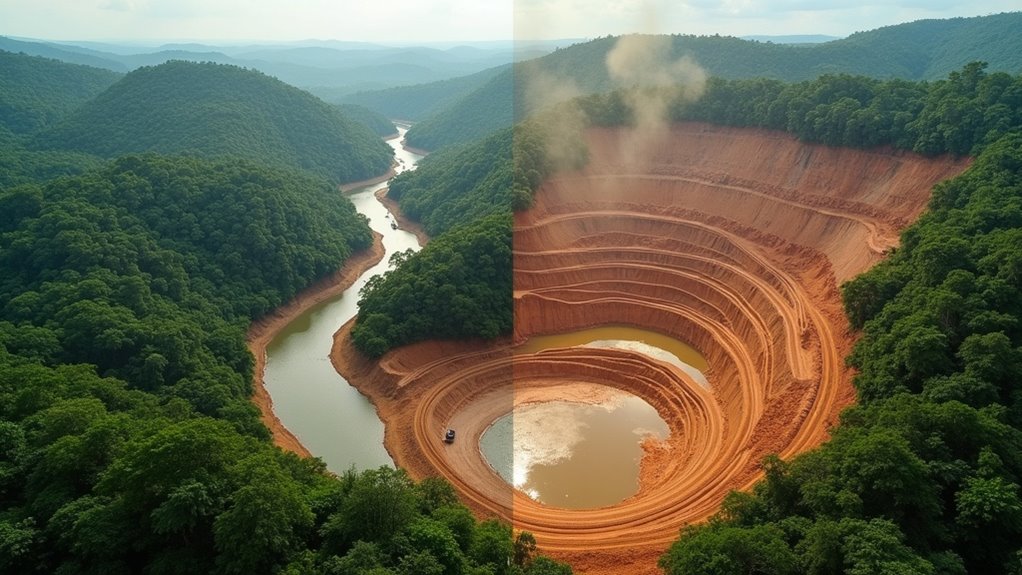

While gold has long symbolised wealth and prosperity, its extraction leaves a trail of environmental devastation that would make even the greediest dragon weep.
The numbers tell a grim tale – for every measly kilogram of gold yanked from the earth, 20 trees get the chop. In the Amazon rainforest, where illegal mining runs rampant, the Yanomami people have watched helplessly as their land’s deforestation skyrocketed by a mind-numbing 308.8% between 2018 and 2022.
Gold’s glittering allure masks a brutal reality: every kilogram mined destroys 20 trees and ravages indigenous lands across the Amazon.
But trees aren’t the only casualties in this gold rush gone wrong. The industry’s dirty little secret is mercury – loads of it. Each gram of gold extracted dumps 4.63 grams of this toxic nasty into waterways, where it accumulates in the food chain like a ticking time bomb. The industry generates an astounding 180 million tonnes of toxic waste annually. Metal mining activities have released over 200 million pounds of toxic arsenic into U.S. waters alone.
And let’s not forget cyanide, the mining industry‘s favourite poison, used to extract 90% of gold in the U.S.

Brilliant idea, really – what could possibly go wrong with using one of the world’s deadliest substances? Modern gold mining techniques aim to reduce toxic chemical usage, but the implementation is often inconsistent and slow.
The air doesn’t fare much better.
Mining kicks up clouds of toxic dust that settle into lungs and soil alike. These airborne menaces don’t discriminate – they’re equal opportunity destroyers, triggering everything from asthma attacks to premature death in folks with dodgy hearts or lungs.
The soil gets absolutely hammered too, transformed from life-giving earth into something resembling the moon’s surface. Good luck growing anything in that mess.

Speaking of messes, the industry’s track record with chemical spills is about as impressive as a chocolate teapot. Every single studied U.S. gold mine has had an “oopsie” moment with hazardous materials. Remember the Animas River disaster? Three million gallons of mining waste turned the water a lovely shade of toxic – not exactly the sort of thing you’d want to splash about in.
The economic toll is equally staggering. In Brazil, each kilogram of gold causes environmental damage worth R$1.7 million (US$325,000). Colombia’s looking at a $11 billion clean-up bill that’ll take 40 years to sort out.
And despite all the promises of economic prosperity, local communities often end up with the short end of the stick.
Some efforts are being made to manage this chaos. Mining companies are trying to figure out how to save topsoil and replant areas with hardy species that can cope with the post-apocalyptic mining landscapes.
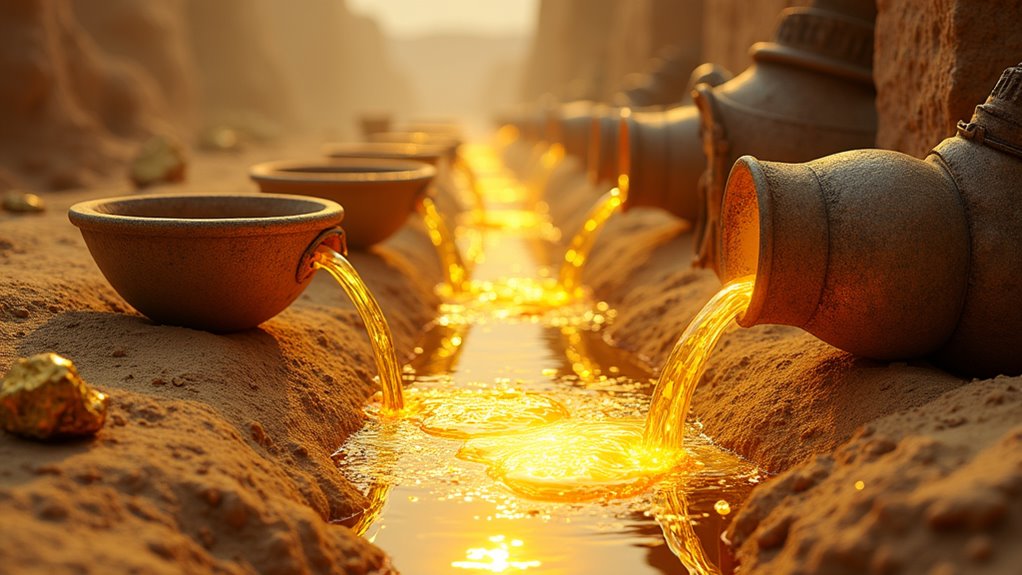
There’s also a push for recycled gold, because apparently we’ve already dug up enough of the stuff to last us a while. But let’s be real – these measures are like putting a band-aid on a bullet wound. Until we seriously reckon with our obsession with shiny rocks, the environmental carnage will continue, one golden gram at a time.
Frequently Asked Questions
How Long Does It Take for a Gold Mine to Become Profitable?
Gold mines are a serious money pit before they pay off.
It takes 1-10 years just to find the gold, another 1-5 years for development, and a whopping $350+ million to build the thing.
Once production kicks off, you’re looking at 1-2 years before seeing any real profits.

Full payback? That’s gonna take 5-7 years.
But hey, once you’re rollin’, these cash cows can keep pumpin’ for 10-30 years straight.
What Percentage of Extracted Gold Comes From Artisanal Mining?
Artisanal mining churns out a whopping 17-20% of the world’s annual gold production – that’s around 380-450 metric tonnes of the shiny stuff each year.
Here’s the kicker: while these small-scale operations are keeping millions fed (we’re talking 40.5 million miners across 80+ countries), most of ’em are operating under the radar.
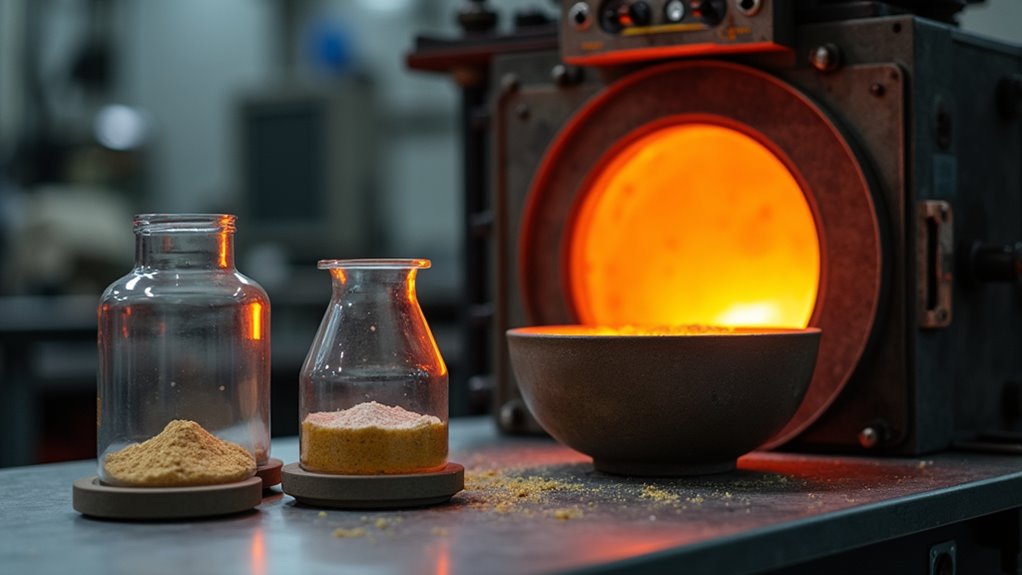
About 70-80% of these diggers are working informally, which makes tracking the exact numbers a bit tricky.
Can Gold Mining Sites Be Successfully Converted Into Other Land Uses?
Yes, mining sites can be transformed into seriously useful spaces.
The evidence is right there – abandoned mines worldwide are getting total makeovers. Solar farms? Check. Wildlife sanctuaries? You bet.
Even tourist attractions and agriculture projects are popping up on old mine sites. It’s not just feel-good greenwashing either – these conversions are creating real economic value.
Some of these rehabilitated sites are actually more profitable now than when they were digging up gold.
How Do Gold Mining Companies Ensure the Safety of Local Water Sources?
Gold mining companies protect local water through multi-layered defence systems – it’s not rocket science, but it’s thorough.
They’ve got high-tech sensors monitoring water quality 24/7, serious containment infrastructure like tailings dams and liners, and treatment facilities that filter out nasties before water leaves the site.
Regular independent audits keep ’em honest, while mandatory reporting to communities guarantees transparency.
Some actually invest in local water projects too – fancy that!
What New Technologies Are Being Developed to Make Gold Extraction More Sustainable?
Mining companies are finally ditching toxic cyanide – bout time!
The CLEVR process uses sodium hypochlorite instead, slashing chemical use by 90% while matching traditional recovery rates.
Some clever cookies are even using bacteria to extract gold, while others are testing glycine-based solutions that’re FDA-approved.
The real game-changer? E-LLE technology, which extracts precious metals for pennies on the dollar through electrochemical wizardry.
Green mining’s not just a pipe dream anymore.