Gold Price Australia
Australia’s gold market pulses with five-minute price updates, reflecting the drama of global economic forces and AUD/USD exchange rates. Major players like ABC Bullion and Perth Mint dominate the scene, while prices have ridden a wild rollercoaster over the past decade. Economic shifts, geopolitical tensions, and central bank moves keep throwing curveballs at valuations. From bullion bars to ETFs, the market’s got more layers than an onion – and there’s plenty more beneath the surface.

The glittering commodity that keeps Australia’s investors on their toes – gold – maintains its reputation as a key financial barometer in the land down under. With prices revitalizing every five minutes in AUD per ounce, the Australian gold market stays locked in a perpetual dance with global forces and the ever-twitchy AUD/USD exchange rate. In Singapore, live gold prices are also closely monitored, reflecting similar trends and investor sentiment.
This precious metal’s not just sitting pretty in display cases – it’s throwing wild parties in the markets. Leading dealers like ABC Bullion, Gold Buyers Sharma, and the iconic Perth Mint keep their fingers on the pulse, offering live price updates that send traders scrambling for their calculators. And boy, do those numbers jump around! Late March 2025’s showing exactly why nobody dares blink in this market.
Looking back over the past decade (cause who doesn’t love a good flashback?), gold’s been more dramatic than a soap opera marathon. Every economic hiccup, every political sneeze has sent it soaring – particularly when inflation decided to crash the party. The data tells a story of peaks and valleys that’d make a mountain range jealous, with prices consistently proving their worth during market meltdowns. Current gold price trends in Colombia reflect similar volatility, underlining how interconnected these markets are.
Gold’s wild ride this decade makes soap operas look tame, with every market sneeze sending prices on a rollercoaster worthy of financial history.
But here’s where it gets juicy – the factors pulling gold’s strings are about as complicated as a spider’s web in a wind tunnel. Central banks playing monetary policy musical chairs, the Aussie dollar doing its currency tango with the USD, and geopolitical drama queens all take turns steering this glittery ship. Chuck in some jewelry demand and mining output variables, and you’ve got yourself a proper market circus.
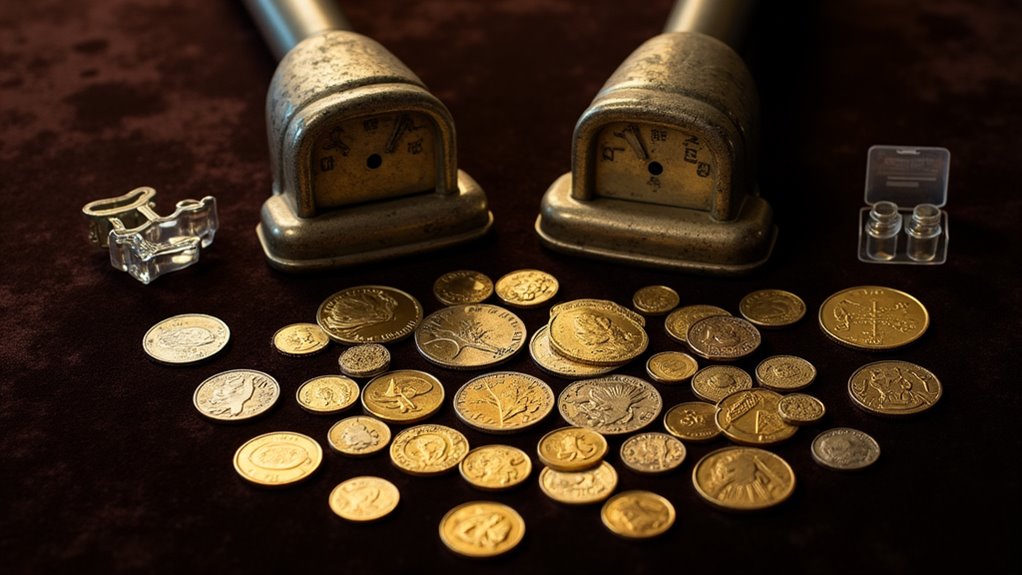
Investment options? Take your pick from the golden buffet – bullion bars, coins that’d make a numismatist weep, ETFs for the digitally inclined, or good ol’ fashioned mining stocks. Platforms like ABC Bullion and Perth Mint make buying and selling easier than ordering takeaway (well, almost). Smart cookies diversify their portfolios with a dash of gold, cause nothing says “I’m prepared” quite like having some precious metals in your back pocket.
The comparison game’s gotten pretty sophisticated too, with platforms offering more filters than your favorite photo app. Whether you’re shopping for cast bars, minted beauties, or historical nuggets, real-time tools keep you informed in both AUD and USD. Perth Mint’s still the big kahuna in this space, but players like ABC Bullion and PAMP aren’t exactly sitting on their hands.
And that’s the tea on Australia’s gold market – a glittering rollercoaster that keeps everyone guessing. Whether you’re a seasoned trader or just someone who likes to watch the numbers dance, one thing’s crystal clear: gold’s not losing its shine anytime soon in the land of Oz. Moreover, Switzerland’s gold market serves as a vital indicator for global trends, influencing prices and demand even in Australia.
Frequently Asked Questions
How Do Australian Gold Dealers Determine Their Buy-Back Rates for Gold?
Australian gold dealers set their buy-back rates primarily based on live market spot prices, adjusting for currency fluctuations and dealer margins.
They factor in the item’s purity, with bullion getting better rates than jewelry. Established brands like Perth Mint snag premium rates, while wear and tear knocks value down.
Dealers typically slice 2-5% off spot price for margins, covering their costs n’ making some profit.
Competition keeps’em honest!
What Security Measures Should I Take When Storing Gold at Home?
Securing gold at home demands serious layered protection.
Smart storage starts with a quality fireproof safe that’s properly bolted down – those lightweight wannabe safes just won’t cut it!
Homeowners should install proper alarm systems, motion sensors, and surveillance cameras while keeping their precious stash location totally hush-hush.
Hidden safes behind false walls or sneaky floor compartments? Now we’re talking!
Just remember – the fewer people who know, the better.
Can I Use Gold as Collateral for Loans in Australia?
Yes, gold can absolutely be used as collateral in Australia.
Pawnbrokers and financial institutions readily accept gold jewelry, bullion, coins, and even fancy watches as security against loans. It’s a quick-cash option that dosn’t require credit checks (oops, meant doesn’t!).
Interest rates tend to be lower than unsecured loans since, y’know, there’s actual gold backing it up.
Just remember to bring ID and proof of ownership – those rules ain’t flexible, mate!
Which Australian Banks Offer Gold Trading Accounts for Investors?
Four major Australian banks offer gold trading accounts, each with their own unique flavor.
ANZ and Westpac lead the pack with dedicated Metals Accounts, letting investors dive right into unallocated gold holdings.
CBA’s playing it cool through CommSec with gold ETFs, while NAB’s keeping things structured with their financial products approach.
Westpac’s particularly intresting (sic) – they’ll even let you get physical with delivery options. Talk about going for gold!
How Does the GST Apply to Different Forms of Gold Investments?
GST treatment varies notably across gold investment types in Australia.
Investment-grade bullion (99.5%+ pure) and qualifying coins traded at bullion value are GST-free.
However, collectible coins, jewelry, and scrap gold attract the full 10% GST.
Mining companies can claim input credits on expenses, while their raw gold sales incur GST.
Refiners must charge GST unless producing investment-grade products.
The key distincter is whether the gold meets strict purity and trading criteria.