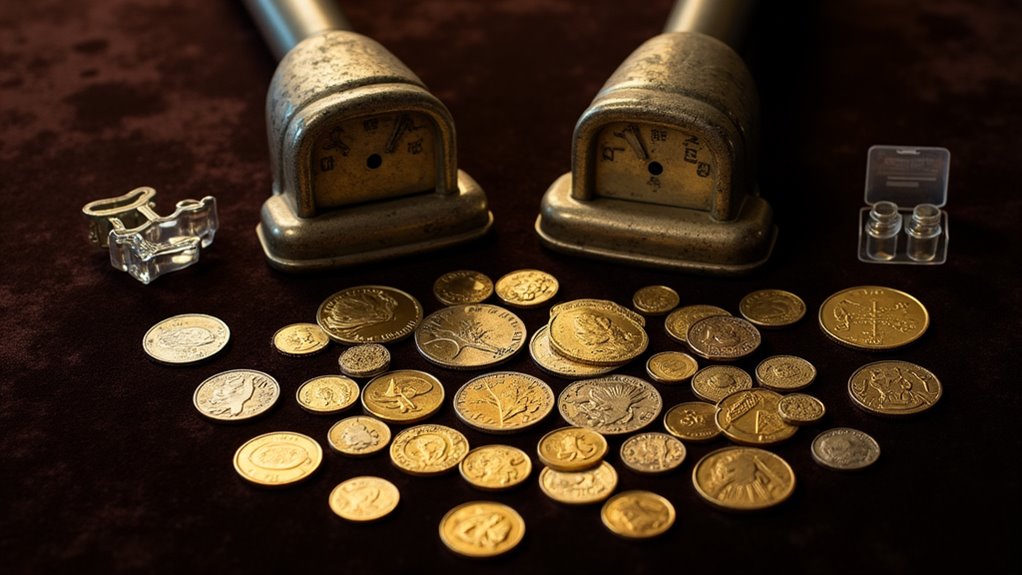
Dubai and Singapore are revolutionizing global gold trading, giving Switzerland’s old-school dominance a run for its money! Dubai’s tax-free DMCC handles a staggering 20-30% of world gold trade, while Singapore’s pristine regulatory environment makes it Asia’s go-to hub. Both cities boast state-of-the-art vaults, robust trading platforms, and tax perks that have traders drooling. With Dubai’s recent BRICS+ entry and Singapore’s refined infrastructure, these powerhouses are just warming up.

While Switzerland may hog the spotlight as Europe’s gold trading paradise, Dubai and Singapore are the real showstoppers redefining how precious metals move across the globe. Dubai’s meteoric rise has positioned it among the world’s leading three gold trading hubs, channeling a staggering 20-30% of global gold trade through its glittering corridors.
Move over Switzerland – Dubai and Singapore are the new gold trading royalty, revolutionizing global precious metals flows with unstoppable momentum.
The Dubai Multi Commodities Centre (DMCC) isn’t just another pretty face – it’s a powerhouse facilitating everything from futures to spot trading, while the iconic Gold Souk continues to dazzle visitors with its labyrinthine alleys of precious metal dealers. Additionally, central banks’ gold reserves play a crucial role in shaping the demand for gold in these markets, serving as a critical tool for monetary policy that enhances market stability.
Singapore, meanwhile, has carved its own niche in the Asian gold scene with a no-nonsense approach to regulation and transparency that’d make even the most stringent compliance officer weep with joy. The Singapore Bullion Market Association (SBMA) keeps things running smoother than a well-polished gold bar, while tax exemptions on investment-grade metals have traders grinning all the way to their vaults. To ensure compliance with local mining regulations, traders must adhere to strict international standards.

Both cities boast infrastructure that’d make Fort Knox jealous. Dubai’s got the largest vault in the MENA region, while Singapore’s Freeport facility looks like something out of a James Bond movie (minus the villains, presumably).
The DMCC Tradeflow system guarantees every gram is accounted for, while Singapore’s robust storage network makes sure your precious metals are safer than a banker’s bonus.
What’s truly fascinating is how these cities leverage their geographic sweet spots. Dubai sits pretty between African mines and Asian buyers, while Singapore plays matchmaker between Europe, Asia, and Australia. It’s like they’re both hosting a never-ending precious metals party, and everyone’s invited – as long as they follow the rules, of course.
Speaking of rules, both hubs have embraced responsible sourcing like it’s going out of style. Dubai’s Federal Gold Policy and Singapore’s ethical sourcing standards guarantee that your gold isn’t just shiny – it’s clean too. Additionally, central bank policies significantly influence gold prices, affecting trading dynamics in these lucrative markets.

The DCCC in Dubai handled gold contracts worth a whopping $4.97 billion in 2023, proving that good behavior and good business go hand in hand.
The tax situation? Well, that’s where these cities really shine. Dubai’s tax-free environment has traders doing backflips of joy, while Singapore’s GST exemption on investment-grade gold has made it the darling of Asian investors.
Add in Dubai’s recent entry into BRICS+ and Singapore’s tight-knit relationships with global refiners, and you’ve got a recipe for success that’d make any competing market green with envy.
Both cities have managed to turn their gold markets into well-oiled machines, complete with exceptional logistics partners, cutting-edge trading platforms, and enough security to make a paranoid person feel at ease.

In the grand theater of global gold trading, Dubai and Singapore aren’t just players – they’re stealing the show.
Frequently Asked Questions
What Are the Minimum Capital Requirements to Start Gold Trading in Dubai?
While Dubai has no fixed minimum capital requirement for gold trading, the reality hits different in free zones.
There, traders need to cough up at least AED 150,000 just to get started – and that’s before the fun stuff like rent and fees!
Monthly operations can drain AED 20k-50k, depending on how big you’re dreaming.

Smart money keeps six months of expenses stashed away.
Licensing? That’ll set you back another AED 20k-30k.
Welcome to the glittering game!
How Do Gold Trading Tax Regulations Differ Between Dubai and Singapore?
Dubai and Singapore take distinctly different approaches to gold taxation.
Dubai’s VAT exemption (5%) targets investment-grade gold in B2B transactions through reverse charge mechanisms, while Singapore’s GST exemption (8%) focuses on qualifying precious metals as financial instruments.

Dubai’s broader exemptions align with its position as a trading hub, whereas Singapore maintains stricter documentation requirements and narrower exemptions tied to financial asset classification.
Both jurisdictions penalize non-compliance heavily.
Can Foreign Investors Obtain Gold Trading Licenses in Both Markets?
Foreign investors can absolutely engage in both markets with relative ease.
Dubai’s setup is particularly sweet through Free Zones like DMCC, offering 100% foreign ownership and zero tax headaches.

Singapore’s equally welcoming, letting international players grab licenses through ACRA without ownership restrictions.
Both jurisdictions demand proper documentation and regulatory compliance, but they’ve got the process down to a science – though Dubai’s paperwork can be a bit more intricate than Singapore’s streamlined approach.
What Are the Storage and Security Requirements for Physical Gold Traders?
Physical gold traders face rigorous storage demands that’d make Fort Knox blush.
High-security vaults require 24/7 surveillance, temperature controls, and multi-layer access systems – think biometric scanners and fancy key codes.
But wait, there’s more! They’ve gotta maintain proper insurance coverage, conduct regular audits, and implement those pesky dual-control systems.
And don’t forget cybersecurity – because apparently, digital threats are now everyone’s problem, even in physical gold storage!
How Do Seasonal Gold Price Fluctuations Compare Between Dubai and Singapore Markets?
Dubai’s gold prices dance to the rhythm of tourism and religious festivals, peaking during summer shopping extravaganzas and Ramadan celebrations.
Meanwhile, Singapore’s market grooves to a different beat, with Chinese New Year driving major price swings.
Dubai’s tax-friendly environment keeps prices lower, while Singapore’s stability keeps things predictable.
Both markets catch global gold fever, but Dubai’s more prone to dramatic mood swings thanks to regional politics and tourism patterns.