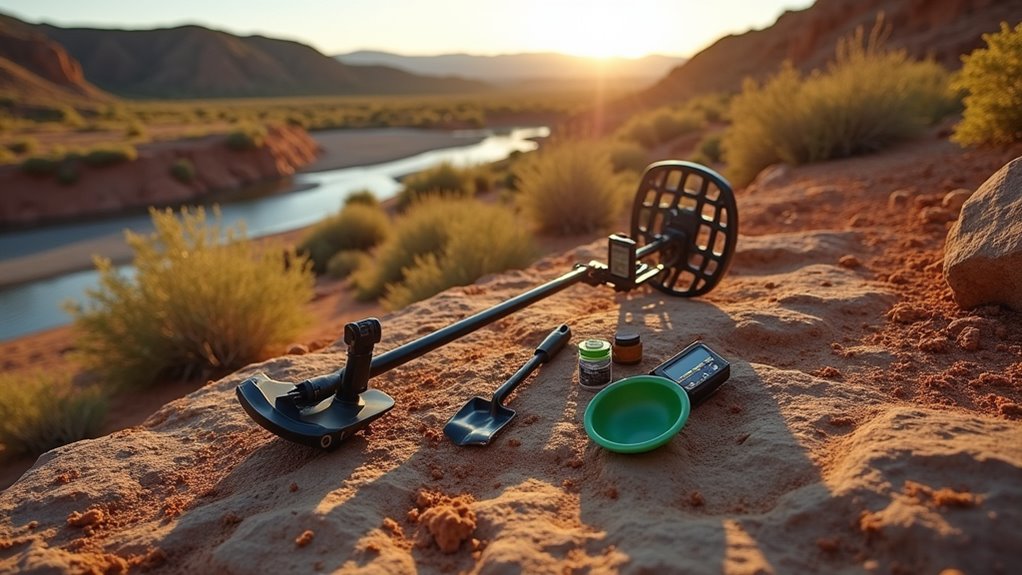
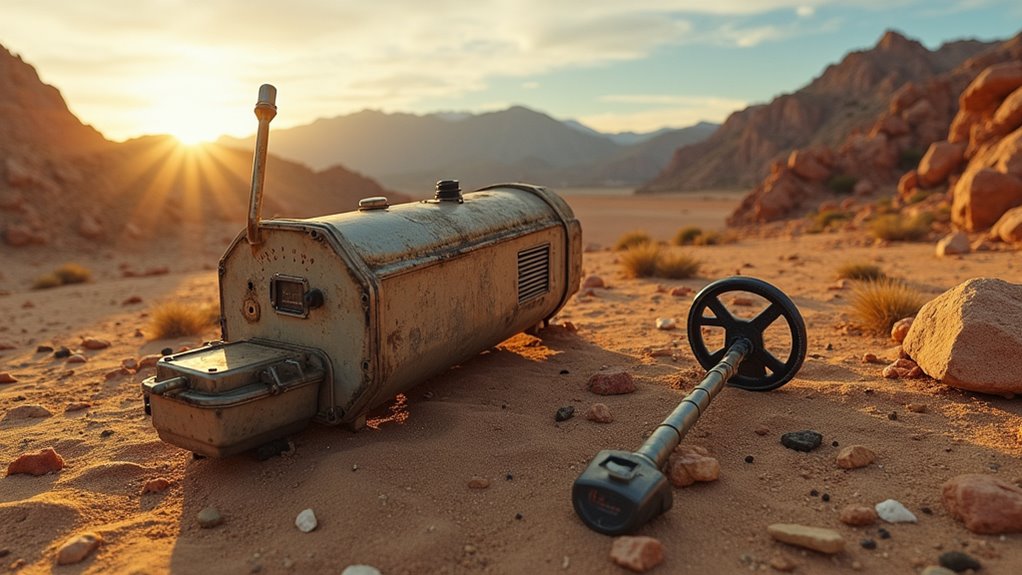
Essential dry panning gear starts with a rugged 14-inch gold pan and classifier with 1/2-inch holes – no water required! Modern prospectors pack GPS devices, metal detectors, and smartphone apps to level-up their treasure hunt game. Safety gear like dust masks and goggles is non-negotiable when working those dusty deposits. The real pros bring dry washers that process up to 50 tons per hour. This off-grid gold hunting setup’s just the beginning of your prospecting journey.

The unforgiving desert sun beats down on prospectors who’ve ditched traditional water-based methods for the gritty art of dry gold panning. Gone are the days when gold hunters needed flowing streams and rivers – modern equipment has revolutionized how fortune seekers can chase their dreams in arid environments, and the gear list is evolving faster than a desert mirage.
At the heart of any dry panning operation sits the essential kit: a sturdy gold pan (plastic with riffles or metal), a classifier sporting 1/2-inch holes, and a trusty shovel that’s seen better days. The ideal 14-inch gold pan remains a prospector’s most reliable companion. While starter kits provide everything needed to begin prospecting for under $100, seasoned hunters often expand their arsenal. But here’s where it gets interesting – the real pros are packing dry washers capable of processing anywhere from 2 to 50 tons per hour, depending on how serious (or obsessed) they’ve become with their golden pursuits. In regions like Africa, where gold mining opportunities are abundant, the competition can be fierce, making the right equipment essential. Interestingly, the choice between open pit and underground mining methods can influence the types of equipment used in gold extraction. Innovations like automation in mining technology are also paving the way for more efficient exploration and extraction techniques, making advanced kits increasingly popular among weekend miners.
Protection isn’t just for the paranoid – it’s vital when you’re kicking up dust that could contain who-knows-what. A proper dust mask, safety goggles, and gloves aren’t optional extras; they’re survival gear. Exposure to toxic chemicals in the dust can pose risks, making protective gear essential for health and safety.

And speaking of survival, smart prospectors pack water filtration systems and high-energy snacks because, let’s face it, gold fever doesn’t care about lunch breaks.
The tech revolution hasn’t bypassed the prospecting world either. GPS devices, smartphone apps loaded with claim information, and even metal detectors have transformed the once-primitive pursuit into a data-driven treasure hunt. Modern prospectors are armed with topographic maps and geological guides that would make old-timers’ heads spin faster than a Desert Fox spiral wheel.
Today’s tech-savvy prospectors wield GPS, apps, and metal detectors, turning old-school treasure hunting into a sophisticated digital pursuit.
Material processing has evolved beyond the simple pan-and-pray approach. Today’s dry prospector carries an arsenal including 5-gallon buckets, tarps for sorting, and specialized equipment like the Gold Cube for recovering those frustratingly fine particles that used to slip away.
Portable sluice boxes modified for minimal water use have become game-changers in areas where H2O is scarcer than common sense at a gold rush.

The advanced gear separates the weekend warriors from the serious prospectors. Highbankers convertible to dry washing setups, snuffer bottles for collecting fine gold, and tweezers precise enough to pick up the smallest flakes have become standard issue.
Even simple tools like magnets for separating black sand show how far the industry has come from its rudimentary beginnings.
Success in dry panning demands more than just the right equipment – it requires a delicate balance of patience, knowledge, and just enough crazy to keep going when rational folks would’ve packed it in hours ago.
But with the proper gear and a dash of desert determination, modern prospectors are proving that water isn’t always necessary to strike it rich in the golden game of chance.
Frequently Asked Questions
How Long Does It Take to Learn Dry Gold Panning Techniques?
Basic dry panning techniques take 1-2 hours to grasp, but mastery’s a whole different beast.
Most newbies nail the fundamentals within 2-3 weeks, while reaching expert status demands 1-2 years of consistent practice.

Prior wet panning experience can slash learning time by half!
Mentorship’s a game-changer too, cutting the learning curve by up to 60%.
Regular practice (3-4 times weekly) is essential for developing those ninja-level skills.
What Safety Precautions Should I Take When Dry Panning in Remote Areas?
Remote dry panning demands serious safety smarts!
Prospectors should inform someone of their location and ETA, pack a reliable sat phone or emergency beacon, and bring double the water they think they’ll need.
That first aid kit? Non-negotiable.
Watch for wildlife, unstable terrain, and sudden weather shifts.
Pro tip: buddy system‘s essential – solo prospecting’s asking for trouble.
And don’t forget basic survival gear – compass, firestarter, emergency shelter.

Nature ain’t playin’ around!
Can I Dry Pan for Gold During Winter Months?
Winter dry panning is totally doable – just gotta watch those temps! The sweet spot is above 25°F, when the ground ain’t frozen solid yet.
Bonus: low water levels reveal prime spots normally underwater. Sunny days over 40°F are gold-hunter’s paradise.
Smart prospectors pack insulated boots, neoprene waders, and thick gloves. Pro tip: hit the site later in the day when sun’s warmed things up.

Just keep those sessions short n’ sweet to avoid freezin’ your nuggets off!
How Do I Identify Gold-Rich Areas Suitable for Dry Panning?
Gold-rich areas often reveal themselves through nature’s telltale signs. Look for quartz outcrops, reddish soil, and black sand deposits – these’re classic indicators.
Ancient riverbeds and dry creek beds in desert regions trap gold particles over centuries. Inside bends of streams? Gold magnet spots.
Don’t ignore those old mine sites either – our prospecting ancestors weren’t stupid!
Best spots combine multiple indicators, like fault zones meeting creek beds or quartz veins intersecting drywashes.
What Is the Average Success Rate for Finding Gold Through Dry Panning?
Dry panning success rates hover around 40-50% overall, though results vary wildly.
Coarse gold particles? You’re looking at a sweet 80% recovery rate.
But those fine gold specks? Good luck hitting 20%.
Experience matters – seasoned prospectors consistently outperform newbies.
The real kicker? Material moisture content better be under 3%, or you’re just wastin’ time.
Recovery rates tank compared to wet methods, but hey – sometimes dry’s your only option!