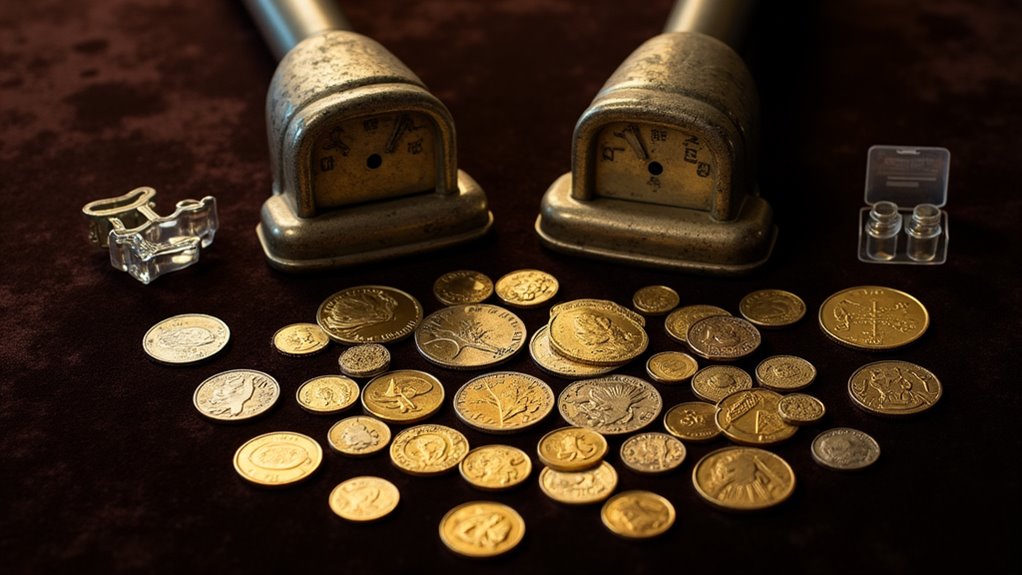
Gold’s status as the ultimate financial security blanket isn’t just ancient history – it’s alive and kicking. The yellow metal has outlasted empires, survived market meltdowns, and kept central banks hoarding like dragons. Its unique ability to preserve wealth during economic chaos makes it the go-to safe haven when markets go bonkers. While not a get-rich-quick scheme, gold’s real superpower lies in its stubborn refusal to lose relevance. There’s more to this glittering story than meets the eye.

In the domain of financial fortitude, gold stands as humanity’s eternal security blanket – a glittering constant that’s outlasted empires, survived market meltdowns, and thumbed its nose at inflation‘s ugly face. Through centuries of economic turmoil, this precious metal has proven itself as more than just a pretty face in a jeweler’s window; it’s emerged as an unshakeable pillar of financial security that refuses to bow to the whims of fiat currencies or market volatility.
Let’s get real – when inflation starts breathing down investors’ necks, gold typically struts its stuff. The yellow metal’s got this uncanny knack for preserving purchasing power while paper assets crumble like yesterday’s newspaper. Central banks aren’t stupid; they’ve been hoarding gold like squirrels before winter, and there’s a darn good reason for that (oops, typo intended). During times of crisis, governments often turn to gold reserves as a means to stabilize their economies, as the metal’s historical performance shows a strong correlation with economic events that threaten stability. Furthermore, central banks utilize gold as a monetary policy tool to bolster confidence in their currencies, demonstrating its integral role in economic stability.
When the economic ship starts sinking, gold becomes everyone’s favorite life raft, keeping wealth afloat while paper promises drown.
What makes gold such a rockstar in the investment world? Its low correlation with traditional assets is pure magic. While stocks and bonds throw temper tantrums during market meltdowns, gold often stands tall, doing its own thing. It’s like that cool kid at school who doesn’t follow the crowd – except this cool kid actually helps protect your wealth when everything else goes sideways.

The beauty of gold lies in its stubborn refusal to play by modern financial rules. Unlike stocks or bonds, it doesn’t depend on someone else’s promise to pay. It’s tangible, finite, and gloriously independent of government shenanigans. When currencies start their death spiral, gold typically soars, proving itself as the ultimate middle finger to monetary mismanagement.
Global recognition? Gold’s got it in spades. From Mumbai to Manhattan, Beijing to Berlin, this shiny metal speaks a universal language of value. Emerging markets can’t get enough of it, and developed economies treat it like their favorite security blanket. The demand persists across sectors – jewelry, technology, investment – creating a robust foundation for its continued relevance.
Perhaps most compelling is gold’s role as the ultimate safe haven during times of crisis. When geopolitical tensions flare up or economic storm clouds gather, investors flock to gold like moths to a flame. Its liquidity means you can convert it to cash faster than you can say “market crash,” while its intrinsic value provides that warm, fuzzy feeling of financial security that just won’t quit. Gold serves as a hedge against economic uncertainty, ensuring that its value remains reliable even in turbulent times.
In a world where financial instruments come and go faster than fashion trends, gold remains fashionably consistent. It’s not just an investment – it’s insurance against human folly, a shield against currency depreciation, and a time-tested guardian of wealth. Sure, it might not make you rich overnight, but it’ll help guarantee you stay wealthy through the kind of economic hurricanes that leave other assets in tatters.
Frequently Asked Questions
How Do I Verify the Authenticity of Gold Before Making an Investment?
Verifying gold’s authenticity isn’t rocket science – but it’s close!
Smart investors layer multiple testing methods. Start with the trusty magnet test (because seriously, real gold laughs at magnets).

Follow up with acid testing if you’re feeling brave, or go high-tech with XRF spectrometry for the ultimate truth bomb.
Weight and measurements matter too – genuine gold hits specific density targets.
When in doubt, professional appraisals are worth every penny.
What Role Does Gold Play During Periods of Cryptocurrency Market Volatility?
During crypto market turbulence, gold emerges as the steady-handed veteran, typically showing remarkable stability while digital currencies ride their rollercoaster.
The precious metal’s proven track record makes it a go-to safe haven when crypto markets get jittery. Historical data shows that as Bitcoin and other cryptocurrencies stumble, gold often maintains its composure or even gains value, attracting investors seeking shelter from digital asset volatility.

It’s like the adult in the room during crypto’s wild parties.
Are Gold ETFS as Secure as Physical Gold Ownership?
Gold ETFs just can’t match the rock-solid security of physical gold ownership – that’s the cold, hard truth.
Sure, ETFs offer convenient trading, but they’re tangled up in a web of financial institutions and counterparty risks.
Physical gold? It’s sitting pretty in your vault, immune to market meltdowns and broker bankruptcies.

When everything else goes sideways, those shiny bars aren’t gonna vanish into thin air like some digital asset might!
How Does Gold Perform Compared to Real Estate as a Long-Term Investment?
Gold and real estate each bring distinct advantages to the investment table.
While real estate offers rental income and tax perks, its performance fluctuates wildly based on location and market cycles.
Gold’s steady 8% annual return might not match real estate’s occasional home runs, but it’s deliciously liquid and drama-free.

No tenant headaches or broken toilets at 3am!
Both assets have proven their worth over decades, though gold’s portability gives it that extra sparkle.
What Percentage of My Portfolio Should Be Allocated to Gold Investments?
Most experts land between 5-15% for gold allocation, though some heavy hitters push those boundaries!
Ray Dalio’s crew suggests a conservative 7.5%, while Harry Browne’s gang goes big with 25%.

Historical data shows that sweet spot around 10-15% – enough to catch those diversification perks without going overboard.
But hey, some research even suggests up to 34% could work (crazy talk?).
The key? Balance those shiny dreams with cold, hard reality.