
A gold mining sieve separates precious metals from sediment using specific mesh sizes – typically 1/2 inch down to 1/8 inch for finer particles. Prospectors should position the sieve near water, fill it 2/3 full with material, and use circular motions while partially submerged. Breaking up dirt clumps beforehand increases effectiveness, while removing larger rocks prevents clogging. Black sand often signals nearby deposits, and proper technique distinguishes serious miners from weekend warriors. There’s more to this golden skill than meets the eye.

Sifting through river sediment for golden treasures isn’t just about luck – it’s about mastering the right tools and technique. The gold mining sieve, a deceptively simple tool, separates prospectors who know their stuff from those just splashing around in streams. Mesh size is the game-changer here – rookies often grab whatever’s available, but pros know that progression matters: 1/2 inch for the chunky stuff, down to 1/8 inch for those elusive golden flakes. This method evolved from ancient panning techniques that were used thousands of years ago to collect gold from streams and rivers. Additionally, modern tools like gold pans and metal detectors can enhance your prospecting experience. In 2025, knowing the best regions for gold prospecting can also significantly increase your chances of a successful outing. The right tools and techniques can make all the difference in your success as a prospector. Open pit and underground mining techniques can inform your understanding of how gold is extracted on a larger scale. Using a mini gold concentrator can also improve your fine gold recovery rates when processing larger quantities of material.
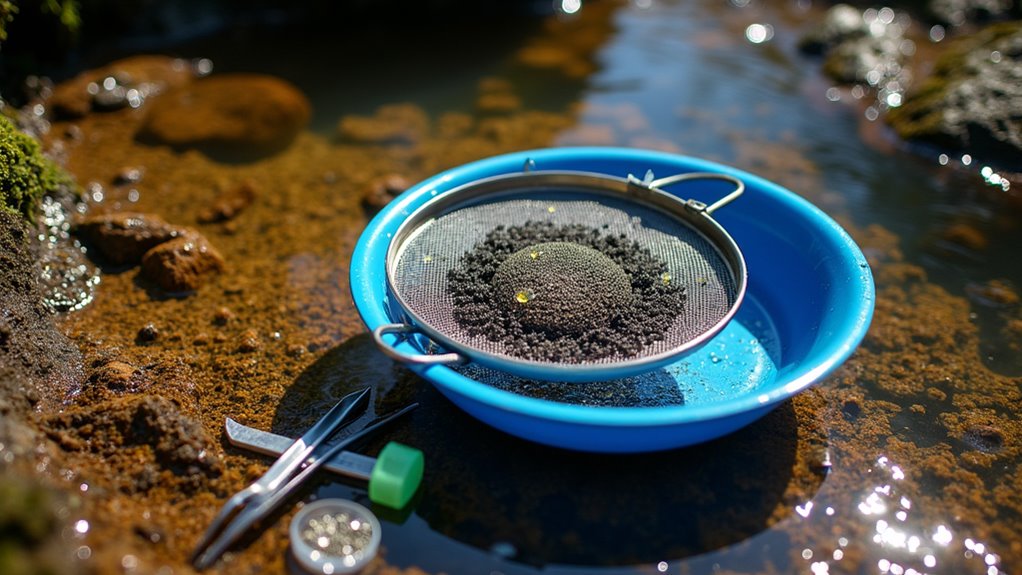
Setting up your workspace isn’t rocket science, but mess it up and you’ll be cursing at the creek all day. Find a stable spot near water (duh), and position your sieve over a gold pan or bucket. The key is creating an efficient workflow – yeah, we meant to spell it that way, because sometimes even seasoned prospectors get too excited to spell check. Keep your tools within arm’s reach, because nothing kills the buzz like constantly hunting for your tweezers. Prospectors should always carry a first aid kit while working in remote locations.
Loading the sieve is where amateurs blow it. Don’t get greedy – fill it about 2/3 full, or you’ll end up with a mess worthy of a YouTube fail compilation. Break up those dirt clumps before they hit the sieve, and for heaven’s sake, pull out the obvious rocks. A bit of water helps the whole process, but don’t drown it – we’re not making mud pies here.

The sieving technique itself? It’s basically a dance with your material. Submerge that bad boy partially in water and work it like you’re panning for your life. Circular motions, side-to-side action, and the occasional tap on the sides – it’s all part of the choreography. Keep at it until the water runs clear, or until your arms feel like they’re gonna fall off (whichever comes first).
Shake, swirl, and tap that sieve in the water – it’s a prospector’s dance moves that separate the gold from the gravel.
Here’s where it gets real: examining what’s left in your sieve. You’re looking for anything that sparkles and shines – gold comes in various hues, from classic yellow to sneaky reddish tints. Black sand is your friend; where there’s black sand, there’s often gold. Use those tweezers like a surgeon removing treasure.
Classification is essential for serious prospectors. Stack those sieves in descending order – biggest holes on top, smallest on bottom – and let gravity do its thing. Each layer catches different size material, and smart prospectors keep it all organized in labeled containers. Because nothing’s worse than mixing up your concentrates after a long day of sieving.
Maintenance matters – treat your sieve right, and it’ll treat you right. Clean it after every use, check for wear and tear, and store it somewhere dry. Nobody wants a rusty sieve ruining their next big strike. And always, ALWAYS pack spare parts – Murphy’s Law loves to strike when you’re miles from civilization.
Frequently Asked Questions
How Long Does a Typical Gold Mining Sieve Last Before Needing Replacement?
A typical gold mining sieve’s lifespan varies dramatically based on usage intensity and care.
Most last 1-3 years with regular prospecting, though heavy-duty models can survive 5+ years of abuse.

Budget sieves? Lucky to make it past 6 months!
The real kicker – proper maintenance can double these lifespans.
Pro tip: those fancy custom-made beauties sometimes push 7 years, but they’ll cost ya.
Just watch for holes n’ warping – dead giveaways it’s replacement time.
Can Gold Mining Sieves Be Used Effectively in Saltwater Conditions?

Gold sieves can function in saltwater, but it’s a tricky business that demands specific modifications.
Stainless steel mesh and plastic-framed models handle the corrosive conditions best, though they’ll still need regular freshwater rinses.
The real kicker? Some prospectors swear by specialized coatings and sacrificial anodes to extend equipment life.
While effective for beach placer deposits, saltwater use requires more frequent maintenance and careful attention to prevent salt buildup on mesh surfaces.
What Is the Smallest Size of Gold Particles a Sieve Can Catch?
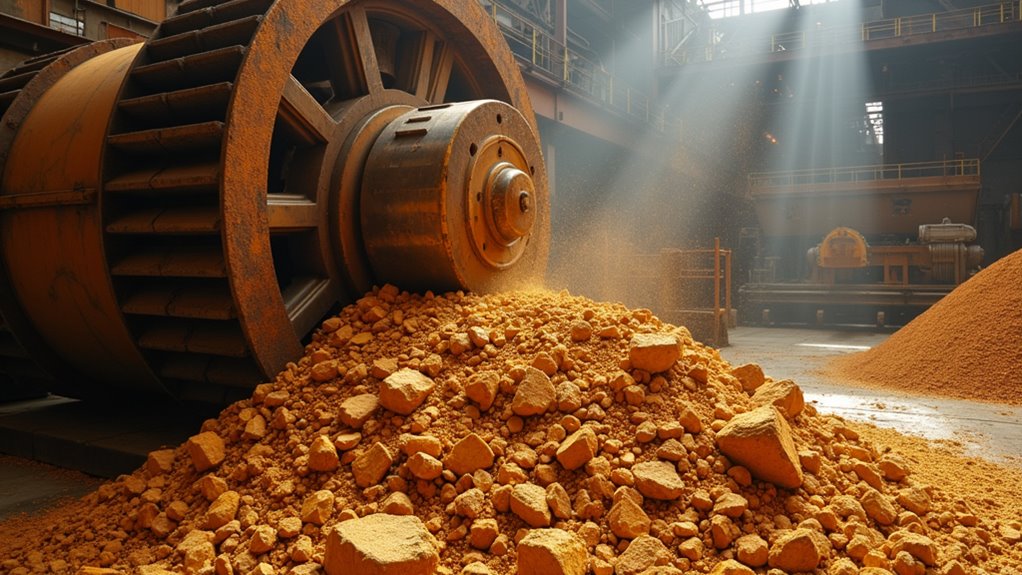
Standard mining sieves can catch gold particles down to 44 microns (-325 mesh), but that’s hardly the whole story.
Real-world recovery gets trickier with particles under 75 microns – we’re talking dust-like specs here!
While specialized equipment like vortex concentrators might snag even finer particles, conventional sieves struggle below that threshold.
Truth bomb: Most prospectors won’t realistically catch anything smaller than 74 microns with typical sieve setups.
Are There Specific Regulations for Using Gold Mining Sieves in Public Areas?

Sieve use on public lands is regulated by multiple agencies – BLM and Forest Service rules apply on federal turf, while state regs vary wildly.
Most areas allow basic hand sieves without permits, but there’s a catch: size restrictions kick in for larger equipment.
Some spots demand Notice of Intent filings, especially if you’re planning any serious dirt-moving.
Local ordinances can slam the breaks on certain sieve types, particularly in enviro-sensitive zones.
How Much Does a Professional-Grade Gold Mining Sieve Typically Cost?

Professional-grade gold mining sieves range from $7.95 to a whopping $89.00 for individual units.
The real heavy hitters like Garrett and Minelab dominate the market’s upper end, while stackable classifier sets can hit $147.99.
Holy mesh, right?! Price tags swing wildly based on size (12-15 inches cost more), material quality (stainless steel ain’t cheap), and mesh refinement.
Budget-conscious prospectors can snag basic plastic sieves starting at $3.39, but ya get what ya pay for!