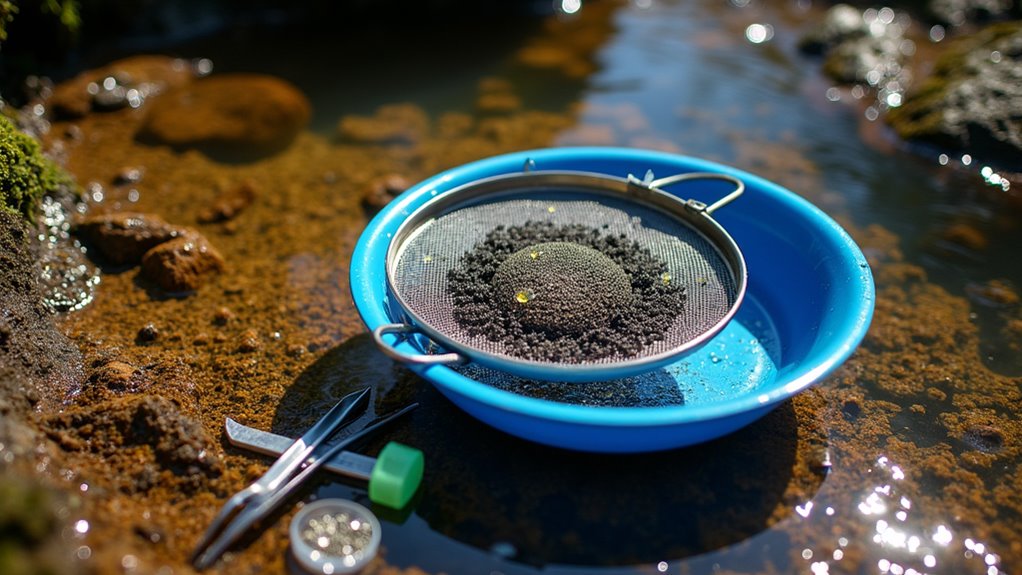
Essential gold hunting gear starts with a quality 14-inch gold pan (blue or green for visibility) and built-in riffles to trap those elusive flakes. Snag a classifier to separate rocks, plus a snuffer bottle and tweezers for nabbing tiny treasures. Don’t forget rubber boots and gloves – wet feet and scraped hands aren’t fun! A basic GPAA Mini Starter Kit at $8.95 gets newbies going without breaking the bank. The real gold rush begins when you’re properly equipped.

While seasoned prospectors might scoff at basic equipment, every gold hunter starts somewhere – and that somewhere usually involves a carefully curated kit of essential tools. At the heart of any beginner’s arsenal lies the humble gold pan, with 14-inch models in eye-catching green or blue serving as the go-to choice. The contrast these colors provide against those precious yellow flakes is nothing short of brilliant, while those built-in riffles trap the good stuff like nobody’s business. The GPAA Mini Starter Kit offers everything a novice needs to begin their prospecting journey for just $8.95.
But let’s get real – nobody wants to spend hours sifting through rocks the size of their fist. That’s where classifiers come in, those mesh-covered lifesavers that separate the wheat from the chaff. A 1/4 inch classifier slapped onto a 5-gallon bucket (Keene’s got some sweet ones) turns an amateur operation into something approaching efficiency. Starting with basic tools is recommended to avoid overspending while learning the ropes. These essential tools serve as a stepping stone for beginners looking to explore the world of gold prospecting, and investing in gold pans early on can significantly enhance your chances of success. Additionally, different types of gold pans can be found to suit various preferences and panning techniques. Understanding how to use a gold trommel can further streamline your gold recovery process as you gain experience, particularly when advanced kits are introduced to enhance efficiency.
And speaking of heavy lifting, don’t forget the muscle of the operation – a solid #2 spade and pickaxe combo. Fiskars makes ’em tough, though they’ll make your pack feel like it’s filled with bricks.

The real magic happens in the details, though. Ever tried picking up microscopic gold flakes with your fingers? Yeah, good luck with that. Enter the snuffer bottle – Garrett’s Gold Guzzler being the rockstar here – sucking up those tiny treasures like a gold-hungry vacuum. Pair that with some precision tweezers for the bigger finds, and suddenly you’re handling your discoveries like a pro instead of fumbling around like a rookie.
For those ready to step up their game, a sluice box transforms the hunting experience from a leisurely weekend hobby into a serious pursuit. The Keene A52 Hand Sluice has earned its stripes as the beginners’ champion, processing material faster than a pan while letting gravity and water flow do the heavy lifting. These bad boys literally separate the gold from everything else, and the folding versions mean you won’t need a pack mule to get to your favorite spot.
Safety might not be sexy, but it’s what keeps you in the game. Rubber boots keep your feet dry while you’re splashing around in frigid streams, and a good pair of gloves saves your hands from looking like you’ve been arm-wrestling with cacti.
Throw in a sun hat that’d make an outback ranger jealous and a first aid kit for when things go sideways – because they will – and you’ve got yourself a setup that’ll make even the crusty old-timers nod in approval. Just remember to pack enough buckets; there’s nothing worse than striking a promising spot and having nowhere to stash your classified material.
Frequently Asked Questions
How Do I Identify Fake Gold From Real Gold While Prospecting?
Prospectors can spot fake gold using several reliable methods.

The classic float test (real gold sinks like a brick) and magnet test (gold tells magnets to buzz off) are go-to techniques.
Acid testing? Brutal but effective – real gold laughs at nitric acid while fakes dissolve in tears.
For quick field checks, that ceramic streak test works wonders – authentic gold leaves a golden line, not some pathetic black smudge.
When in doubt, XRF analyzers don’t lie.
What Are the Best Seasons and Weather Conditions for Gold Hunting?
Spring and fall reign supreme for gold hunting!

Springtime snowmelt reveals fresh deposits, while fall’s perfect temps and reduced water flow make for primo prospecting.
Summer’s low water levels? Gold hunter’s dream – riverbeds practically scream “dig here!”
Even winter’s got potential if you’re tough enough.
Pro tip: Hit the spots after heavy rains (floods uncover hidden treasures) or during droughts when normally submerged areas become accessible.

Just avoid those nasty storms – gold’s not worth riskin’ your neck for!
Do I Need Special Permits or Licenses to Hunt for Gold?
Special permits for gold hunting? You betcha!
The red tape varies wildly depending on location. Federal lands usually demand BLM permits – no escape there! Most states want their cut too, requiring prospecting licenses that’ll set you back $20-100 annually.
Here’s the kicker: recreational panning sometimes gets a free pass, but break out machinery like dredges? That’s when permit requirements go bonkers!

Smart move: check local regs before swinging that first pan.
How Deep Should I Dig When Searching for Gold Deposits?
For recreational gold hunting, initial digging depths of 2-3 feet typically suffice.
Serious prospectors might venture 6-10 feet, but that’s where things get tricky! Most surface gold sits in the first few layers of soil or creek beds – nature’s done half the work already.
Deeper digging (beyond 15 feet) usually requires permits and heavy equipment.

Pro tip: If you’re hitting bedrock or clay layers, you’ve probably gone deep enuff!
What Are the Most Common Mistakes Beginner Gold Hunters Make?
Rookie gold hunters often stumble into a minefield of costly mistakes!
They’ll rush in without studying geological maps, skip proper research on equipment, and expect instant riches (LOL).
The biggest blunders? Haphazard sampling, ignoring those subtle detector signals, and giving up way too fast.
Plus, they’re notorious for not digging deep enough or properly cleaning bedrock.
Many newcomers also waste cash on fancy gear before mastering basic panning techniques.