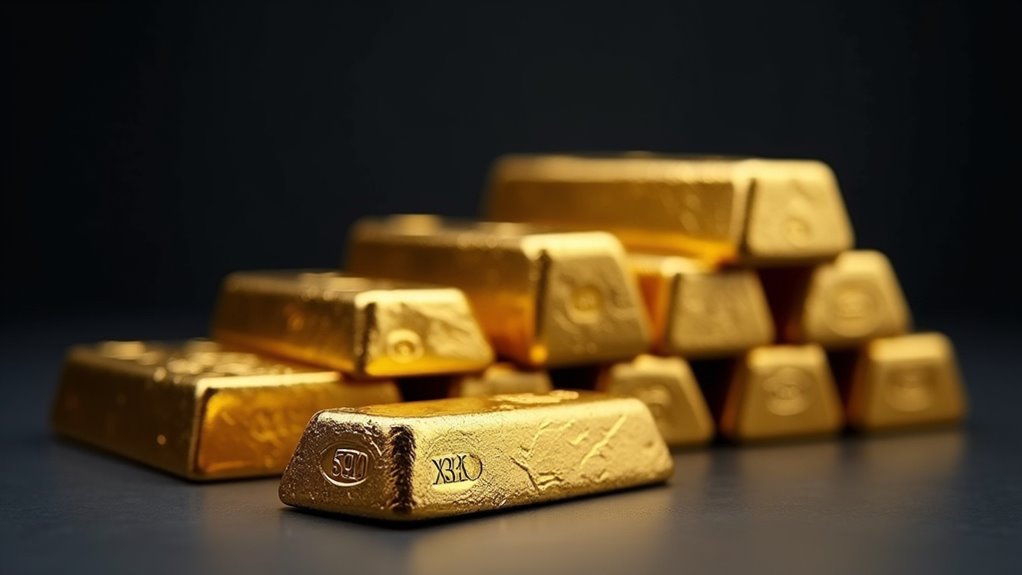
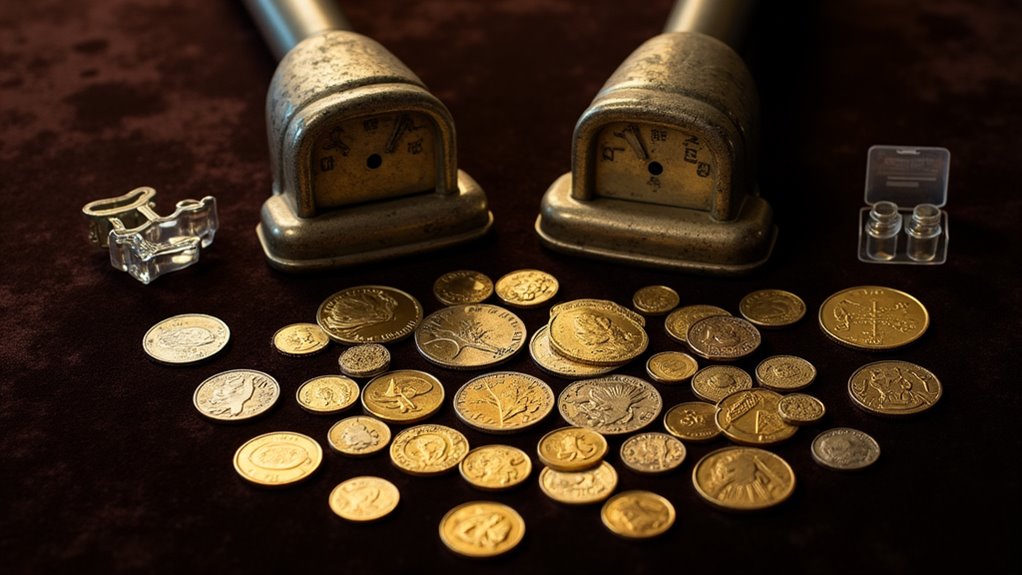
The gold-silver ratio has been on a wild ride since ancient times. Originally stable at 12:1 in the Roman Empire and 15:1 under the 1792 U.S. Coinage Act, modern markets have blown these historical norms to bits. The ratio exploded to 98:1 after Roosevelt’s 1934 gold fix and hit an insane 123:1 during COVID-19. Despite silver being only 17.5 times rarer than gold, today’s 91.6:1 ratio suggests something’s seriously wrong with this picture. The truth behind these numbers might shock you.

While precious metals have been humanity’s go-to store of value since ancient times, the relationship between gold and silver prices tells a story that’d make even the most stoic investor raise an eyebrow. For centuries, the gold-silver ratio maintained a remarkably stable range of 6-12:1, with the Roman Empire setting it at 12:1 and the U.S. Coinage Act of 1792 pegging it at 15:1.
But boy, did things get wild in the modern era. The 20th century threw that historical stability right out the window, with the ratio averaging a whopping 47:1. When Roosevelt fixed gold at $35/oz in 1934, the ratio shot up to 98:1, making those ancient Roman numbers look like child’s play. Fort Knox vault was established during this period to protect America’s massive gold reserves, while the gold-silver price ratio became a crucial indicator for investors.
Then came the 1980s, when silver bugs had their moment in the sun – the ratio plummetted to 17:1 during a legendary price spike that had gold investors clutching their pearls. Fast forward to our current mess, and things have gotten even more bonkers. The COVID-19 pandemic sent the ratio to an all-time high of 123:1 in 2020, proving that even precious metals aren’t immune to global chaos. Many investors took advantage of this extreme by implementing ratio trading strategies to profit from the unprecedented spread.

As of 2025, we’re sitting at 91.6:1, which has some analysts screaming that silver’s criminally undervalued. But lets be real – they’ve been saying that for decades. Here’s where it gets interesting: Mother Nature herself seems to have an opinion on the matter.
The U.S. Geological Survey estimates there’s about 17.5 times more silver than gold in Earth’s crust, which makes that ancient 16:1 monetary ratio look suspiciously spot-on. Yet above-ground supplies tell a different story, thanks to silver getting consumed in industrial applications while gold just sits pretty in vaults.
The modern ratio’s wild swings aren’t just random market tantrums. Economic uncertainty sends investors running to these shiny safe havens, but silver’s dual personality as both precious and industrial metal adds another layer of complexity. Throw in currency fluctuations, monetary policy shenanigans, and speculative trading, and you’ve got yourself a perfect storm of price ratio volatility.
Looking ahead, some experts are betting on a return to that historical 16:1 ratio, but don’t hold your breath. The ratio’s been playing ping-pong between 14:1 and 100:1 since 1687, and there’s no reason to think it’ll suddenly start behaving itself now.

With technological advances driving industrial silver demand and global economic uncertainty showing no signs of letting up, this rocky relationship between gold and silver prices isn’t likely to stabilize anytime soon. Whether that spells opportunity or chaos probably depends on which metal you’re holding.
Frequently Asked Questions
How Do Economic Recessions Affect the Gold-To-Silver Ratio?
Economic recessions send the gold-to-silver ratio soaring like clockwork.
When markets tank, gold’s safe-haven status keeps it relatively stable, while silver takes a brutal beating.
Industrial demand for silver crashes during downturns – no surprise since half its use is industrial.

The numbers don’t lie: during the 2020 pandemic, the ratio shot from 85 to a mind-blowing 112.
Same story in 2008 when it hit 80+.
Can Trading the Gold-Silver Ratio Be Profitable in Modern Markets?
Trading the gold-silver ratio can definitely be profitable, but it ain’t for the faint-hearted.
Smart traders make bank by going long on silver when the ratio’s sky-high (like during the crazy 125:1 spike in 2020) and flipping to gold when it drops.

ETFs make it easier than ever to play this game.
But here’s the kicker – you need patience, sharp timing, and nerves of steel.
Success rates vary wildly, just like the ratio itself.
What Causes Sudden Spikes in the Gold-To-Silver Ratio?
Sudden spikes in the gold-silver ratio typically hit when all hell breaks loose.

Economic meltdowns send investors scrambling for gold’s safety while ditching silver faster than a hot potato.
Look at COVID-19’s chaos – ratio shot past 120:1!
Wars and political drama do it too – Gulf War pushed it to 100:1.
When central banks get trigger-happy with money printing, gold usually wins.
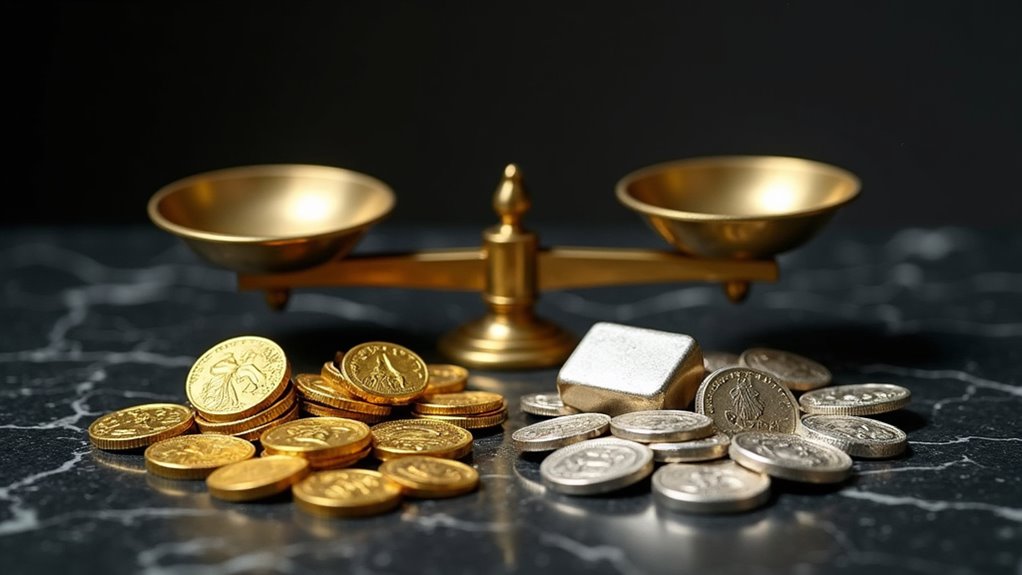
Industrial slowdowns crush silver demand, while gold keeps its cool.
Why Doesn’t the Ratio Stay Constant Despite Both Being Precious Metals?
The ratio fluctuates because gold and silver dance to different beats.
Gold’s primarily a safe-haven asset – when markets tank, people run to it like scared kids to their blankets.
Silver? It’s got a split personality – half precious metal, half industrial workhorse.
While gold sits pretty in vaults, silver’s getting its hands dirty in solar panels and smartphones.
Different uses = different market forces = constantly shifting ratio.
Simple as that.
How Do Industrial Uses of Silver Impact the Gold-Silver Ratio?
Industrial demand for silver throws the gold-silver ratio completely out of whack.
While gold sits pretty in vaults, silver’s getting its hands dirty in everything from solar panels to smartphones.
Over 50% of silver goes straight to industry – that’s huge!
When factories are humming, silver prices surge, shrinking the ratio.
But when manufacturing tanks, silver takes a nosedive while gold stays relatively stable.
It’s like comparing a workhouse to a trust fund baby.