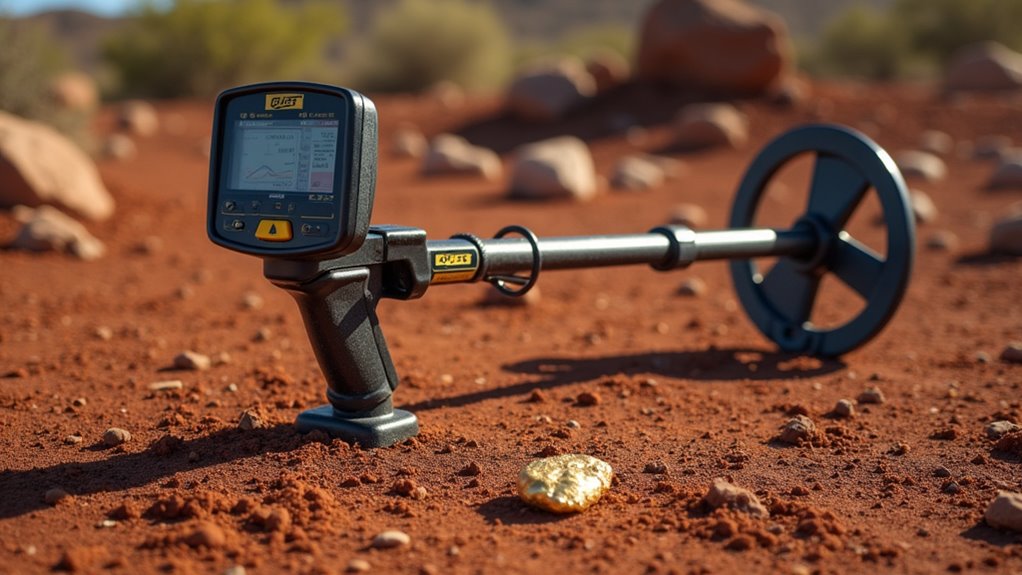

Modern gold nugget detectors pack serious heat when it comes to deep-seeking capabilities. The Minelab GPZ 7000 leads the pack with its Zero Voltage Transmission tech, followed closely by the GPX 6000 and Garrett Axiom. These bad boys can sniff out large nuggets up to 1.5 meters deep, while budget-conscious prospectors might dig the Gold Monster 1000’s 45 kHz frequency for smaller finds. Sure, top models’ll set you back $2.5-8k, but one sweet nugget could make it all worthwhile. There’s more beneath the surface…
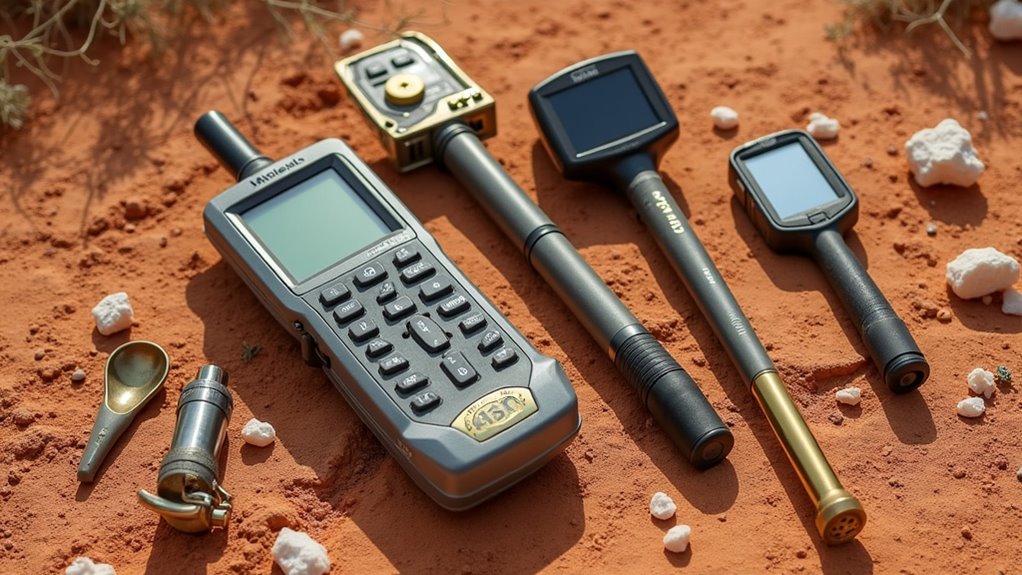
While the allure of gold has captivated treasure hunters for centuries, modern gold nugget metal detectors have revolutionized the way prospectors chase their dreams. The market’s current heavy-hitters pack serious technological punch, with the Minelab GPZ 7000 leading the charge using its groundbreaking Zero Voltage Transmission technology that practically whispers sweet nothings to deep-lying nuggets. User experience matters far more than the specific detector model when it comes to finding gold successfully. The constant digging of targets at extreme depths can lead to physical fatigue during extended searches.
Let’s cut to the chase – depth detection is where the real magic happens. Today’s top-tier machines can sniff out large nuggets up to 1.5 meters deep, though let’s be real: most of your tiny golden friends are hanging out in the top 6 inches of dirt. The GPX 6000 and Garrett Axiom are giving the GPZ 7000 a run for its money (literally, considering these babies cost anywhere from $2,500 to $8,000). Additionally, many prospectors are turning to local dealers for hands-on advice and equipment options. The choice between open pit and underground mining can also inform the types of equipment and methods used by prospectors.
Ground balancing isn’t just some fancy feature to jack up the price – it’s the difference between finding actual gold and chasing hot rocks all day. The best detectors offer both automatic and manual options, because sometimes you need to show that mineralized soil who’s boss. The Gold Monster 1000, despite being more budget-friendly at under $1000, proves its worth with a killer 45 kHz frequency that makes small nuggets sing. Gold pans and other essential tools play a crucial role in the overall prospecting process, including manual prospecting gear that can aid in identifying good sites.

Coil selection matters more than most newbies realize. Think of it like this: small coils (5-6 inches) are your precision instruments for those annoying tiny nuggets, while larger coils (11-14 inches) are your deep-diving submarines for the bigger scores. Double-D coils handle mineralized ground like a boss, but mono coils will give you better depth in cleaner soil. Additionally, it’s crucial to consider terrain type when selecting the appropriate coil for your needs.
The technology race never stops, and manufacturers keep pushing the envelope. Multi-IQ simultaneous frequencies, Variable State Timing, and Gold Chance Technology sound like sci-fi gibberish, but they’re making previously impossible finds possible. The XP Deus II has emerged as a dark horse, offering versatility that makes other detectors look like one-trick ponies.
Today’s gold detectors pack sci-fi worthy tech that makes yesterday’s impossible finds routine, transforming treasure hunting into a high-tech adventure.
The price tag might make your wallet cry, but consider this – one decent nugget could pay for your investment. Entry-level prospectors can start with the Gold Monster 1000, while seasoned hunters typically gravitate toward the GPZ 7000 or GPX 6000. Smart shoppers are finding deals in the used market, though rental options exist for those wanting to test the waters before diving in headfirst.
The bottom line? Modern gold nugget detectors have turned what used to be educated guesswork into a precise science. Whether you’re working with a modest budget or ready to drop serious cash on premium equipment, there’s a detector out there ready to help you strike gold – assuming you’ve got the patience to master it. Just don’t blame the equipment when that “certain” signal turns out to be another rusty nail.
Frequently Asked Questions
What Weather Conditions Affect Metal Detector Performance the Most?
Temperature and moisture pack the biggest one-two punch on metal detector performance.
Extreme cold zaps battery life and can freeze components, while scorching heat risks overheating sensitive electronics.

Rain’s a real troublemaker too – it cranks up ground conductivity and triggers false signals like nobody’s business.
And dont forget those pesky electrical storms… they’ll mess with your detector’s electromagnetic field faster than you can say “gold rush.” *yikes*
How Long Does It Take to Become Proficient With a Gold Detector?
Becoming proficient with a gold detector demands serious time investment – we’re talking months of dedicated practice.
Most prospectors need 100+ hours in the field just to nail the basics, while true expertise requires thousands of hours.

The learning curve’s steepest in the first 3-6 months as detectorists master signal interpretation and ground balancing.
After about 1-2 years of regular hunting, they’re typically hitting their stride with consistent success.
Are Gold Nugget Metal Detectors Legal to Use in National Parks?
No – metal detecting is strictly prohibited in national parks.
The Antiquities Act and Archaeological Resources Protection Act (ARPA) make it illegal, with hefty fines up to $100k and potential jail time for offenders. Park rangers actively enforce these rules and will confiscate equipment.

While some public lands like BLM areas allow detecting, national parks are completely off-limits to protect natural and cultural resources.
Best bet? Stick to legal spots!
Can Gold Nugget Detectors Differentiate Between Gold and Other Precious Metals?
Modern gold detectors use sophisticated discrimination technology to distinguish gold from other metals, but they’re not infallible.
While high-frequency settings and multi-frequency tech can identify gold’s unique conductivity signature, some precious metals (like platinum) produce similar signals.

The latest AI-enhanced detectors boast up to 90% accuracy in ideal conditions, but there’s always that annoying margin of error that keeps prospectors guessin’.
Perfect identification remains elusive.
What’s the Average Battery Life of Professional Gold Nugget Detectors?
Professional gold nugget detectors typically offer 7-32 hours of battery life, with most hovering around the 15-20 hour mark.
High-end models like the Minelab Gold Monster 1000 boast an impressive 19 hours, while the Spark detector leads the pack with 32 work hours.

But here’s the kicker – actual runtime varies wildly based on usage factors like wireless headphones, screen brightness, and ground mineralization.
Smart prospectors always pack spare batteries!