Gold’s meteoric rise to $3,056.56 in March 2025 shows why the yellow metal remains king of safe-haven assets. From its humble $34.75 low, gold skyrocketed 8,695.83% – crushing skeptics who dismissed it as a “boomer investment.” While tech bros chase crypto dreams, gold quietly dominates during economic chaos, with 50% going to jewelry and 40% to investments. The LBMA Gold Price benchmark tells the real story, beyond the hype and drama that lies ahead.
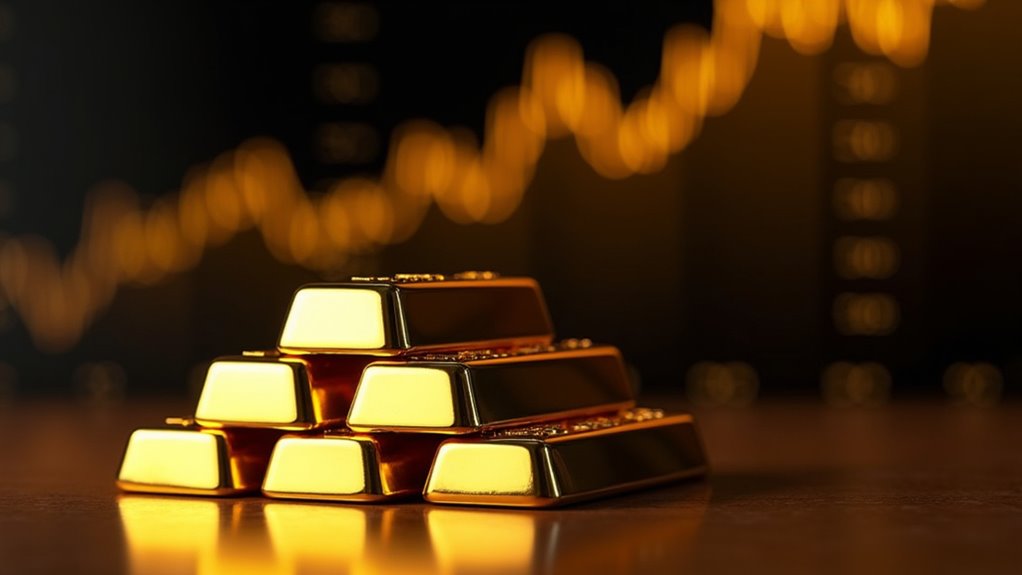
While investors have obsessed over crypto and tech stocks, gold has quietly been crushing it. The yellow metal just hit an all-time high of $3,056.56 per ounce in March 2025, and anyone who’s been paying attention knows this isn’t some random fluke. We’re talking about a mind-boggling 8,695.83% increase from its all-time low of $34.75. Let that sink in for a minute.
Look, the traditional finance bros can roll their eyes all they want, but gold’s been on an absolute tear since the start of 2025, climbing 17.35%. That’s not too shabby for a “boomer investment,” right? The real kicker is how it’s gone from a measly $35.96 per ounce back in 1970 to where it’s at now. Talk about staying power. Investors carefully track the spot price per ounce to make immediate buying decisions in the market. Historically, gold has been a reliable store of value during periods of economic uncertainty, which has contributed to its highest gold price in history.
The recent price action has been nothing short of a rollercoaster. After three straight sessions of losses that had the doom-and-gloomers writing obituaries, gold bounced back above $3,010. Why? Because when the world goes crazy with tariff drama and political nonsense, people run to gold like it’s the last chopper out of Saigon. You can even set up price alerts at 1.5% for daily movements to stay ahead of major swings.

Sure, the Fed’s latest inflation mumbojumbo put a lid on some gains, but that’s just how this game works.
Here’s the thing nobody wants to admit: half the world’s gold gets turned into jewelry, while 40% goes to investments, and the rest ends up in industrial stuff. China, Australia, and the good ol’ USA are pumping it out of the ground, while India and China can’t seem to get enough of the shiny stuff for their jewelry boxes. Interestingly, the global demand for gold often spikes during times of geopolitical instability, making it a sought-after asset.
And let’s be real – when the dollar takes a hit, gold usually struts its stuff.
The LBMA Gold Price is supposedly the big kahuna benchmark everyone uses, but good luck getting current data as of March 2025. At least there’s plenty of fancy charts and historical data going back to 1915 for the nerds who love that kinda thing.

The spot price is what you’d pay if you wanted your gold right freaking now, and it’s usually quoted in dollars per troy ounce because apparently regular ounces weren’t fancy enough.
Bottom line? While everyone’s been chasing the next big tech unicorn or betting their life savings on whatever coin Elon tweeted about, gold’s been doing exactly what it’s done for thousands of years – holding value and making steady gains.
It ain’t sexy, it don’t have a cool logo, and you can’t buy coffee with it, but when the economic stuff hits the fan, guess what everyone suddenly remembers exists? Yeah, that’s right – our old friend gold.
Frequently Asked Questions
What Factors Influence Daily Fluctuations in Gold Prices?
Daily gold prices dance to multiple tunes – supply/demand fundamentals lead the waltz, but speculators love cutting in.

Central bank moves and ETF flows throw their weight around. Political drama? That’ll spike prices faster than you can say “safe haven.”
Don’t forget the USD’s mood swings – when the dollar slumps, gold usually jumps.
And those algo traders? They’re amplifying every twitch like caffeinated day traders on steroids.
How Do Geopolitical Tensions Affect Gold Rate Movements?
Geopolitical tensions send gold prices soaring – period.
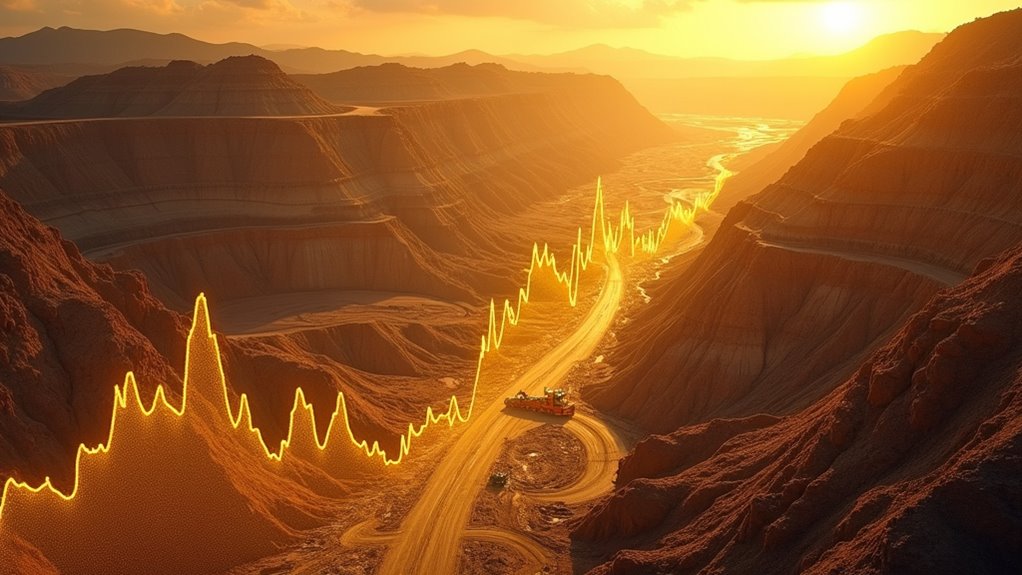
Look at the numbers: 9% jump after Hamas’ attack, 10% spike following Russia’s Ukraine invasion.
When the world’s a mess, investors sprint to gold like it’s their financial bunker.
Recent Mid-East chaos pushed gold to a crazy $3057/oz.
Here’s the deal – war, conflict, and political drama make people nervous.
And nervous people? They grab gold like it’s going outta style.
Simple as that.
Which Countries Have the Biggest Impact on Global Gold Prices?
The usual suspects dominate gold’s price game.
China’s not just the top producer – it’s also a massive buyer, throwing its weight around whenever it feels like it.

The US Federal Reserve’s every sneeze sends prices spinning, while India’s gold-obsessed population can move markets with their jewelry demand.
Let’s not forget Australia – they’re pumping out gold like there’s no tomorrow.
And Russia? They’re quietly stockpiling like it’s going outta style.
What Is the Best Time of Day to Buy Gold?
The sweet spot for gold buying? Mid-morning, when London and New York markets overlap (8 AM – 11 AM EST).
That’s when the real action happens – maximum liquidity, tighter spreads, and all the big players are awake.
Asian hours are too sleepy, afternoon’s too volatile.
Pro tip: avoid the 3 PM London fix like the plague – that’s when price manipulation historically goes down.
Early birds catch better deals before America’s lunch rush.
How Do Central Bank Policies Influence Gold Rate Trends?
Central banks wield massive influence over gold rates through their policy decisions.
Rate hikes? Gold typically tanks.
QE flooding markets with cash? Gold soars as a hedge.
When they’re buying gold by the truckload (like the 1,037 tonnes in 2023!), prices get a serious boost.
Every monetary policy move sends ripples through the market – from interest rates to currency values.
Its basically a game of financial chess, and central banks are the grandmasters.