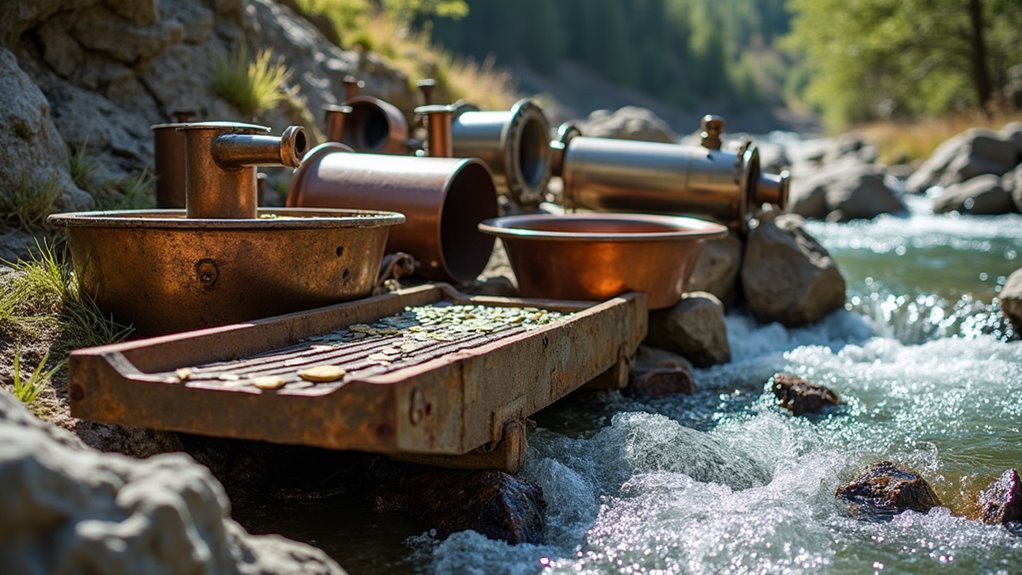
Setting up a Gold Miner Spiral Panning Machine isn’t rocket science – but it sure demands attention to detail. The magic happens at a 40-degree wheel angle with the spray bar positioned between 4 and 5 o’clock. Feed material slowly (about 4 oz every 20-30 seconds) under the spray bar, keeping water flow gentle to avoid losing those precious flakes. Proper classification to 1/8 inch or smaller is essential, and don’t forget that assembly jig! There’s more gold in these technical details than meets the eye.

Setting up a spiral panning machine might seem like rocket science at first, but it’s actually pretty straightforward once you grasp the core principles. The key to success lies in precise wheel positioning and water flow management. Experienced miners know that setting the wheel angle at 40 degrees creates ideal conditions for gold recovery, while positioning the spray bar between 4 and 5 o’clock maximizes efficiency. The included assembly jig helps ensure proper angle setup. Taking time to thoroughly read the manual before starting can save hours of frustration later. Additionally, having the right gold prospecting tools is crucial for achieving optimal results. Understanding the differences between open pit and underground mining can also inform your overall strategy in gold prospecting. Furthermore, using essential gold panning gear can enhance your overall experience and success. Moreover, exploring local options for gold mining supply stores can help you find reliable gear.
Water flow control is absolutely essential – and boy, do newcomers mess this up! Start with a gentle flow (seriously, resist the urge to blast it), then gradually increase until material moves smoothly through the spiral riffles. The last hole on that spray bar better be above the entry point, or you’ll be watching your gold dance right outta there. Proper water management techniques can significantly improve your gold recovery rates.
Material classification isn’t just some fancy suggestion – it’s make-or-break territory. Classify everything down to 1/8 inch or smaller, and for heaven’s sake, run those classifications separately. When possible, aim for minus 20 mesh material, and don’t even think about running stuff loaded with black sand without pre-processing it through a magnetic separator first.

The feeding technique is where the magic happens (or where everything goes terribly wrong). Place material under the spray bar near those lower left feeder paddles, and stick to feeding about 4 oz every 20-30 seconds. Some hotshots think faster is better – it’s not. Slower feed rates often mean better recovery, especially when dealing with finicky material.
Here’s where it gets interesting – multiple runs are your best friend. Run that stuff twice, adjusting the wheel angle to be slightly less steep on the second go-round. Crank up that wheel rotation speed during the second run, and keep your eyes peeled on where that black sand’s positioning itself relative to the center entry point.
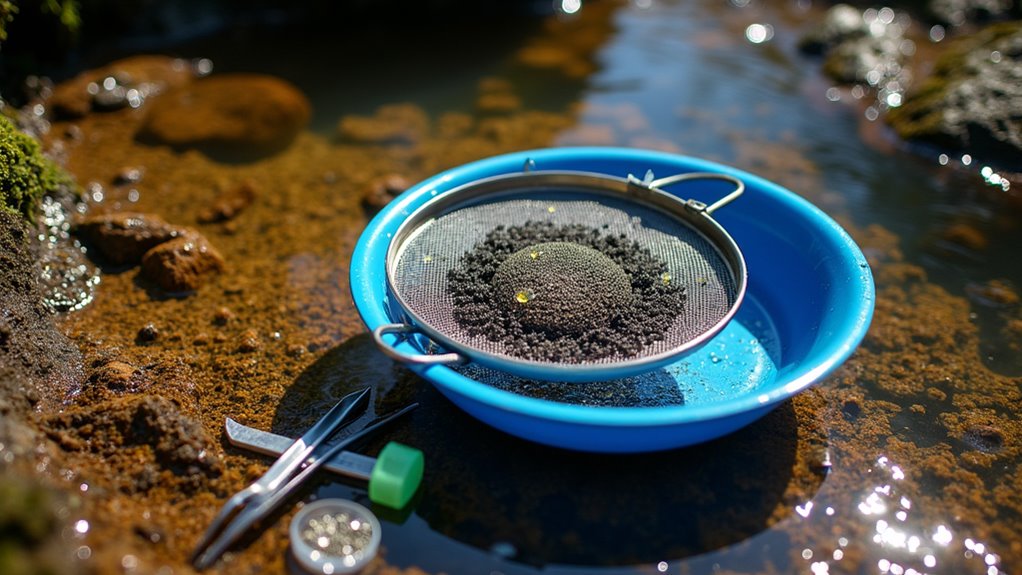
The recovery system setup is pretty straightforward, but vital. Stack a 100 mesh sieve on top of your collection bucket, throw a 12-inch gold pan above it to catch waste material, and make sure everything’s positioned properly under the unit. That auxiliary spray nozzle? It’s not just for show – it gives you extra control when you need it.
When things go sideways (and they will), troubleshooting becomes an art form. Losing gold out the front? Add some lighter material. Black sand giving you grief? Tweak that wheel angle. And for goodness sake, don’t freak out about initial bearing noise – they need time to break in.

Keep that fuse in check (20 amp), and remember that regular maintenance isn’t just suggested, it’s mandatory for consistent performance. After all, a well-maintained spiral panner is a happy spiral panner!
Frequently Asked Questions
How Long Does the Spiral Panning Machine’s Gold Recovery Mat Typically Last?
The gold recovery mat typically lasts 5+ years with proper maintainence (oops, spelled that wrong!).
While manufacturer’s slap a 5-year warranty on these bad boys, they’ve been known to soldier on for 10+ years in standard sluicing ops.
But hey – commercial miners squeeze just 3-5 years outta them. Life expectancy‘s totally tied to usage intensity and conditions.

Pro tip: regular cleaning and proper storage can push these mats way past their expected lifespan!
Can I Use the Spiral Panner for Gemstones and Other Precious Materials?
Spiral panners can handle some gemstones, but they’re not exactly gem-hunting champions.
While they’ll snag denser stones like garnets and rubies pretty well (thanks to similar specific gravity to gold), they’re a bit rough on delicate gems.
The machine works best with heavy minerals, platinum groups, and dense ore concentrates.
For serious gemstone recovery, pros typically opt for other methods – spiral panners are more like gold’s bestie than a gemstone’s BFF.
What Is the Minimum Water Pressure Required for Optimal Operation?
The minimum pressure for ideal operation starts around 450 gallons per hour – just enough to get things movin’ without washing away the good stuff!
The sweet spot? When water flows evenly across the wheel without splashing.
Start low, around 3-4 gallons total, and dial it up gradually until light materials separate cleanly.

Too much oomph will send those precious particles flying, while too little leaves em’ stuck in place.
How Often Should I Clean and Maintain the Spiral Mechanism?
The spiral mechanism requires daily cleaning after each use, with special attention to debris removal using a soft brush followed by clean water rinse.
Weekly deep cleanings with mild soap tackle stubborn dirt.
Monthly inspections check for wear on spiral grooves, while quarterly disassembly guarantees thorough maintenance.

In harsh conditions like dusty environments or saltwater exposure, cleaning frequency should intensify.
Annual professional servicing is recommended for heavily-used machines.
Does Cold Weather Affect the Spiral Panning Machine’s Performance?
Cold weather greatly impacts spiral panning performance.
Sub-freezing temperatures cause mechanical sluggishness due to thickened bearing oil and reduced RPMs. Water flow becomes problematic – freezing in pipes disrupts spray patterns and pressure. Gold separation efficiency drops as cold water’s altered viscosity affects particle settling.
Smart operators warm equipment before use, insulate water lines, and adjust settings to compensate. Below 32°F, machine effectiveness drops dramatically, sometimes forcing operational pauses.