Gold hunting’s gotten way more sophisticated than just panning (though that classic method still works). Modern prospectors wield an arsenal of tech-heavy tools – VLF metal detectors sniff out bigger nuggets while pulse induction models catch the tiny stuff. Sluice boxes and highbankers process material faster than your grandpa ever dreamed possible. Specialized crevice tools grab those stubborn pieces hiding in tight spots. The right combo of equipment turns amateur rock-kicking into serius treasure hunting. More golden secrets await below.

Fortune favors the well-equipped prospector in the eternal quest for gold. Gone are the days when a simple pan and some elbow grease could guarantee success – today’s gold hunters arm themselves with an arsenal of specialized tools that would make their 1849 counterparts’ heads spin.
The humble gold pan remains the foundation of any serious prospector’s kit. These deceptively simple tools, ranging from 8 to 24 inches in diameter (though 14-inch pans reign supreme), separate precious metal from worthless sediment through a practiced swirling motion that’d make any barista jealous. Some pans sport ridged areas that snag those elusive larger nuggets – because who doesn’t want to catch the big ones? Pick and shovel tools form the backbone of any prospector’s excavation efforts. Ancient Egyptians were among the first to develop large-scale mining techniques for extracting gold from the earth, which laid the groundwork for modern practices. Metal detecting technology has also greatly advanced, allowing hobbyists to locate gold more efficiently than ever before, as evidenced by the rise of gold mining dredges that enhance extraction capabilities. In fact, using updated maps can help prospectors identify gold prospecting hotspots near them.
Gold panning: where a simple swirling motion separates fortune from dirt – if you’ve got the right pan and practiced technique.
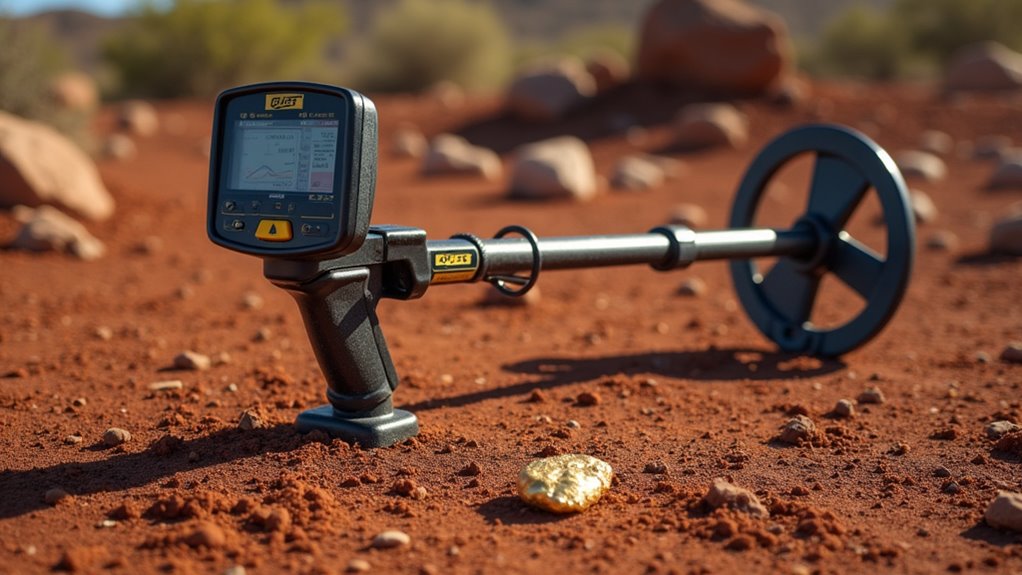
Metal detectors have revolutionized the game, turning previously exhausted claims into potential goldmines. VLF (Very Low Frequency) detectors excel at finding chunkier pieces, while pulse induction models sniff out those tantalizing tiny nuggets that’d otherwise slip through your fingers. It’s like having X-ray vision for gold – minus the radiation exposure and superhero costume. Choosing the right metal detector based on frequency and terrain type can significantly improve your chances of success.

Sluice boxes take the back-breaking labor out of processing larger quantities of material. These long, narrow contraptions use water flow and strategically placed riffles to trap gold particles while letting lighter materials wash away. Think of them as automated gold-catching waterslides, except instead of screaming teenagers, you’ve got precious metals taking the plunge. The effectiveness of sluice boxes has made them a favored tool among gold prospecting enthusiasts for their ability to increase recovery rates.
When it comes to processing serious volume, gold concentrators step up to the plate. These rotating drums separate gold from worthless material using centrifugal force and gravity – basically putting physics to work while you take a coffee break. Popular variants like spiral wheels and blue bowls have turned what used to be days of panning into hours of productive processing.
Classifier screens might not be glamorous, but they’re the unsung heroes of efficient gold recovery. By sorting material into different size categories before processing, they prevent larger rocks from clogging up your equipment and crushing your dreams of striking it rich.
And for those stubborn pieces hiding in rocky crevices? That’s where specialized crevice tools come into play, reaching into tight spots that’d make a contortionist envious.

The highbanker represents the pinnacle of solo mining operations, combining the best features of several tools into one efficient package. By pairing a sluice box with a water pump, these bad boys can process more material than traditional methods while keeping your back intact. Some models, like the legendary Gold Cube, have achieved near-mythical status among serious prospectors for their ability to snag even the finest gold particles.
The technology keeps evolving, but one truth remains constant: the right tools make all the difference between coming home with gold in your pockets or just a bunch of pretty rocks and crushed hopes.
Frequently Asked Questions
What Is the Average Success Rate of Finding Gold Using These Tools?
The success rates for gold finding tools vary dramatically!
Metal detectors hover around a modest 5-50%, while basic gold pans hit 10-30% for newbies and up to 90% for pros.

Sluice boxes crush it with 80-95% recovery, and highbankers/power sluices are the real MVPs, nailing an impressive 90-98% success rate.
But here’s the kicker – these stats assume you’re working rich ground and know what you’re doing!
How Much Does a Complete Gold Prospecting Equipment Setup Typically Cost?
The cost of gold prospecting equipment varies dramatically based on ambition level.
Basic setups with just pans and hand tools run $40-$80 – perfect for weekend warriors.

Intermediate kits featuring sluice boxes and entry-level detectors jump to $480-$1,260.
Serious prospectors might shell out $2,000-$11,200 for advanced gear, while professional-grade equipment with dredges and trommels tops out at $4,500-$12,500.
It’s definitely not cheap to chase that yellow fever!
Can Gold Detecting Tools Distinguish Between Real Gold and Fool’s Gold?
Modern gold detecting tools can absolutely distinguish between real gold and pyrite (fool’s gold) through various technologies.
High-frequency detectors and PI machines are surprisingly accurate at sensing gold’s unique electromagnetic properties.

XRF analyzers nail the elemental makeup instantly, while specific gravity tests exploit gold’s notably higher density (19.3 g/cm³ vs pyrite’s measly 5 g/cm³).
Even basic acid tests reveal the truth – pyrite dissolves, while gold stays defiant!
Which Seasons Are Best for Using Gold Prospecting Equipment Outdoors?
Spring and summer emerge as prime seasons for outdoor gold prospecting equipment.
Spring’s melting snow reveals fresh deposits while keeping temperatures manageable for extended sessions.

Summer’s extended daylight and warm conditions create ideal circumstances for water-based prospecting tools.
Fall offers decent conditions too, but winter’s harsh environment can damage sensitive equipment – though some specialized detectors actually perform better in cold temps.
Do I Need Special Permits or Licenses to Use Gold Detecting Tools?
The permit puzzle‘s no joke! Most basic gold detecting needs some bureaucratic blessing.
Metal detectors? Usually fine on public lands without paperwork. But power equipment? That’s where things get sticky – permits required!
Environmental regs are fierce, especially for dredging. State rules vary wildly, and federal lands have their own rulebook.
Smart move: check local BLM office before swinging that detector, or risk hefty fines. Nobody likes surprises from rangers!