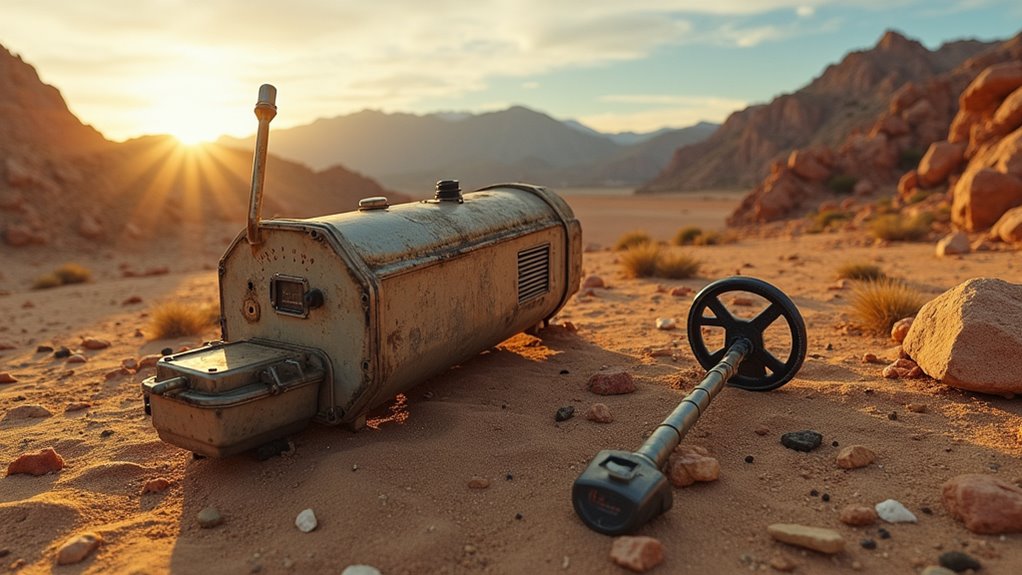
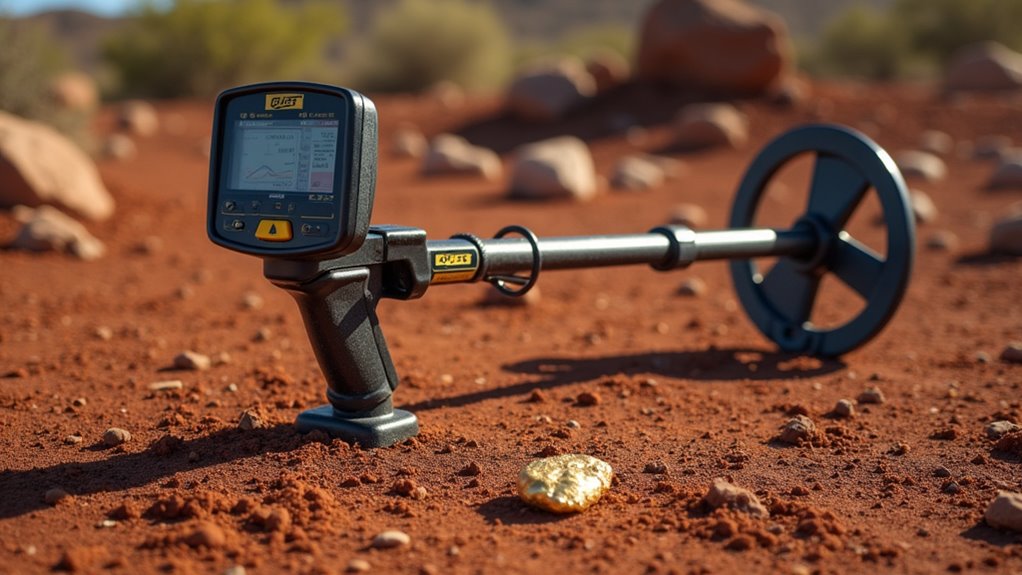
Modern gold prospecting demands a mix of high-tech gear and old-school tools. Essential equipment includes professional gold pans with built-in riffles, reliable classifiers, and snuffer bottles for capturing those elusive flakes. The Minelab GPX 6000 and Gold Monster 1000 detectors are game-changers for serious prospectors. Don’t forget basics like sturdy shovels, crevice tools, and 5-gallon buckets. Smart prospectors pair these with sluice boxes and Gold Cube recovery systems – there’s way more to this treasure hunt than meets the eye.

Whether you’re chasing your first golden flake or you’re a seasoned prospector hunting for that elusive nugget, having the right gold digging equipment can make or break your treasure hunt. The foundation of any prospector’s arsenal starts with a reliable gold pan – the Proline Professional 14” or Garrett Supersluice are top-tier choices that serious hunters swear by. Modern pans include built-in riffles that maximize gold capture efficiency. Additionally, a well-designed gold pan can significantly improve your chances of finding more gold during your prospecting adventures. Understanding local geology can also help you select the best sites for your prospecting efforts. Knowing how to ground balance your metal detector ensures that you can effectively differentiate between valuable targets and trash. It’s essential to recognize the mining methods used in your area, as both open pit and underground mining can influence the availability of gold. Gold mining techniques vary widely, impacting the tools and strategies you should employ.
Every prospector’s journey begins with the right pan – it’s the difference between finding treasure and going home empty-handed.
Pair these with a proper classifier to sort material efficiently, and don’t forget that trusty snuffer bottle for snagging those teasing little flakes that love to play hard-to-get. For maximum safety and efficiency, always remember to tie off sluice equipment to prevent costly losses in swift water conditions.
For those ready to level up their game, sluice boxes and highbankers are where the real action happens. The Dream Mat multi-sluice system is making waves (pun intended) in recovery rates, while the Gold Cube highbanker lets lone wolves work smarter, not harder.

A decent 1200-2000 GPH water pump isn’t just nice to have – it’s essential for keeping your highbanker humming along like a well-oiled machine.
Let’s talk dirt – literally. A heavy-duty shovel isn’t optional, it’s your bread and butter. Combine it with a prospecting pick and some specialized crevice tools, and you’ll be getting into spots other hunters miss.
Those 5-gallon buckets might seem basic, but they’re worth their weight in, well… gold when it comes to hauling pay dirt back to your processing site.
Metal detectors have evolved beyond those beepy toys your uncle used at the beach. The Minelab GPX 6000 is basically a gold-seeking missile, while the Gold Monster 1000 proves you don’t need to mortgage your house to find treasure.

Add some Coil Tech aftermarket coils, and suddenly your detector’s got better vision than an eagle with binoculars.
Safety gear might not be sexy, but neither is a twisted ankle 10 miles from civilization. Sturdy boots, proper gloves, and sun protection are non-negotiable.
Smart prospectors pack a first aid kit and use a backpack or wagon to save their backs from becoming permanent question marks.
The finishing touches come with recovery accessories – because finding gold is only half the battle. A Gold Cube recovery machine paired with Dream Mats can turn those concentrates into paydirt.

Don’t forget your jeweler’s loupe and scale – nothing’s worse than squinting at a speck wondering if it’s really gold or just your imagination playing tricks.
Research tools round out the kit, because successful prospecting is 90% preparation and 10% perspiration (okay, maybe 50-50 in summer). A reliable GPS device, detailed topo maps, and geological references will keep you from wandering in circles.
And that metal file for testing? It’s saved countless prospectors from getting excited over fool’s gold – though sometimes we secretly wish it hadn’t.
Frequently Asked Questions
What Permits Do I Need to Legally Prospect for Gold?
Gold prospecting requires a layered bureaucratic tango – no shortcuts here, folks!
Federal lands need BLM permits or Forest Service approval, while state requirements are a wild grab-bag of regulations that’ll make your head spin.
Local jurisdictions? They might want their piece too.
And don’t even think about private property without written permission – that’s just asking for trouble!
Pro tip: always check multiple gov’t levels before breaking out that pan.
How Much Gold Can I Expect to Find per Day?
Gold yields are brutally honest reality checks!
Recreational prospectors typically snag 0.1-1 gram daily, while the seasoned pros might score 1-5 grams in primo spots.

Don’t quit ur day job just yet – most newbies find tiny flakes, not those Instagram-worthy nuggets!
Pro operations w/ heavy machinery pull 10-50 grams daily, but that’s a different game entirely.
Weather, location, and skill level make yields more unpredictable than crypto markets!
Which Season Is Best for Gold Prospecting?
Spring’s the undisputed champion for gold prospecting – hands down.
Snowmelt delivers fresh gold deposits downstream while maintaining perfect water levels for access. Those mild temps? Pure gold-hunting paradise.

Fall comes in as a solid runner-up with less competition and decent conditions.
Summer’s got its perks but can get brutally hot, while winter’s mostly for the die-hards (except in desert regions where it’s actually pretty sweet).
Can I Sell the Gold I Find While Prospecting?
Yes, prospectors can legally sell their gold finds through various channels. Local coin shops, refineries, and online dealers enthusiastically snap up raw gold – just mind those pesky regulations first!
Selling requires proper permits and landowner permission where applicable. The gold’s value depends on purity (typically 60-85%) and current market rates.
Smart prospectors compare multiple buyers’ offers and consider those sneaky fees. Pro tip: nuggets might fetch premium prices from collectors!
Are There Guided Prospecting Tours for Beginners Near Me?
From the Bradshaw Mountains in Arizona to California’s historic mining parks, guided prospecting tours are popping up everywhere!
Beginners can join small-group expeditions (max 20 people) led by seasoned prospectors who’ll teach proper panning techniques. Most tours include equipment rental and basic instruction – perfect for newbies!
Notable hotspots: Marshall Gold Discovery Park in CA, Phoenix Gold Mine in Colorado, and those sweet Arizona desert excursions.
Time to get your feet wet!