Most folks walk right past genuine gold at thrift stores while fighting over ratty designer bags. Smart hunters check display cases for tarnished trinkets and twisted chains – that’s where the real treasure hides. Use a magnifying glass to spot hallmarks like 585 (14K) or 750 (18K). The magnet test helps too – if it sticks, it’s fake. Estate sale leftovers are gold mines, literally. Minimum-wage workers miss valuable pieces daily, but now you know what to look for.

While bargain hunters swarm thrift stores searching for vintage t-shirts and mid-century furniture, the real treasures often sit neglected in dusty display cases. Those tarnished trinkets and twisted chains might look like worthless costume jewelry, but savvy shoppers know better. Real gold is hiding in plain sight, waiting for someone who knows what to look for. Your best bet is to avoid pieces with strange discoloration, as this often indicates fake items. One recent example revealed a 14k Italian ring that sold for just $4.99.
Let’s be honest – most people wouldn’t recognize genuine gold if it bit them in the face. They’re too busy fighting over faded band shirts to notice the real score. Smart thrifters start by examining pieces for hallmarks and stamps, looking for numbers like 585 (14K) or 750 (18K). A magnifying glass is your best friend here, cause those markings can be tiny as hell. Gold jewelry has intrinsic value which can significantly increase over time, making it a worthwhile find.
The magnet test is next, and it’s brutally simple – if it sticks, it’s garbage. Real gold tells magnets to get lost. But don’t get cocky – some fake stuff isn’t magnetic either. That’s why pros use multiple tests. Gold’s heavy as sin too, way denser than the cheap knockoffs. Give it a feel – after handling enough pieces, you’ll develop an almost supernatural sense for the real deal.
Here’s where it gets interesting (and maybe a little destructive). The ceramic test involves dragging suspicious items across unglazed ceramic. Real gold leaves a yellow streak, fake stuff goes black. Just don’t try this on your grandma’s wedding ring, kay?
There’s also acid testing, but that’s playing with fire – literally. Leave the chemistry experiments to the professionals unless you’re ready to deal with some nasty burns. Speaking of pros, sometimes you gotta swallow your pride and get an expert opinion. Yeah, it costs money, but it beats buying fake junk.
Professional appraisers have fancy tools like XRF analyzers that’ll tell you exactly what your find is made of. Get multiple opinions though – some “experts” are about as reliable as a chocolate teapot.
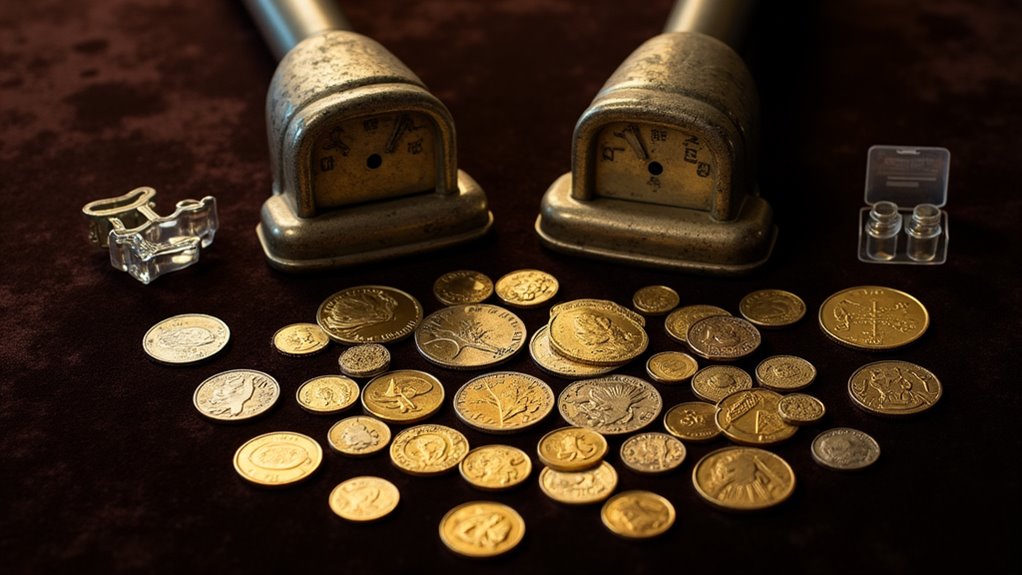
The real gold mine? Estate sale leftovers. Rich folks kick the bucket, and their precious metals end up in thrift store bins. Check the weird stuff too – old dental work (gross but profitable), religious medals, and those ancient watches nobody wants. Even gold coins sometimes slip through the cracks when minimum-wage workers don’t know what they’re looking at.

Look, finding gold in thrift stores isn’t rocket science, but it takes patience and know-how. While everyone else fights over polyester suits and plastic frames, the real money’s sitting there in plain sight. Just remember – if it seems too good to be true, it probably is. Unless you know your stuff. Then it’s time to score big.
Frequently Asked Questions
How Can I Test Gold Authenticity Without Professional Tools?
Testing gold’s legit without fancy tools? Here’s the deal:
Drop it in water – real gold sinks like a rock.
Drag it across ceramic – authentic stuff leaves yellow marks, not black ones.

Hit it with vinegar – fake gold goes green.
And grab a strong magnet – if it sticks, it’s trash.
Visual check’s essential too – look for hallmarks and consistent color.
These DIY tests ain’t perfect, but they’ll save ya from getting scammed.
What Are the Best Times to Visit Thrift Stores for Gold?
hit stores in wealthy areas during tax season.

Rich folks love dumping last year’s treasures for write-offs.
Which Sections of Thrift Stores Typically Have the Most Gold Items?
Let’s cut straight to the chase – the jewelry counter is king when hunting for gold. Duh. That’s where you’ll find the motherlode of rings, necklaces, and other sparkly stuff.
But here’s the real tea: glass display cases are secretly stacked too. They’re like treasure chests packed with vintage gold pieces that actually got some attention from staff.
The accessories section can hide some golden gems, but it’s usually slim pickin’s compared to the main spots.
Should I Reveal to Store Employees That I’m Specifically Looking for Gold?
Let’s be real – telling store employees you’re hunting for gold is like showing your poker hand mid-game. Bad strategy.

While transparency’s nice in theory, it’ll just lead to higher prices and closer item inspection. Those $2 gold chains? Gone.
Store policies might suddenly “evolve” too. Smart thrifters keep their expertise close to the chest.
It’s not about being sneaky – it’s about preserving the thrill of the hunt and keeping prices fair for everyone.
Can Fake Gold Tarnish or Change Color Over Time?
Fake gold absolutely tarnishes and changes color – that’s literally one of the biggest telltale signs it’s bogus.

Real 24k gold? Never tarnishes. Period.
But those cheap knock-offs? They’ll turn your skin green faster than moldy bread.
Even gold-plated stuff eventually shows its true colors when the thin layer wears off.
Lower karat gold (14k, 18k) might tarnish slightly, but nothing like the rapid discoloration you’ll see with fakes.