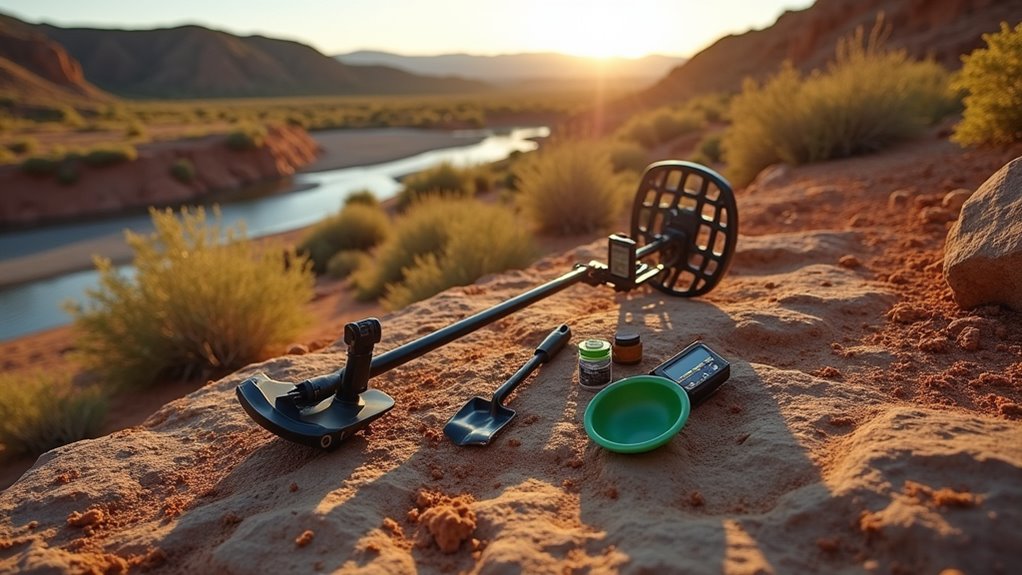
Mini gold concentrators pack serious punch for weekend prospectors and small-scale miners. These compact units harness centrifugal force and vortex action to separate gold from lighter materials, requiring stable ground and consistent 2-gallon-per-minute water flow for ideal results. Success demands proper material prep – screening to 20 mesh size and maintaining those pesky riffles. Both classic Blue Bowl and Knelson-type models dominate the market, while DIY versions tempt the creative crowd. Regular maintenance keeps these golden workhorses humming. The deeper story of these mighty machines awaits.

A glint of innovation sparkles in the world of gold recovery with the mini gold concentrator – a compact powerhouse that’s revolutionizing how small-scale miners and weekend prospectors chase their dreams. These ingenious devices harness centrifugal force and vortex action to separate precious gold particles from worthless material, making the age-old dream of striking it rich more accessible than ever (well, sorta). Dredges have become a popular method for larger-scale operations, but the mini concentrator offers a viable alternative for those seeking a more hands-on approach. Additionally, using the right essential equipment can significantly enhance the overall efficiency of the mining operation, especially when sourced from trusted suppliers that guarantee quality gear. Moreover, the use of suction dredges is often favored in riverbed mining for its efficiency in recovering gold.
Setting up these bad boys isn’t rocket science, but it demands attention to detail – kinda like that first date you don’t wanna mess up. The concentrator needs to be perfectly level on stable ground, and the water flow must hit that sweet spot of 2 gallons per minute. A submersible pump system keeps the water flowing consistently through the device. Using wetted concentrates ensures optimal feeding results. Too much or too little, and you might as well be throwing your gold down the drain. And trust us, nobody wants that embarrassing scenario. Following proper equipment standards can further enhance safety and efficiency during setup.
The real magic happens when the material hits the centrifuge bowl. The specific gravity difference between gold and lighter materials creates a separation that’s almost poetic – if you’re into that sort of thing. The heavier gold particles get trapped in riffles or grooves while the lighter stuff gets whisked away like yesterday’s regrets. It’s basically like a really expensive washing machine for rocks, except what comes out might actually pay for itself… eventually.

Here’s where things get interesting (and a bit messy): material prep is essential, and skipping this step is like showing up to a gunfight with a butter knife. Screening to 20 mesh size and keeping everything wet is non-negotiable. Some prospectors swear by adding wetting agents to the water, though we’ve seen plenty of heated debates about that one in the forums.
The market offers several flavors of these golden machines – from the classic Blue Bowl to Knelson-type concentrators, and even DIY versions for the brave souls who like to tinker. Each type has its devotees who’ll defend their choice with the passion of a football fan during playoffs. The portable units are particularly popular among the weekend warriors who dream of finding their fortune in forgotten streams.
Maintaining these precious metal catchers isn’t optional, unless you enjoy watching money literally wash down the drain. Regular cleaning, inspection, and lubrication keep these babies purring like kittens. And speaking of cleaning – that concentrate collection area needs attention after every use, or you’ll end up with an expensive paperweight instead of a gold-catching machine.
The mini gold concentrator might not make you an overnight millionaire, but it’s transformed the game for small-scale operators. Just remember – like any tool in the prospector’s arsenal, it’s only as good as the operator’s patience and attention to detail. And maybe, just maybe, that next pan will be the one that makes all those hours knee-deep in cold water worth it.
Frequently Asked Questions
How Long Does It Take to Process One Batch of Material?
Processing times for gold concentrators are all over the map! Most mini units knock out a batch in 1-2 minutes flat, but don’t get too excited – some systems march to their own beat.

The GoldKacha‘s taking its sweet time at 1 hour per wash, while the Multi Sluice splits the diffrence at 20 minutes.
Feed rates, particle size, and slurry density play their cards in this game of timing. It’s like speed dating for minerals, really.
What Safety Gear Should I Wear When Operating a Mini Gold Concentrator?
Operating a mini gold concentrator requires serious safety gear – no cutting corners!
Essential PPE includes safety goggles (splashing’s no joke), a proper dust mask or respirator (those fine particles are nasty), and chemical-resistant gloves.

Don’t forget ear protection – these machines can scream!
Long sleeves and pants are a must, and rubber boots keep feet dry n’ protected.
Pro tip: throw on a high-viz vest if working with others nearby – safety first, gold second!
Can the Concentrator Be Used for Other Precious Metals Besides Gold?
The concentrator is a versatile beast that handles way more than just gold.

It’s clutch for snagging platinum group metals (PGMs), and it’ll snatch up those elusive rare earth elements like nobody’s business.
The machine’s got serious game with tin and tungsten too.
Even diamond operations are getting in on the action.
Here’s the kicker – it’s becoming a go-to workhorse for recycling e-waste, pulling precious metals from old electronics.

Talk about range!
What Is the Minimum Gold Particle Size the Concentrator Can Effectively Capture?
According to specs, this beast can snag gold particles as tiny as 10 microns – that’s seriously microscopic stuff we’re talking about!
While it hits peak efficiency (around 90%) with particles between 37-19 microns, it’ll still grab those ultra-fine 10μm bits.
Pretty impressive when you consider a human hair is about 70 microns thick!

The sweet spot‘s definitely in that 37-19 range though – that’s where the magic really happens.
How Often Should I Clean and Maintain My Mini Gold Concentrator?
Daily checks and wipes are essential – quick 5-minute inspections keep that concentrator humming.
Weekly deep cleans (esp those pesky filters!) prevent efficiency drops.
Monthly? That’s when you wanna get serious – full system flush, check those seals, replace worn parts.
Once a year, let a pro take a peek under the hood.
Skip maintenance and you’re basically throwing gold down the drain… literally!
Follow the manual’s schedule religiously.