Gold jewelry as an investment? Let’s get real. While those shiny trinkets hit $2,790 per ounce in late 2024, retail markups and low purity levels crush returns faster than a pawn shop’s dreams. Sure, it’s portable and pretty, but wear and tear makes resale a nightmare. Smart money knows jewelry’s true value lies in specific pieces – think vintage Art Nouveau or top-tier brands with proper documentation. The glittering path to profit requires way more than just impulse buying the sparkly stuff.
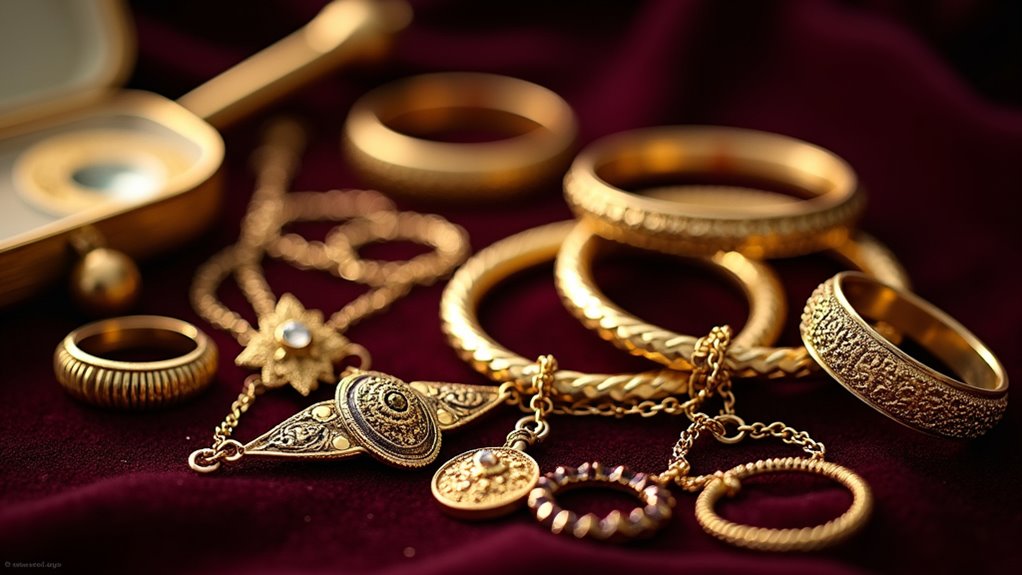
Glitter and gold have long seduced investors looking for a safe haven – but here’s the inconvenient truth about gold jewelry as an investment: those shiny trinkets adorning necks and wrists aren’t quite the foolproof strategy many think they are.
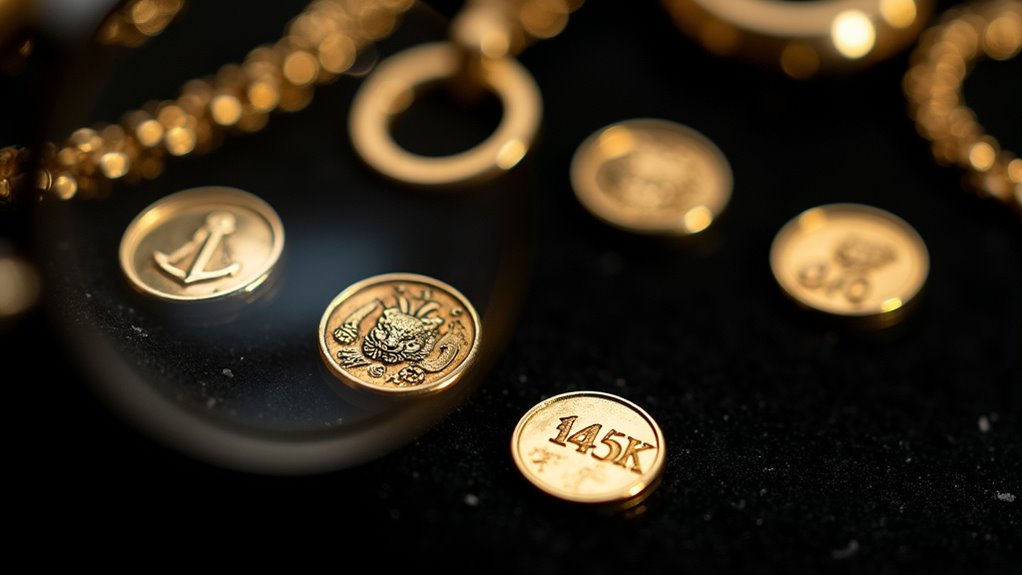
With gold hitting a staggering $2,790 per ounce in October 2024, it’s tempting to view that designer necklace as your ticket to financial security. Sure, jewelry combines aesthetic appeal with potential appreciation, and yeah, you can flaunt it while it supposedly grows in value. A major drawback is that the typical low purity levels of jewelry significantly reduce its investment potential. Additionally, understanding how to decode hallmarks can help you ascertain the actual purity and quality of your gold jewelry.
When gold prices soar, that glittering necklace beckons like a wearable investment, promising both status and security in one seductive package.
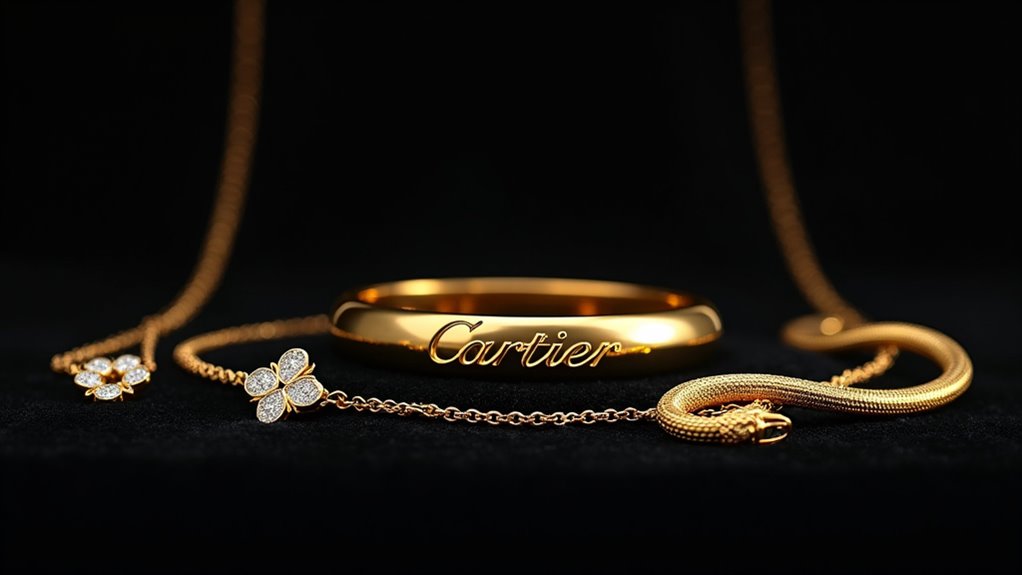
But let’s get real – those hefty retail markups are eating into your returns before you even leave the store. The math isn’t exactly rocket science. Gold jewelry’s value hinges on factors like purity (measured in karats), weight, craftsmanship, and brand reputation. That Cartier bracelet might look fabulous, but you’re paying through the nose for that little stamped logo.

Meanwhile, basic gold bars sit in vaults, accumulating value without the designer premium. Here’s where things get interesting though – jewelry does have some unique advantages over other forms of gold investment. It’s more portable than lugging around gold bars, requires minimal storage costs, and serves a dual purpose as both adornment and investment. Pieces from renowned historical eras like Art Nouveau and Victorian periods tend to maintain strong market value.
Plus, when the stock market takes a nosedive, gold typically zigs while everything else zags. Just ask the folks holding onto their grandma’s vintage pieces through economic downturns. But don’t get too starry-eyed. Wear and tear can seriously diminish your piece’s value faster than you can say “family heirloom.”
And good luck finding a buyer willing to pay top dollar for your scratched-up cocktail ring. The resale market for jewelry is notoriously finicky, often leaving sellers with considerably less than they paid. Smart investors approaching gold jewelry need to think beyond the sparkle.
Look for hallmarks indicating purity, choose classic designs that won’t go out of style faster than last season’s fashion trends, and always get proper documentation. Some savvy collectors focus on pieces from renowned brands or specific historical eras, which can appreciate considerably over time.

The United States might be sitting pretty on 8,000 metric tons of gold reserves, but that doesn’t mean your jewelry collection is going to make you rich overnight. Still, with experts predicting gold prices could hit $2,100 per ounce in 2025, there’s potential for decent returns – if you play your cards right.
Bottom line? Gold jewelry can be part of a diversified investment strategy, but it’s not the get-rich-quick scheme some people make it out to be. Treat it as a long-term play, understand the risks, and maybe don’t mention your “investment strategy” to your financial advisor when explaining that impulse purchase at Tiffany’s.
Frequently Asked Questions
How Can I Test if My Gold Jewelry Is Authentic at Home?
Here’s a no-BS guide to testing gold at home.
Drop it in water – real gold sinks fast.

Grab a strong magnet – authentic gold tells magnets to buzz off.
Rub it with white toothpaste – fake stuff shows dark marks.
Vinegar test works too – legit gold won’t change color.
And yeah, check for those hallmark stamps (14K, 18K).
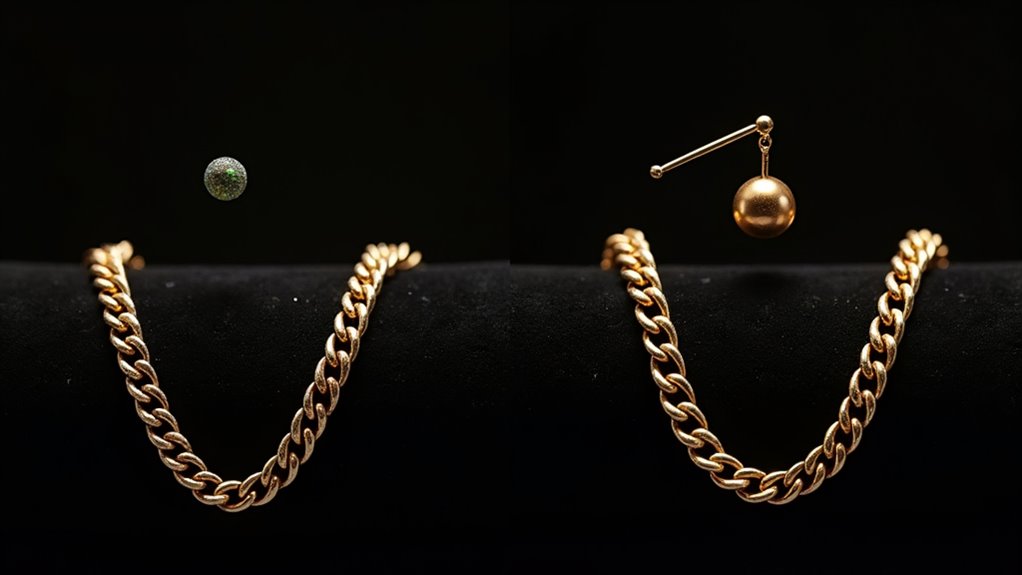
But lets be real – nothing beats a pro jeweler’s opinion for the final verdict.
What Documentation Should I Keep When Purchasing Gold Jewelry for Investment?
Keep those papers tight – documentation is your gold’s best friend.
Essential records include the purchase receipt (shows what ya paid and details about purity), certificate of authenticity (proves it ain’t fake), and professional appraisal docs.
Smart investors also maintain ongoing maintenance records and insurance paperwork.
No documentation? Good luck proving what you’ve got is legit when it’s time to sell or make an insurance claim!
Does Gold Jewelry From Different Countries Have Varying Investment Potential?
Absolutely – location matters big time.
India and China dominate the gold jewelry game, controlling 57% of global consumption. Their pieces often pack more pure gold content than Western designs.
Dubai’s gold game is next-level, with competitive prices and stellar quality standards.

European countries like Switzerland bring reliable banking perks, but higher premiums.
Here’s the kicker: some markets favor tradition over trendy designs, which impacts long-term investment potential.
How Do Gemstones Affect the Resale Value of Gold Jewelry?
Gemstones are a double-edged sword for gold jewelry resale.
High-quality certified stones (especially the big four – diamonds, rubies, sapphires, emeralds) can jack up value by 30-50%.
But here’s the kicker – most buyers don’t give a damn about the rocks. They’ll pay for gold weight only, leaving you holding the bag on those fancy gems.
Unless you’ve got premium certified stones or designer pieces, don’t expect those sparklers to pay off.
Are Antique Gold Jewelry Pieces Worth More Than Their Gold Content?
Antique gold jewelry often crushes its melt value – no contest.
These pieces pack serious punch beyond their weight in gold. We’re talking mad craftsmanship, historical swagger, and that one-of-a-kind factor that makes collectors drool.
Sure, some mass-produced vintage stuff might barely beat scrap value, but those pre-1973 pieces with solid provenance? They’re basically money in the bank.
Age, designer names, and rarity can triple or quadruple the base gold value.