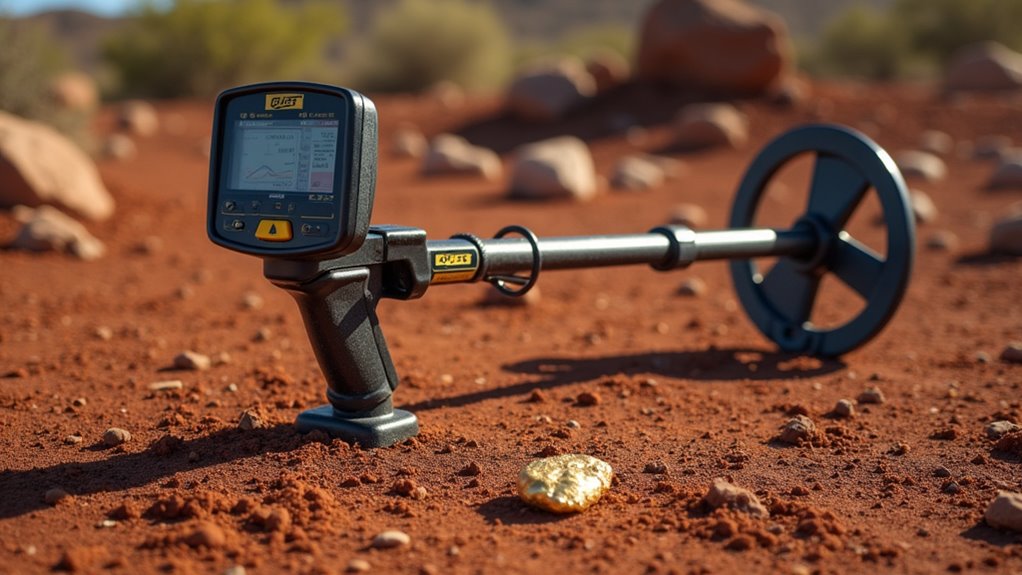
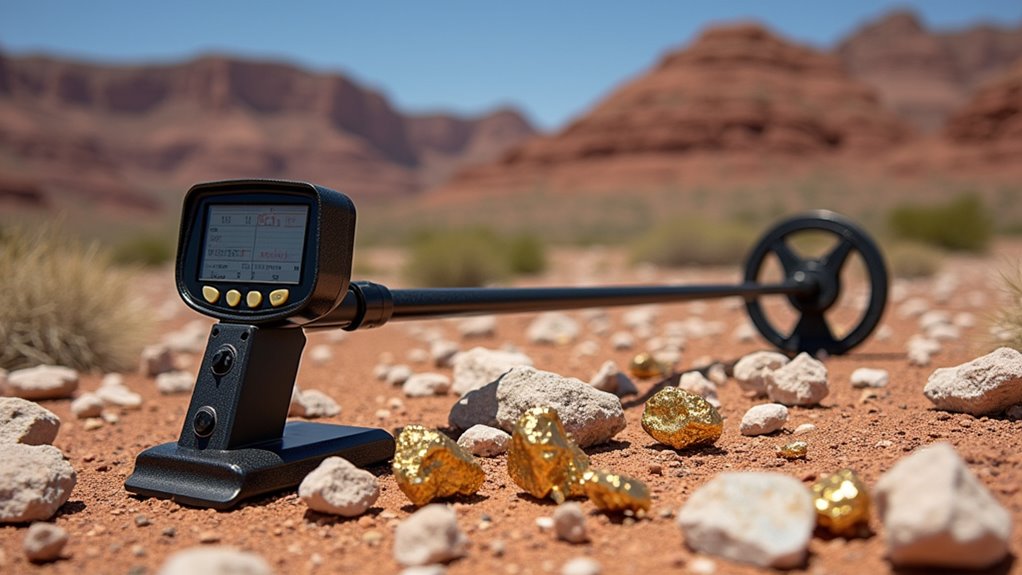
Essential prospecting gear starts with a dark-colored gold pan (14-15″) and reliable classifier – absolute must-haves for beginners. Smart prospectors don’t skimp on safety, packing sturdy boots and first aid supplies. Water-based tools like sluice boxes and highbankers boost efficiency, while dry washers tackle arid terrain. Advanced hunters might spring for trommels or shaker tables. From basic pans to high-tech recovery systems, the right equipment transforms casual searching into serious gold hunting. There’s more treasure in the details.

When diving into the glittering world of gold prospecting, having the right equipment can mean the difference between striking it rich and coming home with nothing but blisters and regret. The essential arsenal starts with a dark-colored gold pan, typically 14-15 inches in diameter – because let’s face it, trying to spot golden flecks in a light-colored pan is like finding a needle in a haystack while wearing sunglasses. The Garrett super sluice pan is a top-rated choice for beginners seeking reliability. The Royal sluice boxes are considered top-tier for their durability and proven gold-catching effectiveness, making them a wise investment for any serious prospector. Additionally, knowing the mining method, whether open pit or underground, can help inform where to search for gold, and understanding the local geology can provide insight into the best locations for prospecting. A reliable supplier of mining equipment can also ensure you have access to high-quality gear that meets your needs.
Gold prospecting without proper gear is like fishing without a rod – you’ll end up frustrated and empty-handed.
Serious prospectors know the drill: pair that pan with a classifier (1/4 or 1/8 inch mesh), a sturdy shovel that won’t buckle under pressure, and a reliable bucket. Don’t forget the snuffer bottle – that tiny vacuum-like tool that’ll become your best friend when picking up those tantalizingly small gold particles that love to play hard-to-get. Safety isn’t sexy, but neither is a nasty sunburn or twisted ankle in the middle of nowhere. Sturdy boots, gloves that can take a beating, and a hat that means business are non-negotiable. Pack a first aid kit because, trust us, Band-Aids are cheaper than helicopter evacuations(first aid kit essentials), and having a well-stocked kit can ensure you stay safe while out in the field.
For those ready to graduate from basic panning, water-based equipment opens up a whole new world of possibilities. Sluice boxes (24-36 inches of pure gold-catching potential) and highbankers turn prospecting into a proper operation. Dredges? They’re like underwater vacuum cleaners for gold – expensive but oh-so-effective when you’re ready to get serious.

Speaking of serious, dry washing equipment is a game-changer in arid regions where water is scarcer than common sense at a crypto convention. Dry washers, blowers, and metal detectors become your holy trinity. And don’t underestimate the humble rock hammer – sometimes gold’s just waiting to be knocked loose from its rocky prison.
The real pros know it’s all about the recovery tools. Tweezers that could pluck an eyelash from 50 paces, magnifying glasses that’d make Sherlock Holmes jealous, and vials to store your precious finds. A black sand magnet might seem boring, but it’ll save you hours of frustration separating the wheat from the chaff.
For the ambitious (and well-heeled) prospector, advanced equipment like trommels and shaker tables turn your operation into a mini gold recovery factory. These beauties ain’t cheap, but neither is leaving gold behind because your equipment can’t handle the volume.
Don’t forget the accessories that separate the amateurs from the pros – detailed gold maps, GPS devices that actually work (unlike your phone’s spotty service), and proper camping gear for those marathon prospecting sessions. Water pumps and crevice tools round out the arsenal, because sometimes the best gold is hiding in the most annoying places.
Frequently Asked Questions
What Licenses Do I Need for Prospecting in My Area?
License requirements vary wildly by location and mineral type.
Federal prospecting permits cap at 640 acres for National Forest lands, while state regs run the gamut. NY’s got strict rules – anything over 750 cubic yards needs permits.

Oil n’ gas? Different ballgame entirely.
Best bet: Hit up local Bureau of Land Management office or state mining authority – they’ll know the nitty-gritty for your specific area.
Don’t risk it without proper paperwork!
How Do I Identify Potential Prospecting Locations Near Me?
Finding prime prospecting spots starts with hardcore research – hit those geological surveys and historical mining records like they’re going extinct!
Smart prospectors dig deep into USGS databases and local historical societies for that sweet, sweet intel on past strikes.

Modern tech’s a game-changer too – Google Earth and metal detectors aren’t just fancy toys anymore.
And hey, those crusty old-timers at local prospecting clubs? They’re literally sitting on goldmines of knowledge.
Get social, get mappin’, get out there!
Can I Prospect on Private Property With Permission?
Prospecting on private property is absolutely doable – with proper permission.
Smart prospectors know the drill: get explicit written consent from the landowner first. That’s non-negotiable.
The agreement should spell out specifics like access times, areas to explore, and how findings will be split (if at all).
Remember: verbal agreements are risky business. Having everything in writing protects both parties and keeps things legal and drama-free.
What’s the Best Season to Start Prospecting as a Beginner?
Spring emerges as the sweet spot for newbie prospectors.
The moderate temps and increased water flow from snowmelt create perfect conditions for learning basic techniques. Plus, there’s less competition since the summer crowd hasn’t arrived yet.

The minimal vegetation makes it easier to spot promising locations, and the comfortable conditions are ideal for mastering fundamentals like panning and sluicing.
It’s basically nature’s training wheels for gold hunting!
How Do I Join Local Prospecting Groups and Communities?
Joining local prospecting groups is a goldmine of opportunity – literally!
The GPAA website’s chapter finder is the first stop for connecting with nearby crews. Experienced prospectors suggest hitting up gem shows and mineral exhibitions to meet the community face-to-face.

State geological societies maintain active memberships, while Facebook groups buzz with local tips.
Pro tip: AllCrystal’s top-18 club list is pure gold for finding legit organizations.
Plus, most groups offer killer perks like private claim access!