Gold investing ain’t rocket science, but newbies better know their stuff. Physical gold (bars and coins) offers direct ownership but comes with storage headaches, while ETFs and mutual funds let investors skip the vault rental. Smart money keeps gold at 5-10% of their portfolio – anymore is just asking for trouble. Picking reputable dealers is essential unless getting scammed sounds fun. Traditional IRAs, Roth IRAs, and mining stocks round out the golden opportunities awaiting those ready to dig deeper.

Why do savvy investors keep hoarding gold like anxious squirrels stashing acorns for winter? Simple – because gold has been humanity’s favorite shiny security blanket for thousands of years. When economies tank, currencies falter, or inflation runs wild, gold typically holds steady or climbs higher. It’s like that reliable friend who shows up to help you move while everyone else mysteriously develops a sudden back problem. The precious metal’s value never zeros, making it a perpetual safeguard against financial collapse. Long-term wealth preservation is why many investors stick with gold through market ups and downs. Long-term investment strategies can help maximize returns and reduce risks over time.
Gold endures as humanity’s ultimate security blanket, standing strong when markets crumble and currencies stumble, like a faithful friend in tough times.
The traditional way to get into the gold game is buying physical gold – bars, coins, or even that gaudy necklace your aunt gave you last Christmas. But here’s the catch: you’ll pay a premium above the actual gold price, sometimes up to 5% more. Plus, you’ll need somewhere secure to store it, unless you fancy turning your basement into Fort Knox.
And lets be real – nobody wants to be that person hauling gold bars through airport security.

For those who’d rather not deal with physical storage headaches, gold ETFs and mutual funds are the modern investor’s best friend. These bad boys let you play the gold market without ever touching an ounce of the stuff. Their beauty lies in simplicity – buy and sell through your regular brokerage account, just like stocks.
Some track gold prices directly, while others spread your risk across various mining companies. Its like getting all the benefits of gold ownership without the paranoia of checking your safe every night.
Speaking of mining companies, gold stocks are another way to ride the golden wave. But buyer beware – these babies dance to two different tunes: gold prices and company performance. Sure, when gold prices soar, mining stocks often follow suit.
But one flooded mine or labor strike can send your investment plummeting faster than a lead weight in a swimming pool.

For the retirement-minded crowd, gold IRAs offer a way to diversify those nest eggs. Traditional, Roth, or SEP – take your pick. Just remember you’ll need an approved custodian and proper storage facility.
Its not as simple as stuffing gold bars under your mattress (which, by the way, is terrible for your back).
For the love of all thats precious, stay away from gold futures and options unless you actually know what your doing. These complex instruments can turn your portfolio into confetti faster than you can say “margin call.”
Smart money keeps it simple – most financial advisors suggest limiting gold investments to 5-10% of your portfolio.
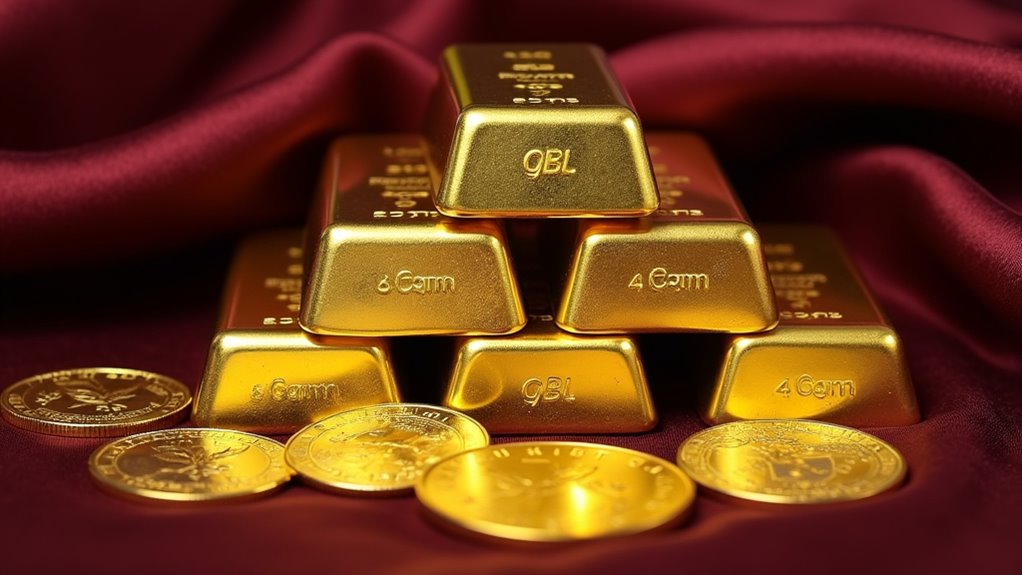
And whatever you do, stick to investment-grade gold thats at least 99.5% pure. Because when it comes to gold investing, purity matters almost as much as picking a reputable dealer who won’t sell you fool’s gold spray-painted to look like the real deal.
Frequently Asked Questions
How Do I Verify the Authenticity of Gold Before Purchasing?
Let’s get real about gold authenticity – skip the amateur hour nonsense.
Smart buyers run multiple tests: visual checks for hallmarks and color, magnet tests (real gold ain’t magnetic), and ceramic scratch tests.
But here’s the kicker – don’t trust your gut alone. Take it to a certified jeweler for professional verification. They’ve got the fancy equipment and expertise to spot fakes.

Better safe than sorry, right?
Can I Store My Physical Gold in a Bank Safety Deposit Box?
Bank safety deposit boxes can work for gold storage, but they’re not perfect.
Yeah, they offer solid security and surveillance, but there’s a catch – no insurance from the bank if stuff goes wrong.
Plus, you’re stuck with limited access during bank hours only.

Hate to break it, but if the bank fails or closes, your precious metals could be locked away.
Smart move? Maybe spread the risk – mix bank storage with other secure options.
What Happens to Gold Prices During a Stock Market Crash?
History doesn’t lie – gold usually shines when stocks tank.
In 6 of 8 major market crashes over 40 years, gold prices shot up. Sure, there’s sometimes an initial dip when panicked investors need quick cash, but that’s temporary.

Once the dust settles, gold typically rebounds fast. Just look at 2008 – gold jumped from $730 to $1,300 in two years.
When markets get scary, investors flock to gold like moths to a flame.
Is Gold Jewelry a Good Investment Compared to Gold Bars?
Gold bars are hands-down the better pure investment – lower premiums, higher purity, easier to trade. Period.
Jewelry’s markup for craftsmanship means you’re overpaying for the actual gold content. Sure, jewelry can appreciate due to design or brand value, but that’s more speculation than investment.
Here’s the real deal: If you want an investment, buy bars. If you want something pretty that might hold some value, get jewelry.
Don’t kid yourself about mixing the two.
How Does Currency Fluctuation Affect the Price of Gold Investments?
Currency swings hit gold prices like a wrecking ball.
When the USD flexes its muscles, gold gets pricier for international buyers – tough luck for them.
But when the dollar takes a nosedive? Gold prices soar as investors scramble for safety.
It’s a classic seesaw effect, really.
China and Europe’s currencies throw their weight around too, but let’s be real – the almighty dollar still runs this show.