Gold ETFs cut straight to the chase – they track gold prices directly with lower fees and real-time trading. Mutual funds? They muddy the waters by throwing mining stocks and other gold-related assets into the mix. While ETFs delivered a killer 21.94% return last year, mutual funds lagged behind at 21.30%. Sure, both options hedge against inflation, but ETFs keep it simple and cost-effective. The deeper you go, the clearer the choice becomes.

While investors endlessly debate whether gold is a smart investment, two popular vehicles have emerged for those looking to get their hands on the shiny stuff: Gold ETFs and mutual funds. Let’s cut through the noise and see what makes these options tick – and which one might actually be worth your time.
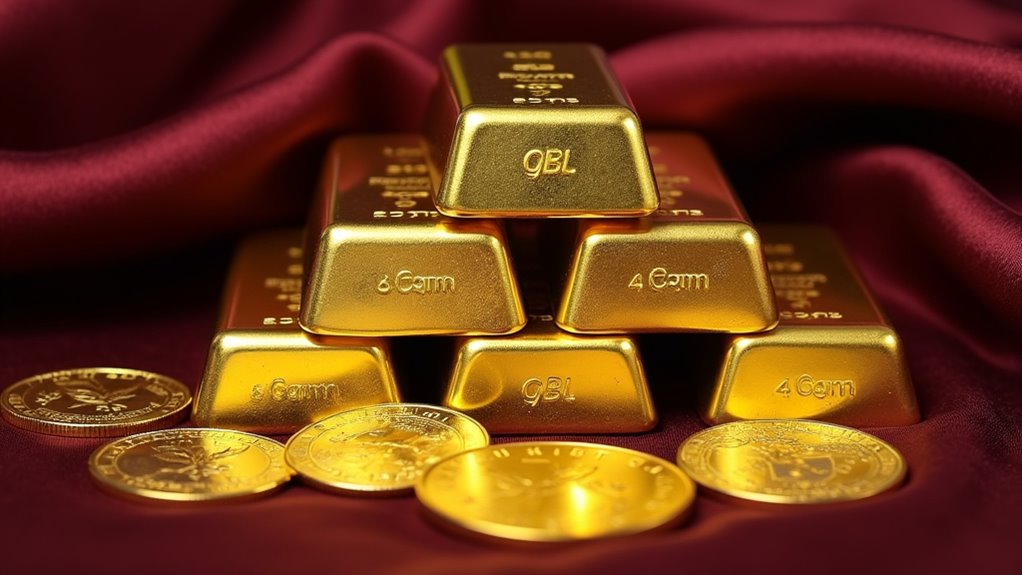
Gold ETFs are basically the cool kids of the precious metals world. They trade just like stocks, letting you buy and sell during market hours without the hassle of storing actual gold bars under your mattress. Each unit represents a fixed amount of gold, and thanks to passive management, the expense ratios stay pretty reasonable at 0.5-1%. The proof is in the pudding – these bad boys delivered an impressive 21.94% return last year, with LIC MF Gold ETF leading the pack. The underlying gold used in ETFs is typically 99.5% pure gold, sourced exclusively from RBI-approved banks. Additionally, investing in gold ETFs provides a straightforward way to gain exposure to the gold market without the complexities of physical ownership.
ETFs are the no-fuss way to ride the gold wave – all the glitter of precious metals without a vault in your basement.
On the flip side, gold mutual funds are like the try-hard cousins who can’t quite keep up. Sure, they offer systematic investment plans starting at just ₹500, but their active management style means higher expenses (1-2%) eating into your returns. They invest in everything from ETFs to mining stocks, which sounds fancy but resulted in slightly lower returns of 21.30% last year. There’s something to be said for diversification, but let’s be real – if you want gold exposure, why complicate things? These funds offer professional management through experienced fund managers who analyze markets to maximize returns.

The real kicker comes down to accessibility and trading flexibility. ETFs require a demat account, which might seem like a pain, but the ability to trade real-time is worth its weight in… well, you know. Mutual funds force you to wait for end-of-day NAV pricing and might slap you with exit loads if you bail within the first year. Not exactly ideal for today’s fast-moving markets.
When it comes to minimum investments, both options are relatively accessible. ETFs let you start with as little as one gram of gold, while mutual funds typically want ₹1,000-₹3,000 to get started.
Portfolio diversification? Both serve their purpose as inflation hedges, with experts suggesting a 5-10% allocation to gold. But ETFs give you pure gold price exposure, while mutual funds throw in some mining stocks and other gold-adjacent investments that might not be what you’re after.
The bottom line? Gold ETFs have been crushing it with better returns, lower costs, and more flexibility. Since 1971, gold has averaged annual returns of 7.98% – not too shabby for a chunk of metal.

While mutual funds try to jazz things up with their active management and diverse portfolios, sometimes simpler is better. If you’re gonna jump on the gold bandwagon, ETFs seem like the smarter way to ride. Just don’t expect either option to make you rich overnight – even King Midas had his problems.
Frequently Asked Questions
Are Physical Gold Investments Safer Than Gold ETFS and Mutual Funds?
Each gold investment type has unique risks.
Physical gold eliminates middlemen but faces theft risks if stored at home.
ETFs offer convenience but involve counterparty risk – you’re trusting financial institutions.
Mutual funds? They’re gambling on mining companies, not gold itself.
Truth is, no option is inherently “safer” – it’s about tradeoffs.
Smart investors diversify across different forms rather than betting everything on one approach.
What Happens to Gold Funds During a Stock Market Crash?
During market crashes, gold funds tend to shine while stocks tank – that’s just cold hard facts.
Gold ETFs typically surge as panicked investors flee to safety, with historical data showing average returns of 16.94% during crisis periods since 2007.

Sure, gold mutual funds might lag behind due to their mining stock exposure, but they still offer decent protection.
Let’s face it – when the market’s having a meltdown, these golden babies usually keep their cool.
How Do Gold Fund Fees Compare to Other Commodity Investments?
Gold ETFs are surprisingly cheap compared to other commodity investments.
While typical commodity ETFs slap you with 0.50%-0.75% fees, gold ETFs often charge less than 0.40%. That’s a sweet deal.

The real shocker? Gold mutual funds are total fee monsters, hitting investors with up to 1.50% expense ratios plus those nasty sales loads. Ouch.
Oil and agriculture ETFs aren’t much better, charging around 0.85%.
Bottom line: gold ETFs are the budget-friendly choice in commodity land.
Can I Convert My Gold ETF Shares Into Physical Gold?
Yes, but only with certain ETFs.
OUNZ (VanEck Merk Gold ETF) lets investors swap shares for actual gold – pretty sweet deal. They’ll ship as little as 1 ounce right to your door, or bigger amounts via armored transport if you’re feeling fancy.

Just fill out some paperwork, hand over your shares, and boom – real gold in your hands. No tax hit either, since you already own the stuff.
Not all ETFs offer this though, so check the fine print.
Do Gold Funds Provide Protection Against Currency Devaluation?
Gold funds can offer decent protection against currency devaluation, but let’s get real – they’re not a magic shield.
ETFs tend to work better than mutual funds since they track gold prices more directly. Just look at the euro – gold’s up a whopping 555% since that currency launched. Pretty telling.
But here’s the kicker: performance is kinda hit-or-miss during inflation. Sometimes gold funds nail it, sometimes they totally whiff.