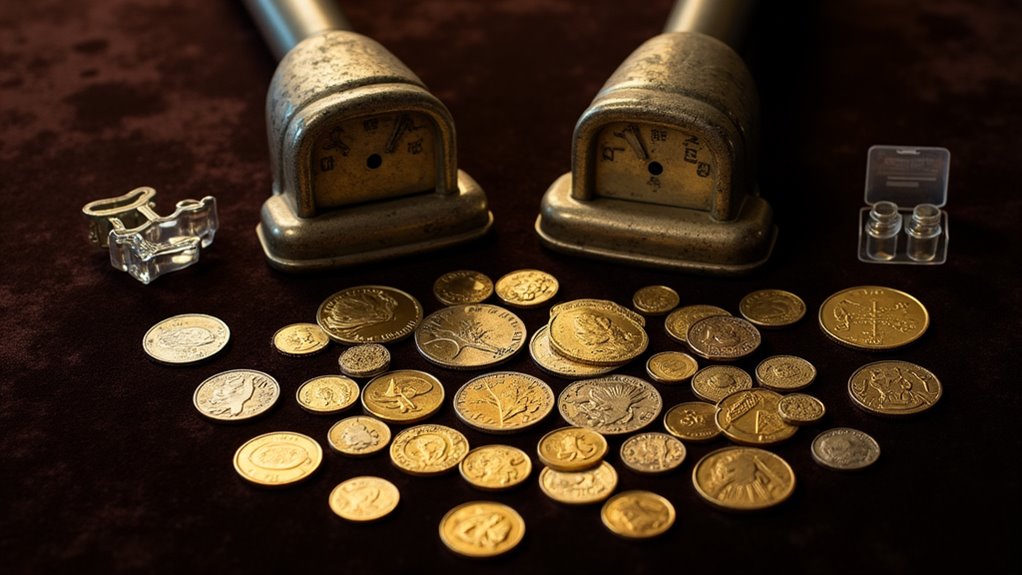
Fafnir’s descent from dwarf prince to gold-hoarding dragon epitomizes Norse mythology’s darkest warnings about wealth’s corrupting power. After his family received cursed gold as compensation for his brother’s death, Fafnir’s greed led him to murder his own father. The curse transformed him into a venomous dragon, guarding his ill-gotten treasure until the hero Sigurd finally slew him. His tale echos through modern financial markets, where gold’s allure still awakens primal instincts.
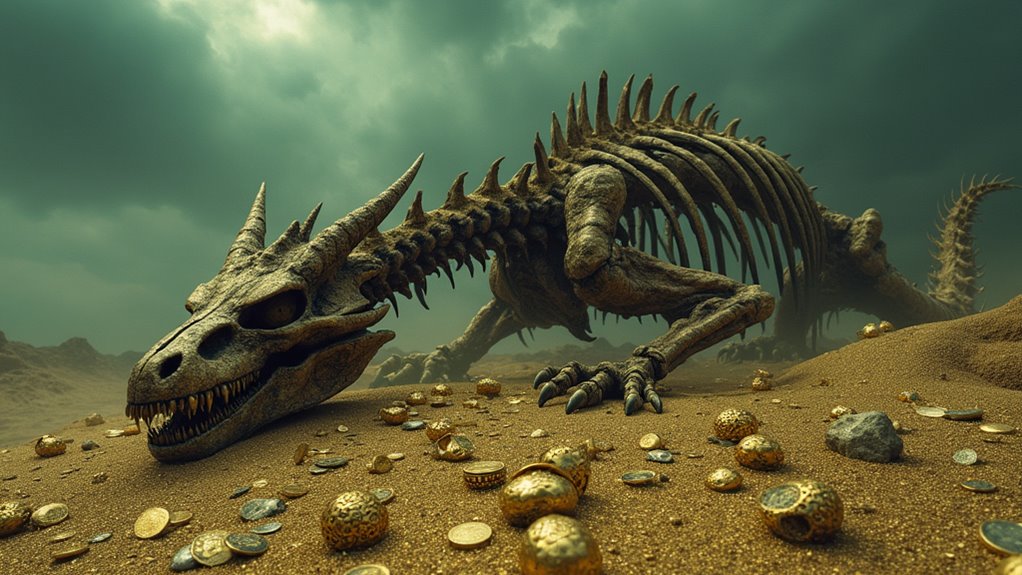
A tale of greed and transformation, Fafnir stands as one of Norse mythology‘s most infamous dragons – though he didn’t start out that way. Born a dwarf and son of King Hreithmar, his metamorphosis into a fearsome beast serves as mythology’s ultimate cautionary tale about greed’s corrupting influence. Talk about family drama gone wild!
From humble dwarf to terrifying dragon, Fafnir’s transformation shows how greed can turn anyone into a monster.
The whole mess kicked off when Loki (always the troublemaker) killed Fafnir’s brother Otr. As compensation, the gods had to cover Otr’s skin with gold – cursed gold, as it turns out, snatched from the dwarf Andvari. The treasure came with some serious strings attached: whoever possessed it would face a nasty fate. Spoiler alert: it delivered on that promise with brutal efficiency.
Fafnir couldn’t resist the gold’s sinister allure. In a shocking power grab that would make Wall Street tycoons blush, he murdered his own father to get his hands on the treasure. But hey, why stop at patricide? The curse’s corruption transformed him into something straight outta your worst nightmares – a massive, terrifying dragon. This transformation symbolizes how the allure of monetary gold can lead to dire consequences for those consumed by greed. Interestingly, this phenomenon echoes the way gold is preferred during times of financial instability, demonstrating that the curse of wealth can extend far beyond myth.

And like every obsessed hoarder ever, he spent his days jealously guarding his precious stash.
Enter Sigurd, the hero we didn’t know we needed. Guided by Fafnir’s brother Regin (who apparently didn’t get the memo about family loyalty), Sigurd pulled off the ultimate dragon-slaying scheme. Armed with the legendary sword Gram and some divine tips from Odin himself, he dug a pit and stabbed upward into Fafnir’s heart as the beast crawled overhead. Not exactly a fair fight, but when you’re dealing with an invincible dragon, who’s counting?
The symbolism here is about as subtle as a gold brick to the face. Fafnir’s transformation from dwarf to dragon perfectly captures how greed can turn anyone into a monster. His story has left an indelible mark on European mythology, inspiring countless tales of dragons and their hoards – including Tolkien’s infamous Smaug, who’s basically Fafnir’s spiritual successor.
Modern culture just can’t get enough of this scaly cautionary tale. From medieval carvings to contemporary fantasy, Fafnir’s influence slithers through art, literature, and pop culture like a golden thread. His story appears in everything from the Völsunga saga to Beowulf, proving that nothing captivates audiences quite like a good old-fashioned tale of greed, betrayal, and dragon-slaying heroics.

The curse of Fafnir’s gold continues to resonate today – maybe because we’re all too familiar with wealth’s ability to corrupt. Gold is a safe haven during economic uncertainty, highlighting the timeless relevance of Fafnir’s fate. Whether you’re a Norse dwarf or a modern-day investor, the message rings clear: greed’s a dragon that’ll eat you alive if you let it. Just ask Fafnir… oh wait, you can’t – he’s dead.
Frequently Asked Questions
What Other Norse Dragons Existed Besides Fafnir?
Norse mythology boasts several iconic dragons.
Nidhogg, the feathered serpent, gnaws at Yggdrasil’s roots while munching on corpses in Nastrond.
Jormungandr, Loki’s massive offspring, wraps around Midgard like nature’s most epic belt.

There’s also Gridr, the mysterious creation serpent who balances out Nidhogg‘s destructive vibes.
These scaly powerhouses played essential roles in Norse cosmology, from maintaining cosmic balance to kickstarting Ragnarok – talk about workplace responsibility!
How Did Fafnir’s Curse Affect Other Characters in Norse Mythology?
Fafnir’s curse wreaked havoc through the Norse sagas, leaving a trail of betrayal and bloodshed.
Sigurd, who slew the dragon, met his end through treachery despite gaining magical powers.

Regin’s greed led him to plot against his own brother, while Högni and Gunnar’s desire for the cursed treasure drove them to murder Sigurd.
The curse’s ripple effects demonstrated how greed could destroy entire families and legacies in Norse mythology.
What Happened to the Cursed Gold After Sigurd Killed Fafnir?
After slaying Fafnir, Sigurd nabbed the cursed treasure but couldn’t escape its deadly influence.
First, he killed his foster father Regin, who’d plotted against him for the gold.

The hoard then passed to Sigurd’s wife Gudrun and her family, sparking a chain of betrayals and murders.
Talk about toxic assets!
The curse kept working its dark magic, bringing doom to everyone who touched it – quite the investment gone wrong.
Did Fafnir Have Any Special Powers Besides His Dragon Form?
Beyond his dragon form, Fafnir possessed several formidable powers.
He wielded the mystical Helm of Awe, which instilled terror in his enemies and granted him fearsome strength.

His mastery of magic enabled not only his transformation but also allowed him to cast deadly poison across the land.
Even before becoming a dragon, Fafnir was an exceptionally strong dwarf with renowned fighting abilities that made him the ideal guardian of his father’s treasure.
How Does Fafnir’s Story Compare to Other Dragon Myths in Europe?
Fafnir’s tale shares striking parallels with other European dragon myths, particularly in its themes of greed and transformation.
Like Beowulf’s dragon, Fafnir guards his hoard obsessively, reflecting widespread beliefs about dragons’ material obsessions. His origin as a dwarf-turned-dragon echoes similar transformation stories across Germanic lore.
While Southern European dragons typically flew and breathed fire, Fafnir’s serpentine form aligns with Northern Europe’s preference for wingless “wyrms” that crawl on earth.