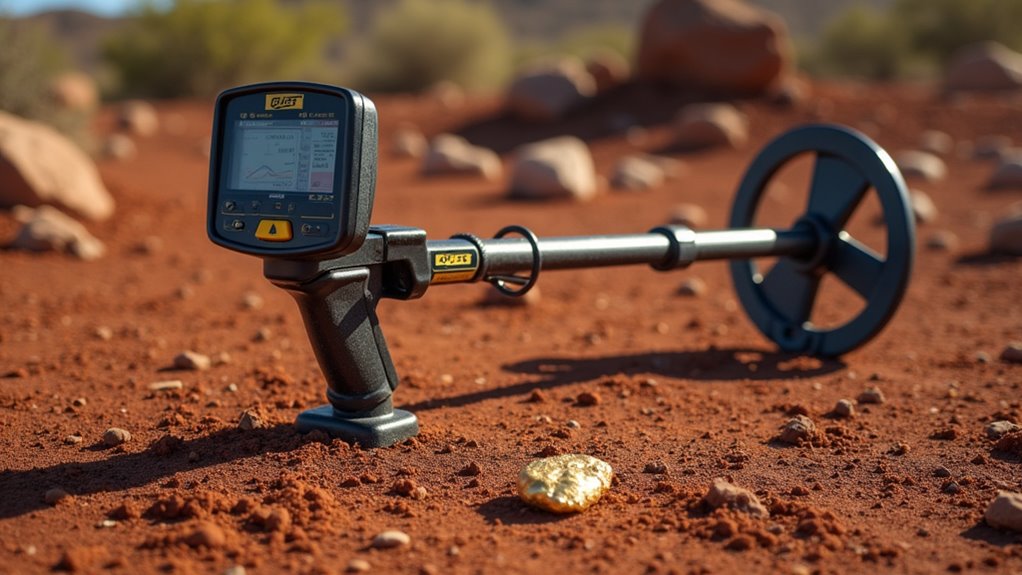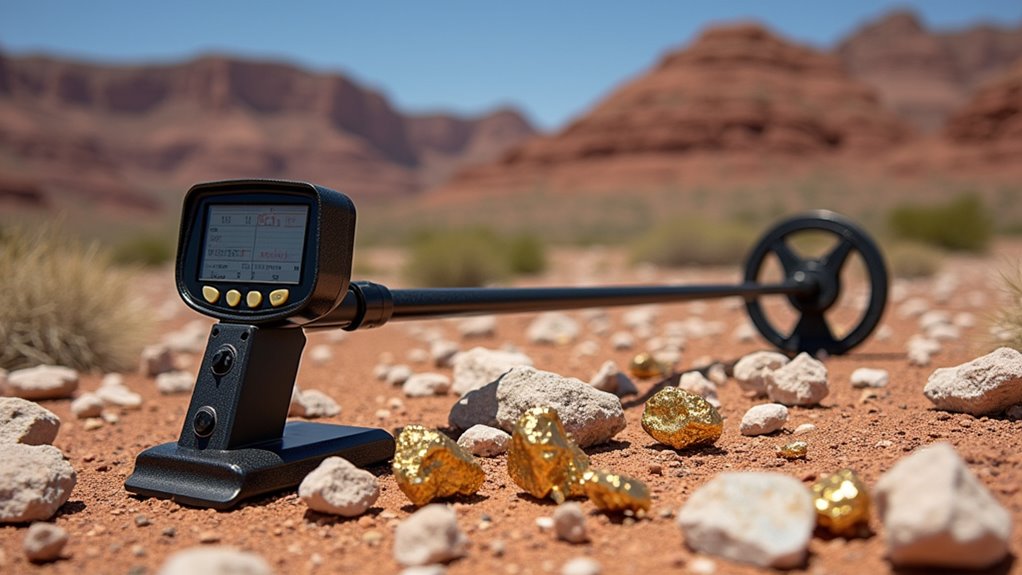
Fake gold absolutely triggers metal detectors – that’s both the problem and the point. These counterfeit pieces typically contain other conductive metals that produce signals similar to genuine gold. Metal detectors, especially VLF models, can’t reliably distinguish between real gold and clever imitations like gold-plated brass or copper alloys. Even top-shelf detectors get fooled by high-quality fakes! The real magic happens when you combine detector readings with acid tests and density checks – there’s more to this golden mystery.
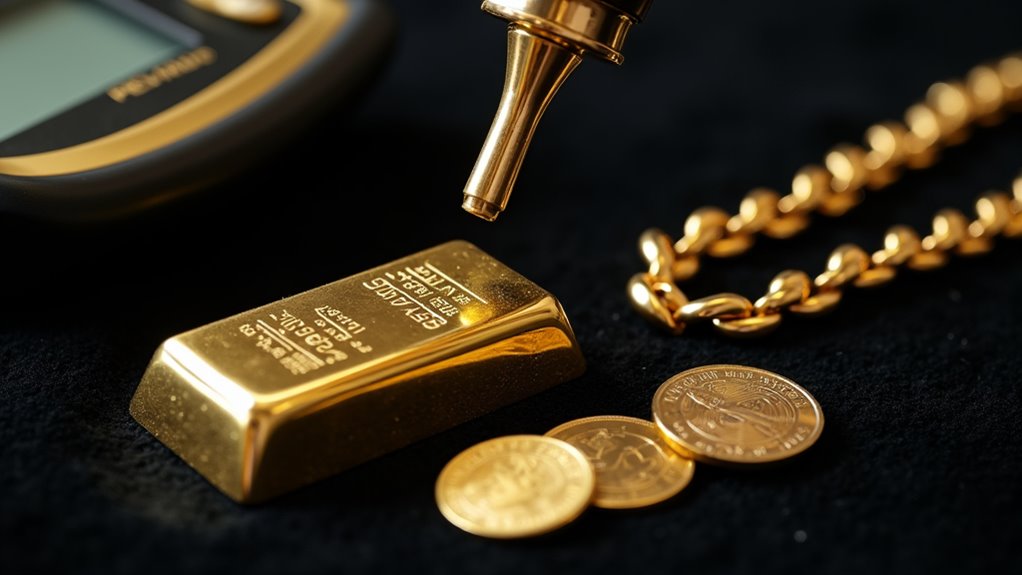
While treasure hunters have long relied on metal detectors to strike gold, the rising number of counterfeit precious metals has turned these electronic prospecting tools into frontline soldiers in the war against fake gold. The reality is that fake gold absolutely can trigger metal detectors, creating a frustrating challenge for prospectors and collectors trying to separate the genuine article from sophisticated counterfeits.
Modern metal detectors, particularly VLF (Very Low Frequency) and PI (Pulse Induction) models, respond to various metallic materials – not just precious metals. This means that gold-plated items, alloys designed to mimic gold’s appearance, and even base metals with similar conductivity properties can generate signals that might fool less experienced users. The detector’s sensitivity settings and discrimination features play essential roles in how it responds to these imposters. Professional dealers often check for manufacturer’s stamps to verify authenticity before using detection equipment. Advanced detectors like the ground balance feature help optimize performance in mineralized soils, while techniques like XRF analysis can provide further verification of gold content, enhancing the accuracy of assessments. Understanding how to identify fake gold jewelry can also aid in discerning counterfeit items before relying solely on metal detection. Additionally, using gold prospecting tools can help improve overall detection success rates. Furthermore, knowledge of mining methods can provide insights into the origins of the materials being searched for.
Metal detectors can be deceived by gold-plated items and clever alloys, making experience and proper calibration crucial for accurate detection.
The good news? Metal detectors can be calibrated and used alongside other testing methods to help identify suspicious finds. Real gold exhibits distinct characteristics – it’s dense enough to sink immediately in water, won’t react with nitric acid, and shows zero attraction to magnets. Fake gold often fails these basic tests, floating or hovering in water, turning green when exposed to acid, or showing magnetic properties that betray its true composition. Additionally, understanding visual inspections can further aid in detecting counterfeit items before relying on metal detection.

The accuracy of metal detection depends heavily on several environmental and technical factors. Soil mineralization can throw off readings, while the depth of buried objects and the size of gold nuggets greatly impact signal strength. Detector coil size and operating frequency also affect the equipment’s ability to distinguish between genuine gold and counterfeit items – higher frequencies typically show greater sensitivity to smaller pieces.
For serious gold hunters, improving detection skills means mastering their equipment’s settings and understanding how different types of fake gold might trigger their devices. Regular practice with known gold samples helps develop the expertise needed to recognize genuine signals, while knowledge of local geology can guide prospectors to more promising search areas. Some treasure hunters even carry portable testing kits to verify their finds on the spot.
The market’s flooded with increasingly sophisticated counterfeits, some sporting convincing karat stamps and surface treatments that can fool casual inspection. But here’s the kicker – while metal detectors might pick up these fakes, they’re just one tool in the authentication arsenal. Smart hunters combine electronic detection with multiple testing methods, including acid tests, density checks, and careful visual inspection of hallmarks.
Frequently Asked Questions
How Accurate Are Metal Detectors in Distinguishing Between Real and Fake Gold?
Metal detectors struggle with definitively distinguishing real from fake gold. While they can detect conductivity differences, many metals mimic gold’s conductive properties.
High-frequency detectors (45-61 kHz) offer better accuracy but aren’t foolproof. Even pro-grade units can be fooled by copper, brass, or gold-plated items.

The most reliable results come from combining metal detection with other testing methds like specific gravity or acid tests.
Can Gold-Plated Items Trigger Different Responses Than Solid Gold Jewelry?
Gold-plated items typically trigger weaker signals than solid gold due to their thinner gold content.
The base metals underneath the plating create mixed conductivity readings that metal detectors struggle to interpret.
While a thick 18k solid gold chain screams “I’m here!” on the detector, its plated twin whispers a more confusing song.

The difference is especially noticeable when using high-frequency detectors, which excel at picking up variations in metal composition.
Do Airport Metal Detectors Use Different Technology for Detecting Precious Metals?
Airport metal detectors don’t use specialized technology just for precious metals.
The same electromagnetic pulse induction or continuous wave systems detect all metallic objects. While some advanced detectors can differentiate between metal types, they’re primarily focused on finding potential threats.
The distinction between gold and other metals isn’t their priority – they’re looking for anything that conducts electricity, regardless if it’s a $10k chain or a smuggled weapon.
What Other Metals Are Commonly Used to Create Counterfeit Gold Items?

Tungsten tops the list of counterfeit gold materials due to its nearly identical density (19.3g/cm³).
Brass, a copper-zinc combo, remains a classic faker’s choice for its golden hue.
Copper-gold alloys sneak into the mix, while some crafty counterfeiters opt for nickel-based compounds.
Platinum occasionally shows up in high-end fakes, but it’s pricey for fraudsters.

The real kicker? Gold-plated tungsten bars – they’re basically the celeb’s of the fake gold world!
Can Wearing Multiple Fake Gold Pieces Affect Metal Detector Sensitivity?
Multiple fake gold pieces can absolutely amplify metal detector sensitivity.
When several counterfeit items cluster together, they create a stronger collective electromagnetic signature – it’s basically a party of conductivity!
The combined mass and surface area of these fakes generates more pronounced signals than single pieces.

However, this enhanced detection isn’t necessarily helpful, since it makes distinguishing between genuine and fake gold even more challenging for the equipment.