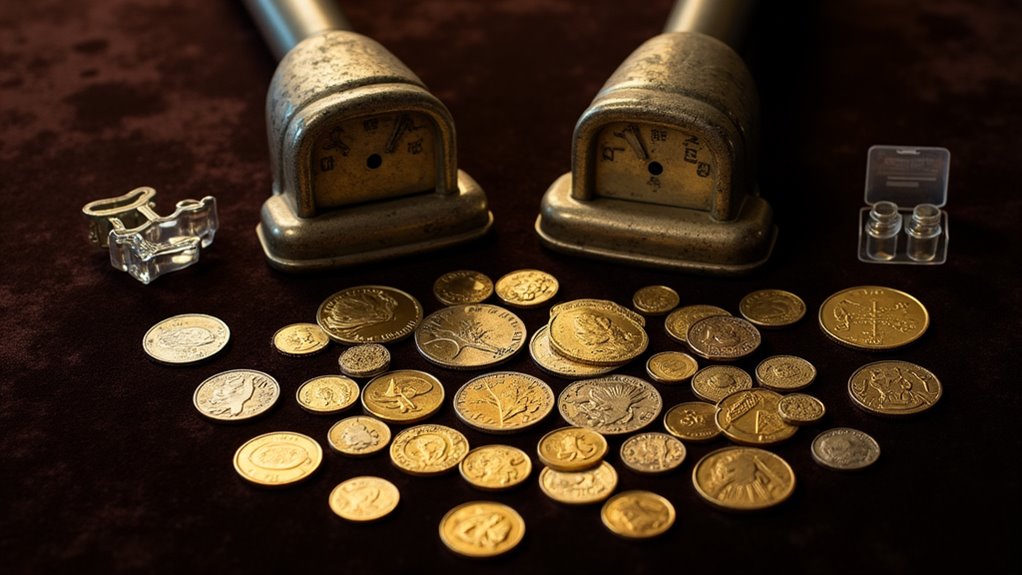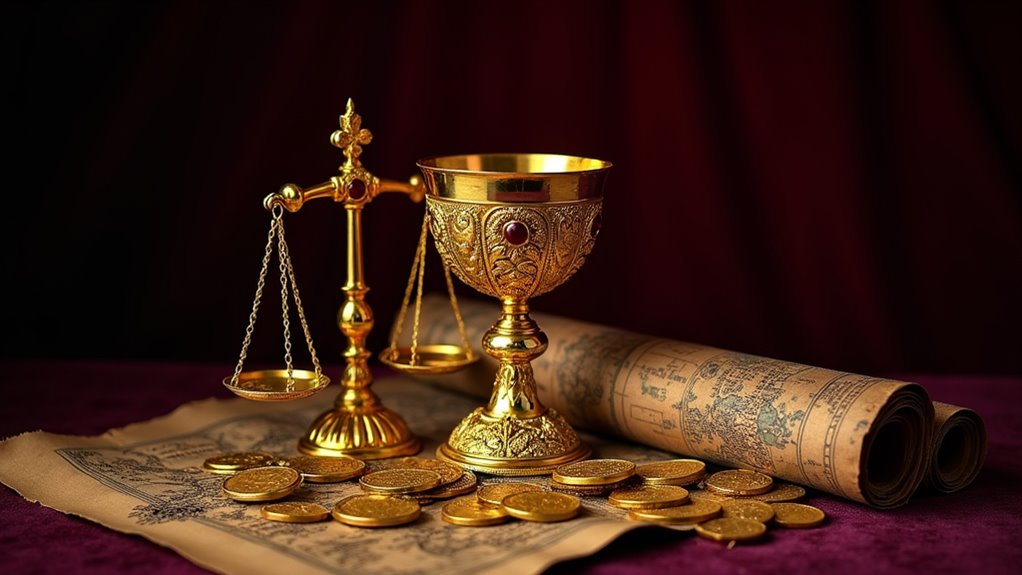

Gold ruled medieval society with an iron (or should we say golden?) fist. From crowning kings to funding crusades, this glittering metal transformed ordinary rulers into legendary figures wielding divine authority. Religious institutions flaunted it in crosses and relics, while nobles hoarded it like dragons in their castle-turned-fortresses. The introduction of gold pennies in 1257 revolutionized commerce, establishing gold as the ultimate power player. There’s way more beneath that shiny surface.

Gold blazed through medieval society like divine fire, transforming everything it touched from mundane to magnificent. As the ultimate symbol of power and prestige, gold didn’t just shine – it dominated the medieval landscape, with kings and nobles hoarding it like dragons guarding their precious treasure. The precious metal adorned everything from royal crowns to castle walls, screaming “I’ve got the power!” to anyone who dared look.
In medieval times, gold wasn’t just wealth – it was pure power, turning ordinary rulers into legendary figures who sparkled with divine authority.
The Crusades turned Europe’s gold game completely upside down. When crusaders came marching back with their shiny souvenirs, they basically kick-started a medieval gold rush. Suddenly, trade routes lit up like Christmas trees, and Europe’s economy got the caffeine shot it desperately needed. The introduction of the gold penny in 1257 wasn’t just another coin – it was basically medieval Europe saying “We’re getting serious about this money thing.” This newfound wealth also mirrored the strategic importance that gold has maintained in central bank reserves, showcasing its enduring value. Additionally, central banks continue to utilize gold as a currency support mechanism, ensuring stability in times of economic uncertainty.
Religious institutions couldn’t get enough of the stuff either. They slapped gold on everything from crosses to relics, creating a dazzling display that merged earthly wealth with divine authority. Goldsmiths went absolutely bonkers, crafting pieces that would make modern jewelry designers weep with envy. These weren’t just pretty trinkets – they were power moves, showing everyone who had the divine backup.

Storage became a whole thing too. Medieval folks weren’t exactly trusting their local banks (mainly cause they didn’t exist). Instead, they got creative – melting gold into ingots, stuffing them into secret compartments, and basically turning their castles into medieval Fort Knoxes. During times of crisis, gold became the ultimate “I told you so” asset, outlasting everything from plagues to peasant revolts.
The social impact? Talk about drawing a line in the sand! Gold ownership created a medieval version of the velvet rope – you either had it or you didn’t. Nobles flashed their bling like medieval influencers, while religious leaders used it to remind everyone they had connections both upstairs and downstairs. The gold trade turned some regions into medieval Wall Streets while others got left in the dust.
In medieval commerce, gold coins were basically the American Express cards of their day – accepted everywhere that mattered. But unlike modern credit, these babies had real weight (literally). Merchants weighed and tested every coin, cause medieval fraud was definitely a thing. International trade exploded, turning local markets into medieval trading floors where gold spoke louder than words.
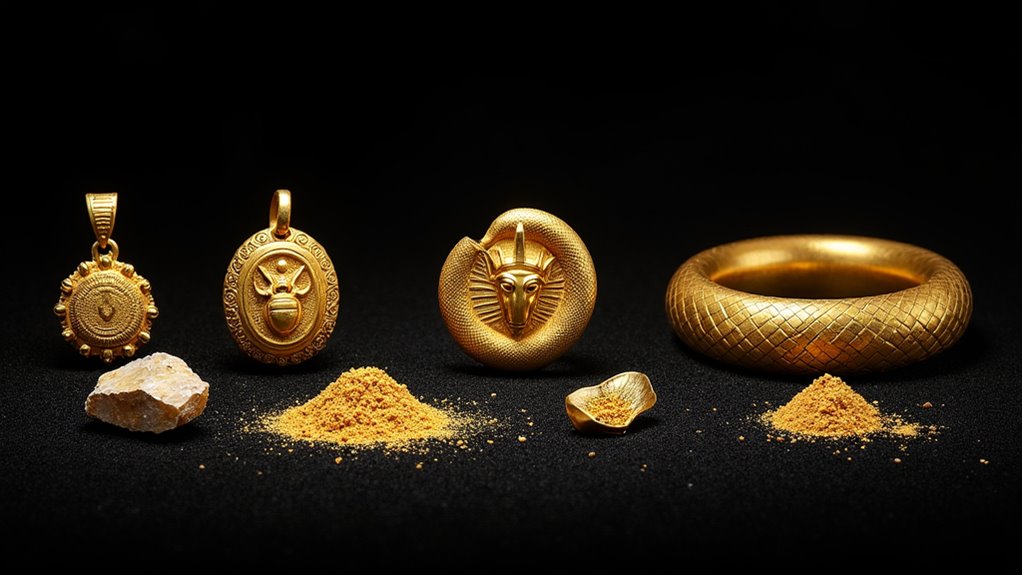
Through it all, gold maintained its iron grip on medieval society, proving that whether you’re talking 1223 or 2023, humans never really lose their appetite for that sweet, yellow metal. Its allure was reminiscent of the divine association that ancient civilizations, like the Egyptians, held towards gold, further embedding its significance within the fabric of human history.
Frequently Asked Questions
How Did Medieval Alchemists Attempt to Create Gold From Other Materials?
Medieval alchemists mixed mercury, sulfur, and base metals while heating them in furnaces, convinced they could transform these materials into gold.
They’d toss in some real gold as a “starter” (yeah, that totally works).

The whole process relied on the mythical Philosopher’s Stone – their magic bullet for purification.
Between mystical rituals and primitive chemical reactions, they basically created fancy-looking alloys instead of actual gold.
What Security Measures Did Medieval Merchants Use When Transporting Gold?
Medieval merchants weren’t messing around when it came to protecting their precious cargo. They employed armed escorts (often knights) and relied heavily on the whole “loose lips sink ships” approach – keeping routes top-secret.
Smart traders used false compartments, reinforced wagons, and even spread fake intel about shipment times. They’d split larger gold loads into smaller batches and form alliances with local bigwigs to guarantee safe passage thru dangerous territories.
Were There Any Gold-Related Superstitions or Myths in Medieval Society?

Medieval society was absolutely obsessed with gold-related myths.
People believed gold jewelry could ward off evil spirits and protect their souls from harm. The metal’s divine powers were thought to channel heavenly blessings, while melted gold was used in protection charms.
But it wasn’t all positive – tales like King Midas warned about gold’s corrupting influence.
Alchemists even pursued the philosophers stone, believing gold held the key to eternal life and enlightenment.
How Did Medieval Goldsmiths Test Gold Purity Without Modern Technology?

Medieval goldsmiths were surprisingly sophisticated in their purity testing methods.
They primarily relied on touchstones – black rocks that revealed gold’s true nature through streaking patterns.
Fire assay was their heavy-duty option, burning away base metals to isolate pure gold.
Some craftsmen got hands-on with acid testing, dropping nitric acid on filed spots to gauge reactions.
And let’s not forget the old-school bend test – pure gold’s malleability was a dead giveaway!
What Punishments Were Given for Gold Counterfeiting in Medieval Times?
Medieval counterfeiters faced absolutely brutal consequences. Rulers weren’t playing around – counterfeiting gold was basically treason, and the punishments were designed to shock!
Think losing hands, getting boiled alive (yikes), or the classic hanging-drawing-quartering combo. Women typically got burned or strangled instead.
Some poor souls ended up displayed in chains as a grim warning. Even mint workers caught tampering with gold weren’t safe – castration under Henry I became their special nightmare.