
Gold’s epic journey began in the Black Sea region around 5000 BCE, with the oldest known artifacts discovered at Bulgaria’s Varna Necropolis. Ancient Egyptians took things next-level, establishing organized mining ops in Nubia by 1500 BCE and cornering the market like total bosses. Their innovative craftsmen mastered techniques like granulation and inlays, while using the precious metal to flex divine authority. This glittering tale of innovation and power’s just getting started.

While modern investors obsess over gold’s daily price swings, humanity’s fascination with this precious metal stretches back millennia to its humble discovery in ancient streambeds. The earliest documented use of gold dates to the 5th millennium BCE in the Black Sea region, where the spectacular Varna Necropolis in Bulgaria yielded the oldest known gold artifacts, dating to around 4000 BCE. These findings reveal that our ancestors weren’t just magpies attracted to shiny things – they were sophisticated craftsmen who recognized gold’s unique properties.
Gold’s allure isn’t just modern market mania – it’s a story as old as civilization itself, beginning in ancient riverbeds millennia ago.
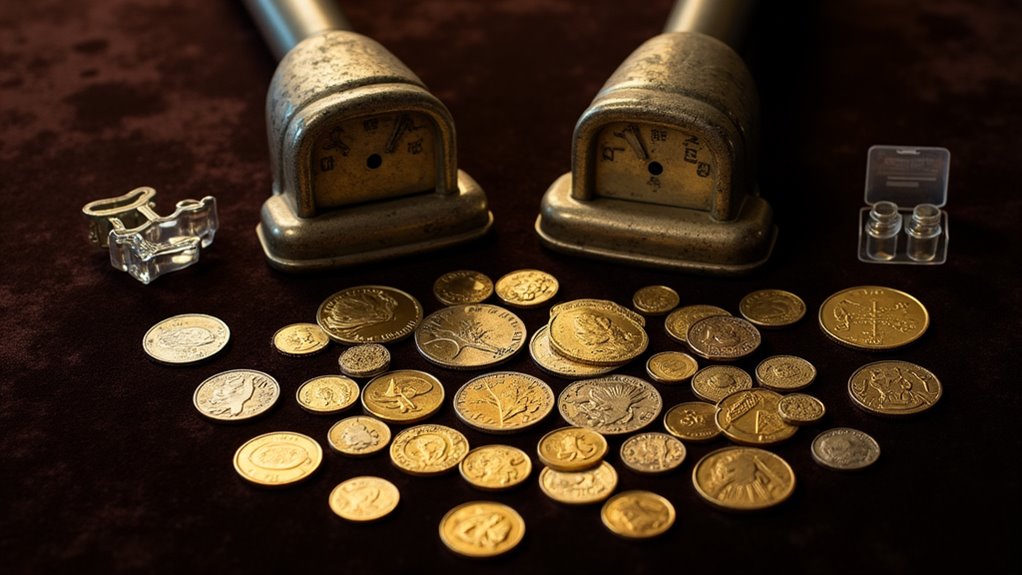
The ancient Egyptians took this obsession to a whole new level, turning gold into a symbol of divine power and immortality. They weren’t messin’ around when they established the first organized mining operations in Nubia, fundamentally cornering the ancient world’s gold market by 1500 BCE. Talk about an early monopoly! These savvy traders were also the first to use gold as an international currency, proving that even ancient civilizations knew the value of a solid gold portfolio. This practice laid the groundwork for modern monetary policy that would evolve over the centuries. By harnessing advanced mining techniques, they ensured that their gold supply remained steady and plentiful, which was a crucial strategy for maintaining their global gold reserves.
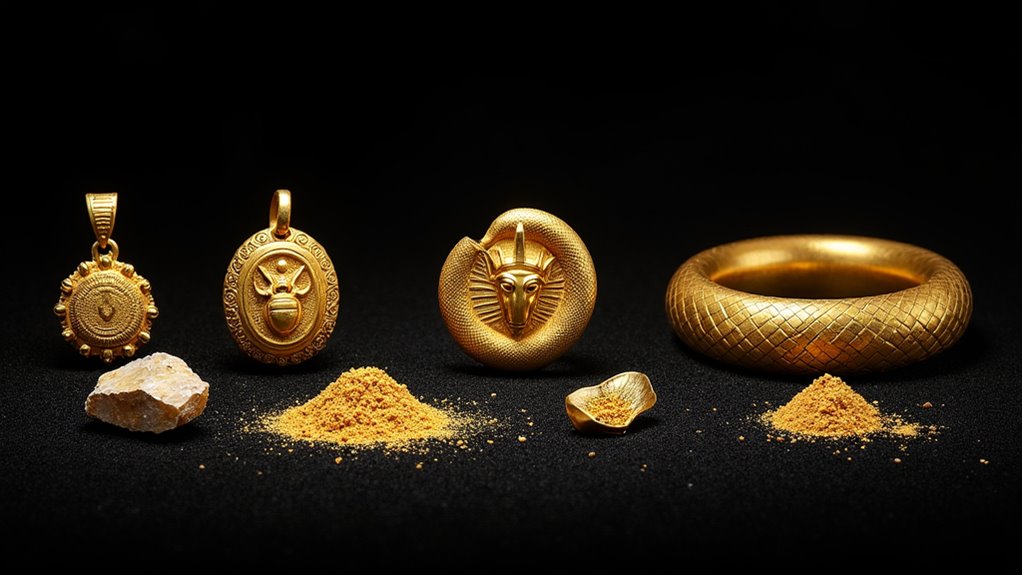
The technical sophistication of early gold crafting is mind-blowing. Egyptian artisans were basically the original jewelry designers, pioneering techniques like granulation and inlays that would make modern craftsmen sweat. The Romans later jumped on the bandwagon, introducing purification methods that took gold quality to the next level.

And lets not forget those early Mesopotamian metalworkers who figured out that mixing gold with other metals could create more durable alloys – ancient innovation at its finest.
Religious and cultural practices gave gold its early street cred. Ancient civilizations weren’t subtle about using gold to flex their spiritual connections – creating elaborate idols, masks, and burial artifacts that screamed “divine authority.” These weren’t just pretty trinkets; they were powerful symbols that reinforced social hierarchies and religious beliefs. The Egyptian pharaohs particularly excelled at this game, turning their tombs into veritable gold vaults, which served as a testament to their royal symbolism and status in the afterlife.
As mining techniques evolved from simple placer methods to more sophisticated hydraulic operations, the Greeks and Romans expanded the gold game considerably. They developed new ways to extract gold from hard rock formations, proving that where there’s a will (and potential profit), there’s a way.
The spread of gold use from its origins in Eastern Europe and the Near East created a complex web of trade routes, including the famous Silk Road, where gold became an essential currency for international commerce.

This early history of gold reads like a blueprint for modern market dynamics – complete with monopolies, technological innovation, and status symbols. While we’ve moved beyond using gold masks in burial rituals, our fascination with this precious metal hasn’t dimmed one bit. Some things, it seems, really are eternal.
Frequently Asked Questions
How Did Ancient Civilizations Determine the Purity of Gold?
Ancient civilizations mastered several ingenious methods to test gold purity.
Fire assaying, pioneered by those crafty Egyptians around 1500 BCE, involved heating gold with lead in bone ash crucibles – talk about getting fired up!
The touchstone method left golden streaks for comparison, while Archimedes’ specific gravity principle got real specific about density.

And let’s not forget the Lydians’ salt cementation process – they literally brought home the bacon by removing silver impurities.
What Tools Did Early Humans Use to Mine Gold?
Early humans wielded an impressive array of primitive tools to extract gold.
Stone cleavers and fist-sized hammers dominated early mining, while wooden pans became essential for river panning.
Ancient Egyptians got creative with stone hammers and chisels for digging tunnels, while the Sumerians engineered clever sluice boxes.

Basic querns and mortars crushed ore, and two-handed mallets made quick work of stubborn quartz veins.
Even simple wooden sieves proved surprisingly effective!
Did Prehistoric Humans Wear Gold Before Learning to Smelt It?
Yes, prehistoric humans definitely rocked gold before mastering smelting!
Here’s the wild thing – gold was one of the few metals they could just pick up and work with. Those early fashionistas found gold nuggets in streams and hammered them into jewelry using basic stone tools.

The oldest gold bling we’ve found dates back to around 4600 BCE in Bulgaria’s Varna Necropolis.
Pretty flashy for cavemen who hadn’t even figured out how to melt metal yet!
Which Ancient Culture First Used Gold as Currency?
Ancient Egyptians blazed the trail, becoming the first civilization to use gold as currency around 3,000 BC.
While they didn’t exactly mint coins (that came way later!), they cleverly used gold “rings” as standardized trade money.

Talk about innovation! These weren’t your typical jewelry pieces – they functioned as a legitimate currency system, complete with established exchange rates against silver.
The Egyptians basically wrote the playbook for precious metal monetization!
How Did Early Humans Discover Where to Find Gold Deposits?
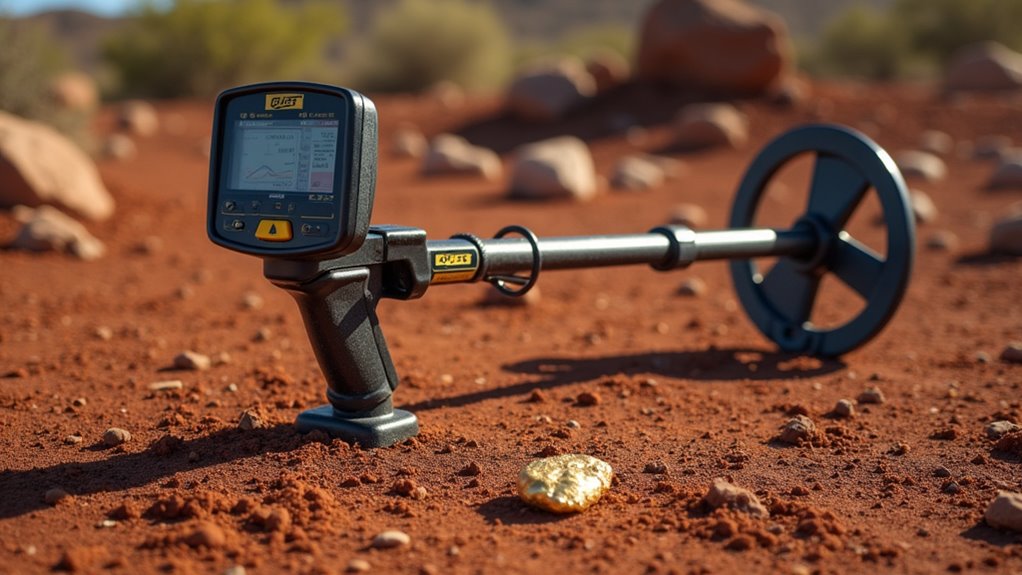
Early humans discovered gold deposits through observation of natural indicators in the environment. They spotted shiny yellow nuggets in streambeds where water had naturally concentrated the heavy metal.
Following these alluvial deposits, they learned to identify promising locations by looking for quartz veins, soil discoloration, and geological features like ancient riverbeds.
Simple but effective panning techniques helped them separate gold from sediment thanks to its unique density and weight.