Modern gold forecasting has ditched the crystal ball for something way cooler: predictive analytics. The game-changers? ARIMA models and LSTM neural networks that crunch massive datasets to spot market patterns human eyes might miss. These sophisticated tools analyze everything from interest rates to Twitter sentiment, achieving impressive accuracy rates. Sure, they’re not perfect – market volatility still throws curveballs. But combining AI with traditional economic indicators? That’s where the real gold rush begins.

While traditional gold forecasting has long relied on gut feelings and crystal balls, predictive analytics is finally dragging the yellow metal into the digital age – and it’s about time! The marriage of advanced statistical algorithms and machine learning has revolutionized how we peer into gold’s glittery future, replacing hunches with hard data and sophisticated modeling techniques that would make even the most seasoned trader’s head spin.
Gone are the days when traders squinted at charts and consulted their magic 8-balls. Today’s predictive analytics arsenal includes ARIMA models that slice through time-series data like a hot knife through butter, and LSTM neural networks that dig deep into non-linear patterns that human eyes might miss. These aren’t your grandfather’s forecasting tools – they’re the Ferrari’s of financial modeling, capable of processing massive amounts of data faster than you can say “bull market.”
Modern gold forecasting harnesses ARIMA and neural networks to transform market predictions from guesswork into data-driven precision.
The real magic happens when these models start crunching numbers across multiple dimensions. Principal Component Analysis strips away the noise, leaving only the juiciest predictors – think interest rates, GDP growth, and those pesky geopolitical events that send markets into a tizzy. Understanding the fundamental factors driving gold prices is essential for accurate forecasting, especially since gold’s role in economic uncertainty has become a pivotal factor influencing investor behavior. Additionally, shifts in central bank policies can lead to significant changes in the demand for gold as a safe-haven asset.

And let’s not forget sentiment analysis, because apparently, the machines now read Twitter better than we do (scary thought, isn’t it?).
But here’s the kicker – even these fancy algorithms aren’t perfect. They struggle with the same demons that plague human forecasters: market volatility, unpredictable global events, and the occasional tendency to see patterns where there aren’t any. It’s like trying to predict where lightning will strike while standing in a thunderstorm wearing a copper suit – technically possible, but fraught with risks.
The proof is in the pudding, though. Case studies have shown these predictive models hitting their marks with impressive accuracy. ARIMA-based forecasts have been nailing time-series predictions, while LSTM models have been connecting dots across decades of data that would make a conspiracy theorist jealous.
Even better, when you throw PCA into the mix, the error rates drop faster than a gold bear’s jaw during a rally.

What makes this all tick is the beautiful symphony of economic indicators, market trends, and good old-fashioned supply and demand dynamics. These models don’t just look at price charts – they digest everything from inflation rates to central bank policies, creating a thorough view of what makes gold tick. Gold’s role in strengthening monetary policy is a crucial element that underpins many of the economic indicators influencing these forecasts.
And while they might not have crystal balls, they’ve got something better: cold, hard data and the computing power to make sense of it all.
The future of gold forecasting isn’t in tea leaves or tarot cards – it’s in the silicon chips and algorithms that are finally bringing some method to the madness of precious metals markets. And if that doesn’t get your investment neurons firing, we don’t know what will!
Frequently Asked Questions
How Does Weather Data Impact the Accuracy of Gold Yield Predictions?
Weather data slams gold yield predictions with game-changing accuracy.
Historical patterns show how rain, heat, and storms mess with mining operations – and not in a fun way!
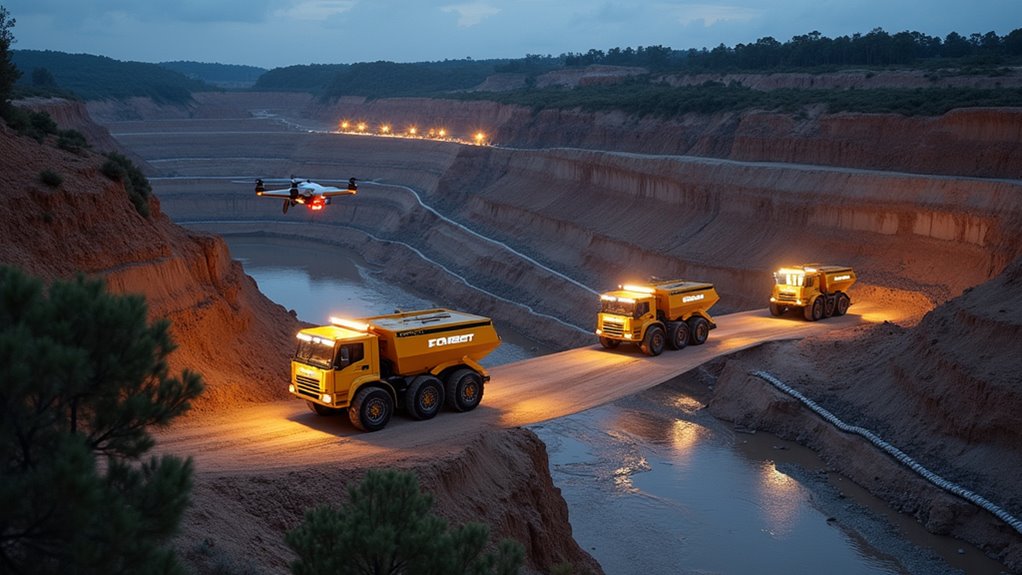
Temperature swings hit equipment efficiency hard, while flooding can shut down entire sites.
Smart miners are mashing up weather forecasts with production metrics, creating prediction models that actually work.
It’s not rocket science, but it’s pretty darn close to nailing those elusive yield numbers.
What Is the Minimum Historical Data Required for Reliable Gold Forecasting?
Gold forecasting demands serious data muscle – you can’t just wing it. For reliable predictions, analysts typically need 10+ years of daily data for long-term trends, while short-term forecasts can scrape by with 1-3 years of high-frequency numbers.
But here’s the kicker: anything less than 3-5 years? That’s playing with fire. Machine learning models get twitchy without enough historical context to chew on, and nobody wants a hangry algorithm!
Can Predictive Analytics Detect Potential Equipment Failures Affecting Gold Extraction?

Predictive analytics absolutely crushes it when spotting equipment issues before they wreck gold extraction.
Using IoT sensors and AI algorithms, mining operations can detect subtle red flags – like weird vibration patterns or temperature spikes – that spell trouble.
The tech’s already proven itself, slashing unplanned downtime by 75% at some sites.
Sure beats waiting for catastrophic failures that cost $22k per hour!

Even better? These systems get smarter over time, learning from every hiccup and near-miss.
How Often Should Prediction Models Be Retrained With New Mining Data?
Mining prediction models demand regular tune-ups!
Ideal retraining intervals typically fall between monthly and quarterly cycles, depending on data flow intensity. High-volume operations need monthly updates to stay sharp, while static mines might get away with biannual refreshes.
But here’s the kicker – when new tech hits or markets go bonkers, it’s time for an emergency model makeover!

External factors like price swings and geopolitical drama can force early retraining sessions.
What Role Do Geological Factors Play in Prediction Model Accuracy?
Geological factors are absolute game-changers in prediction accuracy.
Fault zones and fractures serve as gold’s favorite highways, while geochemical markers like Hg and Pb act as nature’s breadcrumbs leading to deposits.
Temperature-pressure dynamics create gold’s perfect storm – dictating where it’ll settle down.
Historical data from legendary spots like Witwatersrand Basin proves these geological factors aren’t just theories – they’re the real MVPs in nailing those predictions!