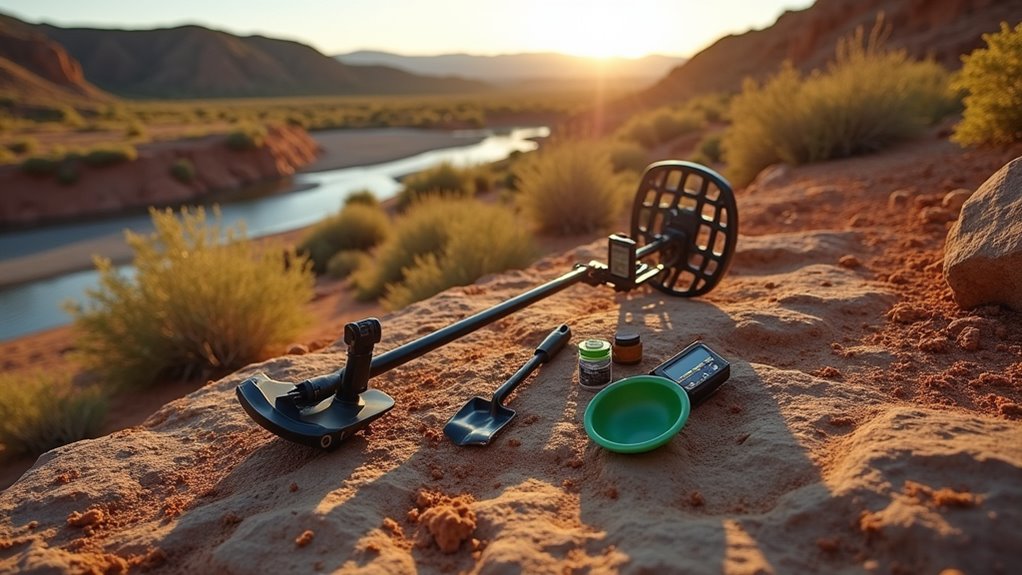
Gold mining’s gone full-on sci-fi! The industry’s ditching pickaxes for AI-powered robots that handle 80% of routine tasks, while human operators kick back in cushy control rooms. These smart machines are slashing workplace injuries by 75% and boosting profits with precision ore sorting. Environmental impact? Way down. Costs? Plummeting. It’s a tech revolution that’s transforming one of Earth’s oldest industries into something straight outta tomorrow – and that’s just scratching the surface.

While old-timers once wielded pickaxes and pan-sifted for precious metals, today’s gold mining has gone full-on robotic revolution. The transformation has been nothing short of extraordinary, with automated systems now handling 80% of routine tasks that previously required backbreaking manual labor. This ain’t your grandpa’s gold rush – it’s a high-tech bonanza where AI-powered machines sort ore with surgical precision while remote operators orchestrate the entire show from climate-controlled rooms miles away. Additionally, innovations in remote gold mine monitoring have enhanced operational oversight and decision-making, further streamlining the mining process. Digital mapping tools have also emerged as invaluable assets, improving spatial understanding and navigating complex underground environments. Moreover, the integration of AI and data analytics has proven essential in optimizing resource extraction.
The safety gains are staggering (and let’s be honest, mining was never exactly a cushy desk job). Workplace injuries have plummeted by 75% since robots started tackling the most dangerous tasks. These mechanical warriors fearlessly venture into unstable tunnels, sniffing out structural weaknesses and gas leaks while human workers stay safely above ground. It’s like having an army of tireless inspectors that never call in sick or demand overtime pay.
Mining’s deadliest jobs now belong to robots, turning death-defying human labor into a safer, machine-managed operation.
Environmental sustainability has gotten a major boost too. These smart systems are practically obsessed with optimization, squeezing every ounce of value from extracted materials while minimizing waste. AI-controlled operations have become surprisingly eco-conscious, integrating renewable energy sources and rehabilitating mined areas. Who knew robots could be such tree-huggers?

The financial impact is enough to make accountants do backflips. Labor costs have nosedived as machines take over the grunt work, while predictive maintenance systems catch equipment problems before they become budget-crushing catastrophes. With 15% projected annual revenue growth, the sector’s looking shinier than a freshly polished gold bar. Insurance companies are practically throwing discounts at mines that deploy robots in hazardous zones – turns out metal workers are better risk-takers than flesh-and-blood ones.
The tech innovations driving this revolution are mind-bending. Machine learning algorithms crunch data faster than a hungry prospector devours his lunch, while integrated monitoring systems make real-time adjustments that would make a Formula 1 pit crew jealous. Remote-controlled machinery has transformed mining operations into something resembling a sophisticated video game, except the prizes are very, very real. Additionally, the integration of smart sensors has allowed for enhanced data analytics that inform decision-making processes.
But it’s not all golden robots and AI rainbows. Smaller mining operations are struggling to foot the massive upfront costs of automation, creating a technological divide in the industry. System failures can bring operations to a screeching halt, proving that even the most advanced technology isn’t immune to Murphy’s Law.
Still, the writing’s on the cave wall – automation and robotics aren’t just changing gold mining, they’re completely reinventing it. The future of mining looks less like a dusty prospector and more like a tech startup, just with slightly more explosions and considerably more precious metals.
Frequently Asked Questions
How Much Does It Cost to Implement Automation Systems in Gold Mining?
Implementing automation in gold mining ain’t cheap – we’re talking serious cash! Initial investments typically hit $1 million+ for medium-scale operations.
The breakdown? Robots cost $100k-500k each, fancy sensors run $50k-200k per site, and don’t forget the pricey software licenses at $50k-250k annually.

But here’s the kicker – companies usually break even within 3-5 years thanks to 10%-30% operational cost savings.
Pretty steep entry fee, but worth every penny!
What Happens to Mining Jobs When Automation Technology Is Introduced?
Traditional mining roles face major upheaval when automation rolls in.
Manual labor jobs like truck driving and drilling get axed, while tech-savvy positions emerge.
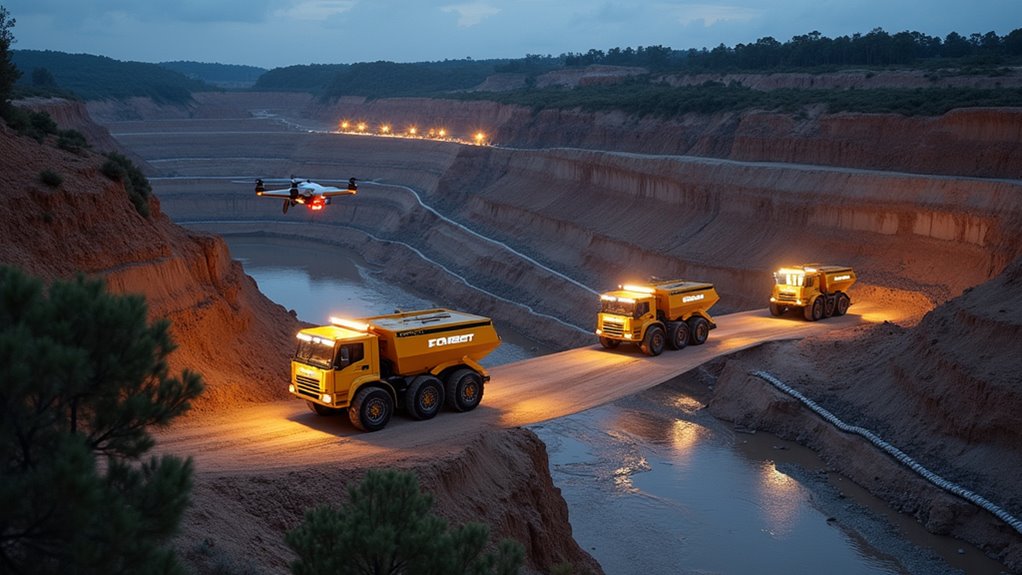
Sure, new roles like data analysts and robotics specialists pop up, but let’s be real – they’re fewer than the jobs lost.
Local communities take the hit hard, with reduced income and spending power.
Some workers manage to retrain and adapt, but many struggle to shift into these fancy new automated systems.
Can Automated Mining Systems Work in Extreme Weather Conditions?
Automated mining systems are surprisingly resilient in extreme weather.
Advanced sensors and AI-driven controls allow machines to operate through storms, intense heat, and bitter cold – though they’re not invincible.

Sure, ice can mess with mobility and dust storms might confuse sensors, but these metal beasts adapt better than humans.
With real-time weather monitoring and predictive analytics, they keep digging when mother nature throws a tantrum.
Pretty impressive stuff, right?
How Long Does It Take to Train Personnel for Automated Mining?
Training personnel for automated mining varies dramatically based on complexity and prior experience.
Entry-level workers need 24-40 hours of basic safety training before diving into the tech stuff.

The real meat of automation training? That’s gonna take anywhere from 2 weeks to 6 months!
Specialized skills like robotics and data analytics demand even more time.
Plus, there’s that essential 8-16 hours of hands-on training that absolutely can’t be skipped.
Continual retraining? Yeah, that’s just part of the deal.
What Are the Environmental Benefits of Using Robotics in Gold Mining?

Robotics in gold mining delivers major environmental wins on multiple fronts.
The tech slashes GHG emissions by 32% per ton and cuts energy costs through smart ventilation systems.
It’s not just about emissions tho – these machines minimize harmful chemical use, especially nasty stuff like cyanide and mercury.
They’re also crushing it in waste management, reducing tailings and improving ore recovery.
Plus, their precise extraction helps preserve ecosystems and speeds up land rehabilitation post-mining.