The smart money knows gold isn’t just for doomsday preppers anymore. Research shows portfolios with 2-17% gold allocation consistently outperform, delivering better returns and lower volatility during market chaos. Between 2007-2021, a modest 17% gold position acted like portfolio kevlar, protecting against nasty drawdowns while boosting gains. Whether through ETFs, mining stocks, or physical bullion, the key is steady, strategic allocation. Theres way more to this golden story than meets the eye.

While Wall Street’s dinosaurs keep pushing the same tired stock-and-bond gospel, savvy investors know there’s more to life than just riding the S&P 500 rollercoaster. The facts don’t lie – gold has proven itself time and again as more than just a shiny trinket for doomsday preppers. Between 2007 and 2021, portfolios with a 17% gold allocation crushed it, delivering both better returns and lower volatility than traditional mixes. Warren Buffett may prefer a lumpy 12% return over a smooth 10%, but diversification still matters. Investing in gold for beginners can provide a solid foundation for reducing overall portfolio risk.
Let’s get real for a minute. The market’s been a wild circus lately, and those “perfectly balanced” 60/40 portfolios aren’t looking so perfect anymore. That’s where gold comes in, playing the role of portfolio bodyguard with its stubborn tendency to zig when everything else zags. We’re talking about an asset that’s been trading around $162 billion daily – this ain’t some penny stock playground. Gold particularly shines during periods of stagflation with outperformance, delivering nearly 17% annualized gains.
Traditional portfolios look shaky these days, but gold stands guard, moving opposite to market chaos with massive daily trading volume.
The numbers tell an interesting story: a modest 2-10% gold allocation has historically jacked up portfolio Sharpe ratios and returns. During the 2005-2019 period, just a 10% gold position slashed maximum drawdowns by 390 basis points. Translation? When markets went full dumpster fire, gold holders weren’t sweating nearly as much as their gold-less peers.

Here’s where it gets juicy – there’s more than one way to get your gold fix. Physical bullion? Sure, if you’ve got a fancy safe and don’t mind playing security guard. Gold mining stocks? They’re like gold on steroids – higher potential returns but also wilder mood swings than your ex. ETFs and mutual funds? Now we’re talking – convenient, cost-effective, and you don’t need a vault in your basement.
The timing couldn’t be better for considering gold. With inflation acting crazy, geopolitical tension everywhere you look, and the dollar looking shakier than a jenga tower, gold’s traditional role as a hedge is more relevant than ever. But let’s not kid ourselves – gold isn’t some get-rich-quick scheme. It’s more like portfolio insurance that occasionally pays out big.
Smart money knows that gold allocation isn’t about timing the market – it’s about time in the market. The sweet spot seems to be around 2-10% for most investors, though some data suggests up to 17% could work depending on your situation. Whatever you choose, stick to it like gum on a shoe. Regular rebalancing is key – don’t let market swings throw your allocations outta whack.
Bottom line? Gold might not be the flashiest player in your portfolio, but it’s proven itself as a reliable teammate during both bull and bear markets. Just remember: this isn’t about getting rich overnight – it’s about building a portfolio that can weather any storm Wall Street throws at it.
Frequently Asked Questions
What Is the Best Time of Year to Buy Gold?
History shows December and January offer the lowest gold prices – if you’re looking to stack some shiny metal.
March/April and June/July are also solid buying windows.

But here’s the real deal: timing the market is mostly BS.
Smart money focuses on economic factors like inflation, interest rates, and USD strength.
The best time to buy? When you’ve got dry powder and the fundamentals align. Period.
How Do Storage Costs Affect Long-Term Returns on Physical Gold Investments?
Storage costs are a silent wealth-killer for physical gold investors.
Annual fees ranging from 0.3% to 0.65% might seem small, but they’re brutal over time.
Home storage? Good luck with those insurance premiums!
Bank boxes are cheap but risky as heck – zero insurance coverage.
Private vaults? They’ll charge you an arm and a leg.
These costs compound yearly, steadily eating away at returns that already tend to lag behind stocks.
Are Gold ETFS Taxed Differently Than Physical Gold?

Nope – gold ETFs and physical gold get hit with the same brutal 28% collectibles tax rate on long-term gains.
The real kicker? Physical gold buyers get slapped with sales tax and VAT up front, while ETF investors dodge those bullets.
Some fancy ETFs pull tax tricks through PFIC structures or futures contracts for better rates, but here’s the truth: Uncle Sam’s gonna get his cut either way.
Just less paperwork with ETFs.
Should I Buy Gold Coins or Gold Bars?

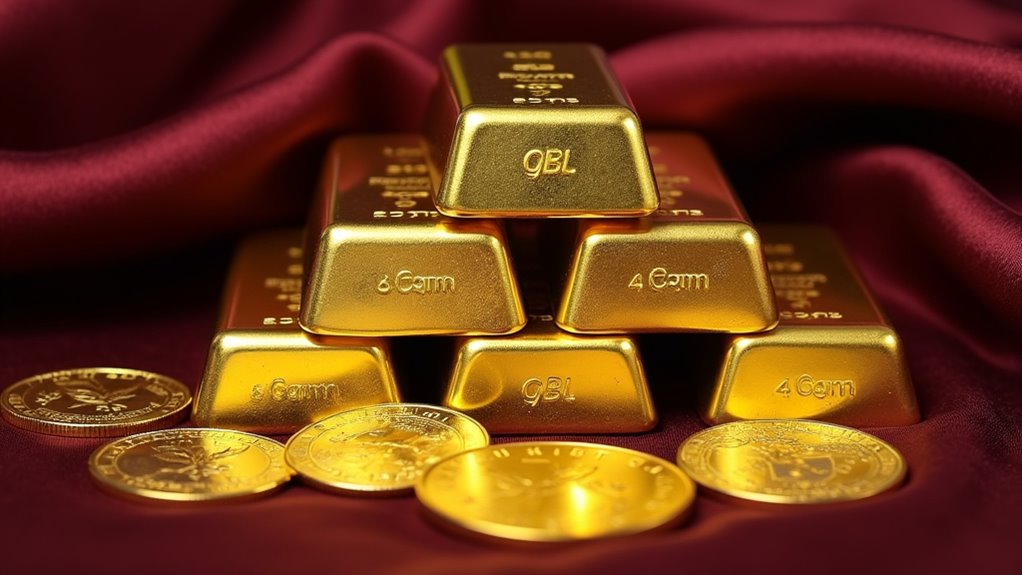
Look, it depends on your goals. Gold bars are the no-nonsense choice if you’re going big – lower premiums and better value per ounce. Period.
But coins? They’re actually smarter for smaller investors. More liquid, easier to sell piece by piece, and some have sweet collectible value.
Plus, you can actually store ’em at home without needing Fort Knox.
Here’s the real deal: Bars for bulk buying, coins for flexibility. Simple as that.
How Can I Verify the Authenticity of Gold Before Purchasing?

Let’s get real – trusting your eyes alone won’t cut it.
Smart buyers use multiple verification methods. Start with basic visual checks for hallmarks and proper coloring.
Then hit it with physical tests – the magnet test never lies, and that ceramic scratch better leave a golden streak.
Still skeptical? Good. Get professional chemical testing done. Those fancy XRF machines don’t mess around.
Bottom line: Trust no one. Verify everything. Your wallet will thank you.