Gold doesn’t just appear by magic – it needs the perfect geological storm. Deep beneath Earth’s surface, mineral-rich fluids circulate through the crust while magma creates a hellish transport system for metals.
Specific chemical conditions like sulfur levels, pH, and salinity must align perfectly. Pressure and temperature changes force gold to precipitate out, usually near tectonic boundaries or in quartz veins.
There’s way more to this fascinating process than meets the eye.
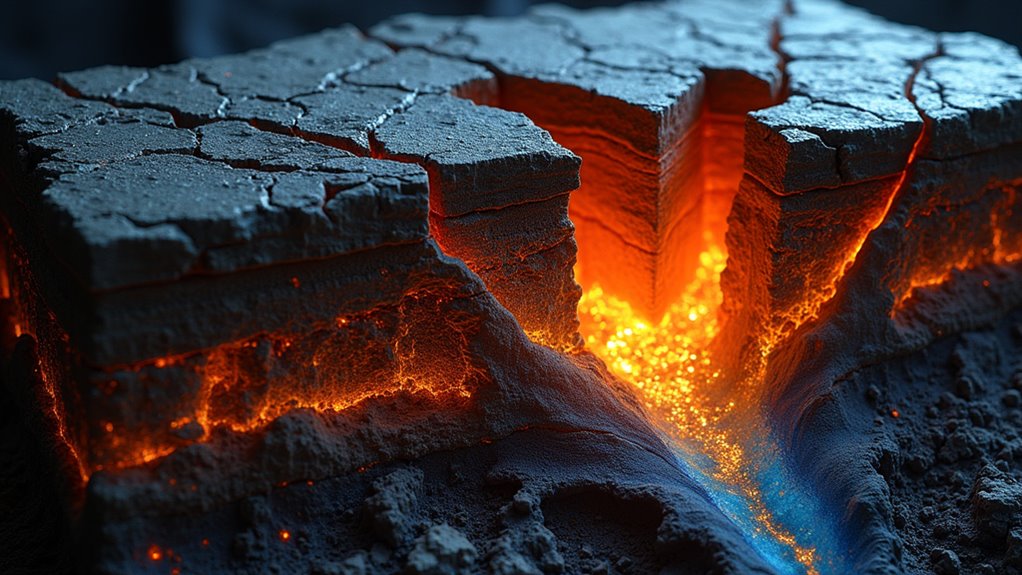
While most folks picture gold as glittering jewellery in shop windows, the reality of how this precious metal forms is way more metal than that. Deep beneath Earth’s surface, it’s absolute chaos – a violent moshpit of molten rock, scalding fluids, and crushing pressures that would make your head spin.

Let’s get real about what’s happening down there. Hot, mineral-loaded fluids are constantly circulating through Earth’s crust like some underground heavy metal mosh pit.
These fluids are seriously aggressive, dissolving gold from surrounding rocks as they cruise through fractures and fissures. When conditions change – maybe the pressure drops or things cool down – boom! The gold drops out of solution faster than a crowd surfer hitting the deck. The mixing of alkaline seawater with these hydrothermal fluids causes gold to precipitate rapidly. Additionally, modern gold mining techniques often rely on advanced extraction methods to efficiently recover gold from these deposits.
Hot fluids thrash through Earth’s crust like headbangers in a mosh pit, snatching gold and dropping it when the party cools down.
But that’s not even half of it. You’ve got magma – literally melted rock – carrying dissolved metals around like some sort of underground uber service for precious metals. As this stuff cools down, it forms these sick gold-bearing veins that metalheads would kill for. These intense processes create various deposit types including magmatic-hydrothermal deposits, which are directly connected to igneous activity.
And here’s the kicker – this usually happens near tectonic plate boundaries, where Earth’s crust is getting absolutely smashed together.

The whole process is like a perfect storm of geological conditions. You need the right chemical soup – plenty of sulfur, specific pH levels, and just the right amount of saltiness. It’s proper fussy, actually.
Then you need the perfect host rocks – some types are just better at holding onto gold than others. Quartz veins are like the VIP section for gold deposits, while carbonaceous sedimentary rocks host these things called Carlin-type deposits that are absolutely mental.
Temperature and pressure are major players in this underground party too. You’ve got your shallow deposits forming at relatively low temps (epithermal), your middle-ground ones (mesothermal), and your deep, hot-as-hell deposits (hypothermal).
Each one’s got its own sweet spot where gold decides to make itself at home.

The really mind-bending part? This isn’t some quick process. We’re talking millions – sometimes billions – of years of Earth doing its thing. Some of the oldest gold deposits are chillin’ in these ancient rock formations called Archean greenstone belts.
They’ve somehow survived being squashed, stretched, melted, and eroded over ridiculous amounts of time.
Frequently Asked Questions
How Long Does It Typically Take for Gold Deposits to Form Naturally?
Mother Nature’s a patient one when it comes to gold formation – we’re talking millions to billions of years here, mate.
Most deposits take at least a few million years to concentrate enough of the shiny stuff to make it worthwhile. Some of those ancient orogenic deposits? They’ve been cooking for over 3 billion years!
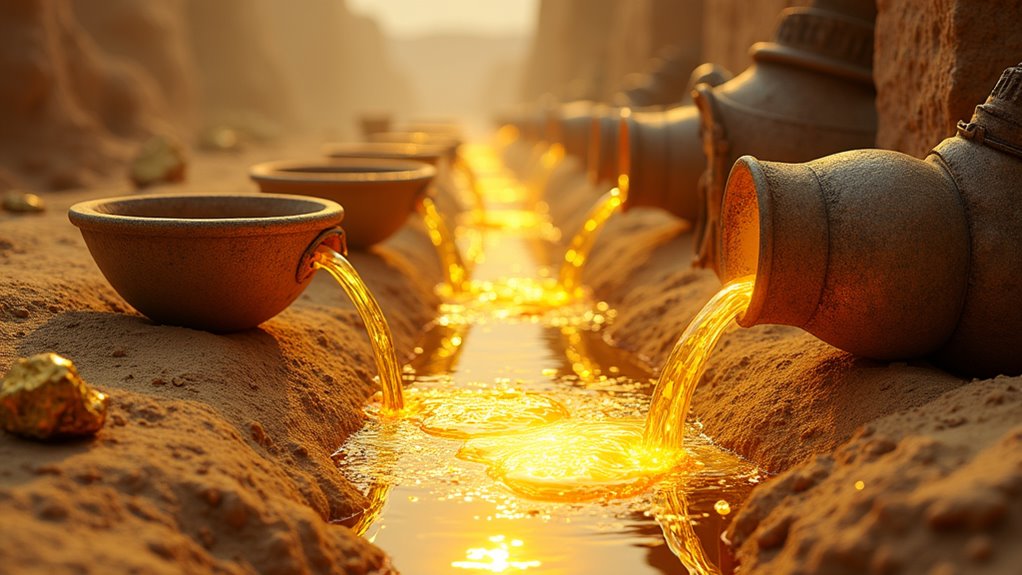
Hydrothermal processes are particularly slow, while placer deposits form a bit quicker through erosion and transport.
Can Gold Deposits Form in Active Volcanic Regions Today?
Absolutely – gold deposits are forming right now in active volcanic zones.
Places like New Zealand’s Taupo region and Indonesia’s Ring of Fire are literal gold factories.
Hot magmatic fluids packed with dissolved gold-sulfur complexes are busy depositing fresh gold as we speak.

These modern deposits can concentrate gold up to 1000x more than typical mantle levels.
Mother Nature’s still got her gold-making mojo working – no ancient history required.
What Depth Below Earth’s Surface Is Most Ideal for Gold Formation?
Gold’s sweet spot? It’s not a one-depth wonder. The richest deposits actually form at multiple levels – from surface-level placers right down to 50-mile deep subduction zones.
But here’s the kicker: most economically viable deposits cluster between 4-15 km below ground. That’s where the pressure and temp hit just right, creating perfect conditions for those juicy hydrothermal deposits.
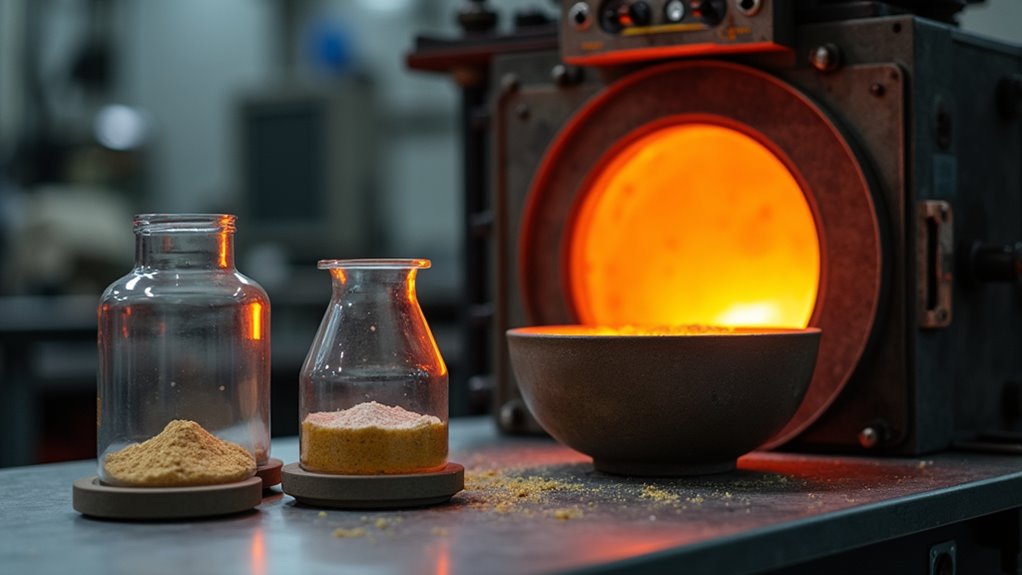
Surface gold’s great, but the real motherlode lurks deeper.
Are Certain Types of Rocks More Likely to Contain Gold Deposits?
Absolutely. Gold’s a picky customer when it comes to real estate. Igneous rocks like granite and rhyolite are prime spots – they’re basically gold magnets.
Metamorphic rocks, especially those greenstone belts, are bloody brilliant at hosting the stuff.
But here’s the thing: it’s those sneaky sedimentary rocks in places like Nevada’s Carlin trend that’ve been hiding some of the world’s biggest deposits.
Hydrothermal alteration’s usually the dead giveaway for where to look.
Does the Presence of Other Minerals Indicate Potential Gold Deposits Nearby?
Absolutely – certain minerals are nature’s neon signs pointing to potential gold.
Quartz veins are classic gold buddies, while pyrite and arsenopyrite are like gold’s clingy mates who won’t leave it alone.
Magnetite and hematite often hang around gold deposits too.
But here’s the kicker – pathfinder elements like arsenic, antimony, and mercury are dead giveaways.
They’re basically gold’s chemical fingerprints scattered across the landscape.
Trust these tell-tale signs.