Successful gold investing ain’t for the faint of heart – it requires a solid game plan to avoid getting burned. Smart investors limit gold to 5-10% of their portfolio and diversify across bullion, coins, and ETFs to spread risk. Hidden costs like storage, insurance, and transaction fees can eat profits alive. Regular portfolio rebalancing and stop-loss orders help tame market volatility. Dollar-cost averaging smooths out the bumps, but there’s way more to mastering this glittering asset’s complexities.

While gold has long been touted as humanity’s favorite “safe haven” investment, let’s get real – there’s nothing safe about throwing your money at a shiny metal without a solid risk management strategy. Smart investors know that gold’s glitter can blind you to its risks if you’re not careful, and that’s exactly why diversification isn’t just a fancy buzzword – it’s your financial lifeline.
The key to not getting burned? Spread those bets like butter on toast. Savvy investors typically keep their gold allocation between 5-10% of their portfolio, mixing it up with different forms like bullion, coins, and ETFs. Regular portfolio review helps ensure proper allocation balance. But don’t stop there – throw in some stocks and bonds for good measure, because putting all your eggs in one golden basket is about as smart as using sandpaper for toilet paper.
Here’s where things get interesting – and by interesting, we mean potentially nerve-wracking. The gold market dances to the tune of everything from inflation rates to geopolitical chaos. Smart money keeps a hawk-eye on economic indicators, seasonal demand patterns, and those pesky technical analysis charts that look like a toddler’s crayon art but somehow matter. Central bank policies create significant ripples in the gold market that can’t be ignored. Additionally, understanding the tax implications of gold investments is crucial for long-term profitability.

Want to really protect your precious metal investment? Time to get nerdy with risk assessment. We’re talking scenario analysis, volatility metrics, and fundamental analysis of mining companies that makes calculus look like kindergarten math. And don’t forget about counterparty risk – because trusting your gold dealer shouldn’t be based on their winning smile and firm handshake.
The costs of gold investing can sneak up on you like a ninja in the night. Storage fees, transaction costs, insurance – it all adds up faster than your ex’s shopping spree. Compare those ETF expense ratios, scrutinize dealer spreads, and for heaven’s sake, don’t forget about the tax implications that could turn your golden dreams into a brass nightmare.
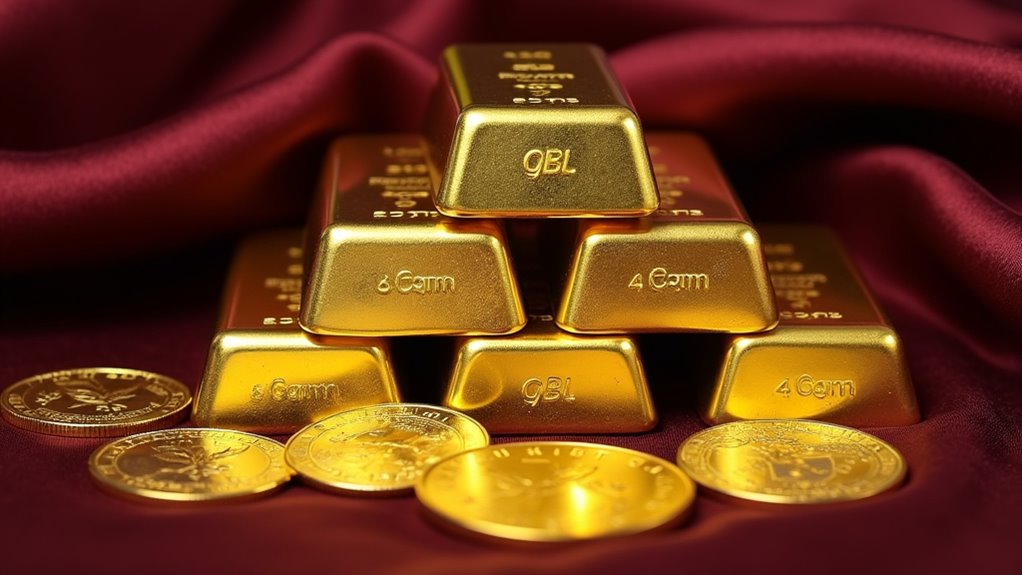
Physical gold brings its own special brand of headaches. Sure, holding actual gold bars makes you feel like a boss, but proper storage ain’t cheap or simple. You need secure facilities, insurance coverage, and enough documentation to kill a small forest. Plus, moving that stuff around requires more security than a presidential motorcade.
The smartest players in the game take the long view. They use hedging strategies like options and futures contracts to protect against price swings, implement stop-loss orders, and even explore inverse ETFs when things look dicey. Dollar-cost averaging helps smooth out the bumps, while regular portfolio rebalancing keeps everything in check.

Remember this: Gold might be eternal, but your investment strategy shouldn’t be set in stone. Markets change, economies evolve, and what worked yesterday might not work tomorrow. Stay flexible, stay informed, and most importantly, stay skeptical of anyone who tells you gold investing is a sure thing.
Frequently Asked Questions
How Do Gold ETFS Differ From Physical Gold in Terms of Risk?
Gold ETFs and physical gold are totally different beasts when it comes to risk.
ETFs come with counterparty risk – if the fund goes bust, you’re screwed. Plus, they’re at the mercy of market whims and trading hours.
Physical gold? It’s yours to hold, but good luck storing it safely. You’ll need deep pockets for security and insurance.
And when you need quick cash, ETFs are way easier to dump than lugging bars to a dealer.
What Role Does Political Instability Play in Gold Price Fluctuations?
Political instability is basically gold’s best friend.
When countries start butting heads or internal chaos erupts, gold prices typically shoot up faster than politicians’ excuses.
Look at the facts: US-China trade wars? Gold jumped 1%.

COVID panic? Record highs.
Every time world leaders throw a tantrum, investors run to gold like it’s the last lifeboat on a sinking ship.
It’s almost predictable – more drama equals higher prices.
Simple as that.
Is Gold Jewelry a Viable Investment Option Compared to Bullion?
Let’s get real – jewelry’s a terrible investment compared to bullion.

Sure, that 18K necklace looks fancy, but you’re paying through the nose for craftsmanship and brand markup’s that’ll evaporate faster than morning dew.
Bullion’s straight-up pure gold, typically 99.9%, while jewelry maxes out around 91.7%.
Plus, jewelry’s subjective pricing makes it a nightmare to resell.
Want actual returns? Skip the pretty stuff and stack those boring gold bars instead.
How Do Seasonal Patterns Affect Gold Pricing and Investment Timing?
Gold’s seasonal patterns are no joke – they’re like clockwork. Prices typically surge from July through February, with a meaty 6.96% average gain.

Why? Cultural festivities drive demand – Indian weddings and Chinese New Year aren’t just party time, they’re gold-buying frenzies.
January’s the real MVP, averaging 1.90% returns since ’78.
Summer months? Total snoozefest for gold.
But here’s the kicker – seasons ain’t everything. Markets don’t always play by the rules.
What Impact Do Central Bank Gold Reserves Have on Individual Investors?
Central banks’ massive gold hoarding directly impacts regular investors – like it or not.
When these financial giants snap up 1,000+ tons annually, they’re not just padding their vaults – they’re driving prices skyward.
Just look at 2024’s wild ride: 40 new record highs! Their buying sprees boost market confidence and create a self-fulfilling prophecy.
When China goes on an 18-month gold shopping spree, smart money follows the trend.