Britain’s notorious gold sell-off during 1999-2002 under Chancellor Gordon Brown ranks as one of history’s most epic financial face-plants. The Treasury dumped 401 tonnes of gold at rock-bottom prices, averaging $275/oz, in a misguided attempt to diversify into foreign currencies and US bonds. Brown’s public announcements of the sales drove prices even lower – ouch! The total loss? A cringe-worthy £5 billion compared to today’s values. There’s way more to this golden disaster than meets the eye.

While Britain once boasted a glittering pile of over 2,500 tonnes of gold reserves in 1950, its rocky relationship with the precious metal has evolved into a series of controversial sell-offs that’ve left market watchers cringing.
Britain’s golden glory days of 2,500-tonne reserves devolved into a cringe-worthy saga of controversial fire sales and missed opportunities.
The UK’s gold-dumping saga reads like a financial thriller gone wrong, with the most infamous chapter unfolding during Gordon Brown‘s tenure as Chancellor, when he orchestrated what critics later dubbed “Brown’s Bottom” – possibly the worst-timed gold sale in modern history.
The late 1990s saw Britain initiate a questionable mission to diversify its assets, swapping that shiny yellow metal for allegedly more sophisticated investments like foreign currencies and US Treasury securities. The sale generated $3.49 billion in total proceeds, a figure that seems paltry by today’s standards. This decision ultimately contributed to global gold prices experiencing a sharp increase shortly after the sales concluded.

The logic seemed sound on paper – spread the risk, boost returns, and maybe even pay down some pesky national debt. But oh boy, did that plan backfire spectacularly when gold prices decided to throw a party right after the UK left the room. Gold’s value as a core reserve asset was often underestimated during this time, especially considering gold’s status as a safe haven during economic downturns. Moreover, central banks often use gold to support currency stability, reinforcing its importance in monetary policy. In fact, gold has historically served as a hedge against inflation, making its sale even more questionable.
Between 1999 and 2002, the Treasury conducted 17 auctions, offloading precious metal at an average of $275 per ounce – a price that makes today’s gold bugs wince so hard they might need neck braces.
The timing couldn’t have been worse if they’d tried, with the sales announcements actually helping drive prices even lower. Talk about shooting yourself in the foot with a golden bullet.
The whole debacle wasn’t just about poor market timing though. There were bigger forces at play, including a shifting global financial landscape that saw growing confidence in the US dollar and the emergence of the euro. The UK now sits at a mere 310.29 tonnes of gold reserves, a far cry from its historical peak.

Some whisper that geopolitical considerations and pressure from other central banks might’ve influenced the decision to sell, though nobody’s exactly rushing to take credit for that call nowadays.
The financial impact was brutal – estimates suggest Britain lost around £5 billion compared to what those same reserves would be worth today.
Critics have been quick to point out that gold’s role as a safe haven asset during times of economic turbulence makes the decision even more puzzling.
The Treasury’s argument about gold not paying dividends seems rather weak in retrospect, especially given the metal’s subsequent performance.

Looking back, Britain’s gold sales represent a masterclass in how not to manage national reserves.
The decision to sell significant portions of the country’s gold stockpile during price lows, while simultaneously telegraphing those intentions to the market, demonstrates either remarkable bad luck or a stunning misread of market dynamics.
Yet perhaps the most painful lesson is that sometimes, the old-school approach of holding onto your gold isn’t such a bad strategy after all – especially when the alternative is becoming a cautionary tale in financial textbooks.
Frequently Asked Questions
How Does Gold Reserve Selling Impact the British Pound’s Exchange Rate?
Gold reserve sales hit the British pound like a sledgehammer!
When the UK dumped its precious metal in ’99, the pound took an immediate nosedive, dropping against major currencies. Short-term, it’s a classic supply-demand nightmare – more pounds floating around means lower value.

But here’s the kicker: long-term effects get complicated as proceeds shift into other currencies. The move gave Britain more monetary flexibility but kinda dinged the pound’s street cred.
What Percentage of Britain’s Total Reserves Are Kept in Gold?
According to latest figures, Britain’s gold stash sits at a mere 11% of its total reserves – talk about playing it conservative!
The UK’s modest 310 tonnes of yellow metal, worth roughly $28 billion, seems almost puny compared to its total reserves of $178 billion.
It’s a far cry from the golden days when precious metals dominated the vault’s real estate.
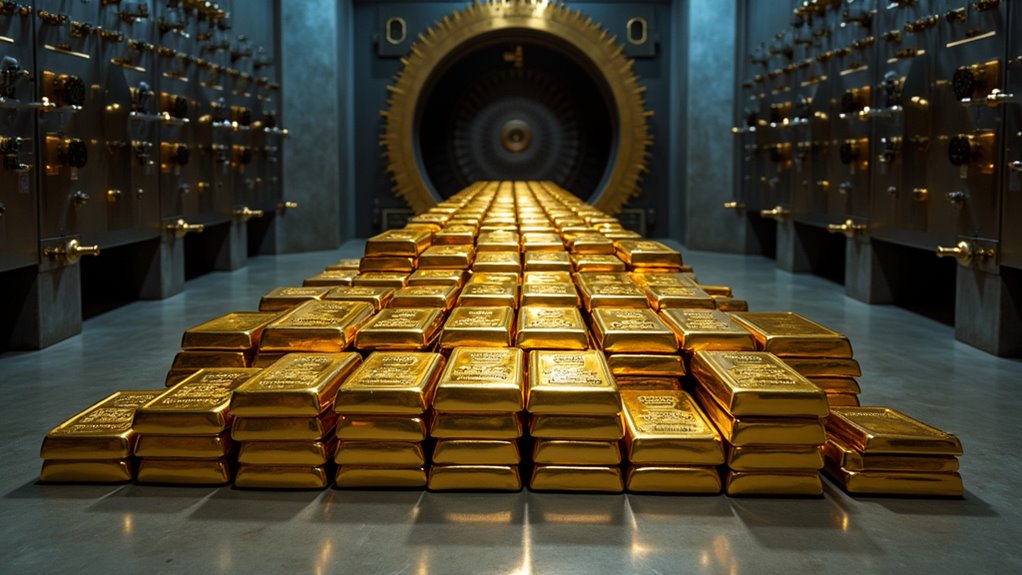
Most of Britain’s reserves now chill in foreign currencies and other assets.
Who Are the Primary Buyers When Britain Sells Its Gold Reserves?
When Britain offloads its gold reserves, central banks typically dominate the buyer landscape, with the European Central Bank and Asian powerhouses like China and India leading the pack.
Private investors and commodity traders swoop in too, especially during market volatility. Investment banks and gold ETFs jump at these opportunities to boost their holdings.
Some mining companies also get in on the action, though they’re usually smaller players in these transactions.
How Does Public Opinion Influence Decisions to Sell Gold Reserves?

Public opinion wields serious muscle when it comes to gold sales.
Just look at Europe – overwhelming majorities (70%+) believe gold reserves = economic strength.
After Gordon Brown’s infamous UK gold dump sparked public outrage and a $650M loss, governments got the memo.
These days, they’re tiptoeing around gold sales, with central banks playing nice with transparency rules.
Bottom line: Politicians can’t ignore those poll numbers – the public’s golden obsession shapes policy.
Are There Legal Restrictions on How Quickly Britain Can Sell Reserves?
Britain faces no explicit legal restrictions on the speed of gold reserve sales.
While HM Treasury must report significant changes to Parliament, the actual timing and volume remain at their discretion.
The only soft constraint came from the Central Bank Gold Agreement, which limited annual sales to 400 tonnes – but that expired in 2019.
Market impact concerns typically drive the pace more than legal requirements do.