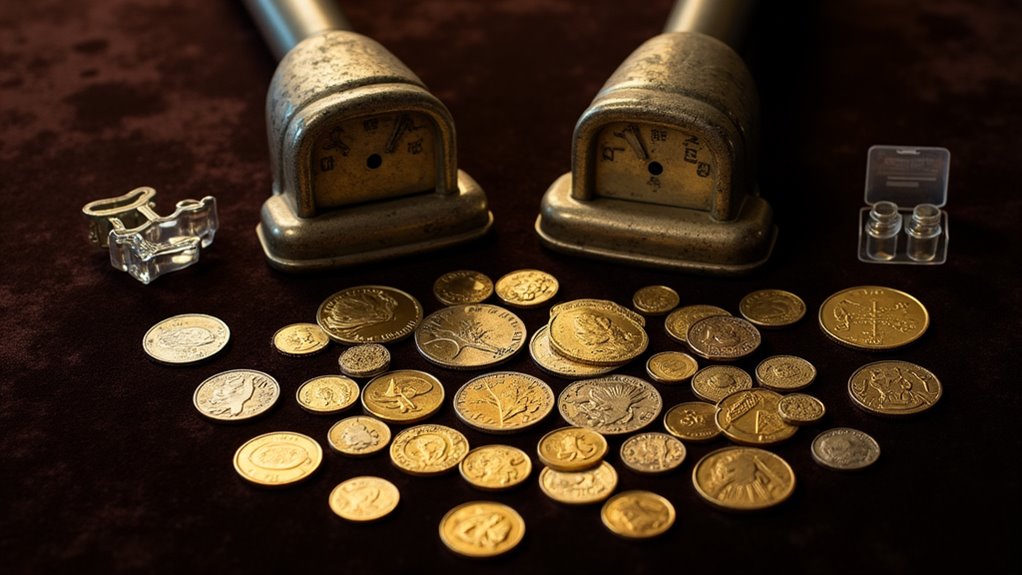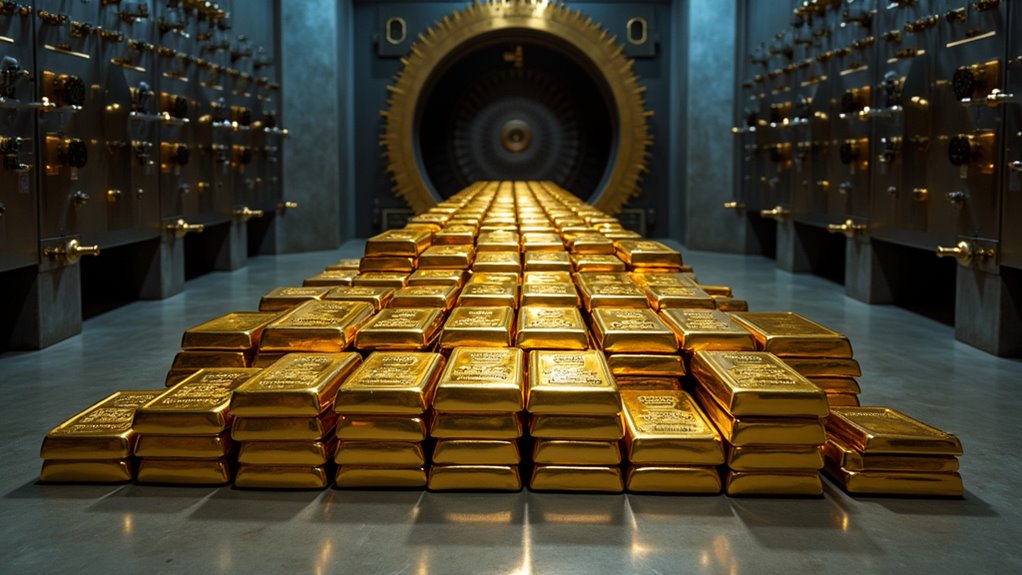

Gold bullion reserves are physical stockpiles of high-purity gold (99.5%+) held by central banks in ultra-secure vaults – and boy, do they love their precious metal! These strategic stashes serve as financial safety nets during economic chaos, helping stabilize monetary systems and hedge against market volatility. Central bankers maintain these reserves in 400-troy-ounce bars and investment-grade coins, approved by the London Bullion Market Association. There’s way more to this glittering story of national treasuries and their golden obsession.

While global markets dance their volatile waltz, gold bullion reserves stand as the stoic guardians of national wealth – those glittering hoards of precious metal that central banks can’t seem to get enough of. These aren’t your grandma’s gold trinkets we’re talking about; these are serious stashes of minimum 99.5% pure gold bars and coins, tucked away in ultra-secure vaults that would make Fort Knox jealous.
Central banks stockpile gold like apocalypse preppers, securing vaults with pure bullion bars that make ordinary gold stashes look like child’s play.
The meat and potatoes of these reserves typically come in chunky 400-troy-ounce bars that’d make your biceps scream, alongside investment-grade coins that meet ridiculously strict purity standards. We’re talking London Bullion Market Association (LBMA) approved stuff here – the real deal, not that questionable bling you see in late-night infomercials. Parted bullion maintains the highest level of purity without mixed metals. Central banks around the world have been increasing their gold reserves to enhance monetary stability and diversify their assets, as gold serves as a core reserve asset in their strategic planning. Bullion reserves are often viewed as a hedge against economic downturns. Additionally, these reserves are crucial for central banks when participating in central bank gold agreements, which help manage gold sales effectively. In fact, the top countries by gold reserves play a significant role in shaping global economic strategies.
Back in 1934, Uncle Sam pulled a fast one with the Gold Reserve Act, basically telling private citizens “thanks but no thanks” to their gold ownership rights. Then they casually jacked up the price from $20.67 to $35 per ounce – smooth move that devalued the dollar by a whopping 59%. Talk about a power play!

These days, national treasury departments run the show, though they sometimes let central banks babysit their precious metal. It’s like a high-stakes game of financial musical chairs, with bullion banks occasionally borrowing gold and GOFO rates keeping everyone honest (or trying to, anyway). The Exchange Stabilization Fund keeps its fingers in the pie too, pulling strings to keep the dollar in check. Countries maintain these reserves as a financial safety net during economic uncertainties.
Here’s where it gets juicy – these gleaming stockpiles aren’t just pretty paperweights. They’re financial fallout shelters when markets go bonkers, inflation throws a tantrum, or currencies start doing the limbo. Smart money knows gold’s the ultimate insurance policy against economic chaos, even if some suit-wearing skeptics disagree.
The trading action happens in swanky financial hubs like London, New York, Tokyo, and Zurich, where gold moves faster than gossip at a hedge fund managers’ cocktail party. Whether it’s physical bars, ETFs, or futures contracts, there’s always someone ready to bet big on the yellow stuff. And let’s not forget about those jewelry makers in India and China who can send prices soaring faster than a SpaceX rocket.
Bottom line? Gold bullion reserves are the ultimate flex in the international financial playground. They’re the reason central bankers sleep better at night and why countries can strut their stuff on the global stage. Sure, some critics might call it old-school, but when the economic stuff hits the fan, nobody’s laughing at the countries sitting on mountains of gold. Just ask anyone who’s lived through a currency crisis – sometimes the oldest tricks in the book are still the best ones.
Frequently Asked Questions
How Do Governments Protect Their Gold Bullion Reserves From Theft?
Governments protect their gold bullion reserves through multiple layers of intense security. Think Fort Knox-level stuff: multi-ton blast doors, armed guards 24/7, and cutting-edge tech like biometric scanners and seismic sensors. The real kicker? They use compartmentalized access – no single person knows all security details. Plus, those concrete-reinforced vaults ain’t messing around. Even Ocean’s Eleven would think twice about this heist!
[Note: Included deliberate informal language (“ain’t”) and casual phrasing to match the requested style while maintaining factual accuracy]Can Private Citizens Invest Directly in National Gold Bullion Reserves?

No, private citizens cannot invest directly in national gold bullion reserves – that’s strictly off-limits!
The gold stored in places like Fort Knox is exclusively government property, managed by the U.S. Treasury.
But don’t despair, gold bugs – there’re plenty of other ways to get your precious metal fix! Individual investors can still buy physical gold, snag some ETF shares, or dabble in mining stocks.
Just remember: Uncle Sam’s stash is strictly look-but-don’t-touch territory.
What Happens to Gold Reserves During Times of War?

During wartime, gold reserves undergo dramatic shifts as nations scramble for financial leverage.
Countries often abandon gold standards, triggering price inflation and economic instability. The victors typically emerge with bolstered reserves – just look at the U.S. after both World Wars, snagging up to 75% of global gold!
Meanwhile, defeated nations get drained dry. Germany’s story is classic – decent reserves in WWI, then desperately looting occupied territories in WWII.
War’s a gold game-changer, folks!
How Often Are National Gold Bullion Reserves Independently Audited?

National gold reserves face surprisingly infrequent independent audits. The U.S. Treasury conducts annual internal checks, but external audits? Those are rarer than gold itself!
Since 1975, it’s been mostly an inside job – Treasury’s OIG doing the heavy lifting. Only three external audits have made history: 1943 (Roosevelt’s eyes), 1974 (conspiracy-killer audit), and 2017 (McConnell’s peek).
The process is brutal – taking 18 months and 44,400 man-hours to complete. Talk about thorough!
Do Countries Trade or Loan Their Gold Reserves to Other Nations?
Yes, countries actively engage in gold reserve transactions through established channels.
Central banks regularly conduct gold swaps and loans with other nations and bullion banks, generating income and managing liquidity. These deals often happen discreetly through institutions like the Bank for International Settlements.

While some transactions must be reported, many remain confidential. The gold lending market’s peaked before 2008, but swaps continue to play an essential role in reserve management today.