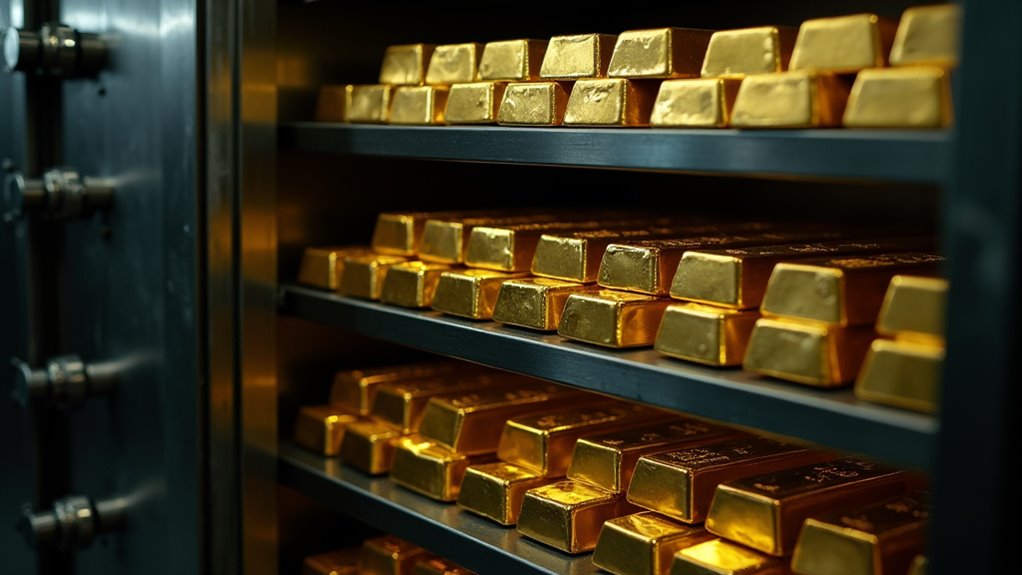

The Federal Reserve’s relationship with gold is fascinatingly complex – and slightly maddening! They hold certificates valued at $42.2222 per ounce (yeah, that’s not a typo), but can’t actually trade them for real gold. The U.S. Treasury calls the shots, with the Mint controlling 95% of America’s gold stash. Meanwhile, central banks worldwide are sitting on 20% of all gold ever mined, using it as their financial safety blanket. There’s way more to this golden tale than meets the eye.

The tangled web of America’s gold policy reads like a monetary thriller, with the Federal Reserve playing an unusual role as both custodian and certificate holder – but never actually owning the precious metal itself. Since the game-changing Gold Reserve Act of 1934, the U.S. Treasury has been the true gold boss, while the Fed merely babysits the shiny stuff for various governments and central banks. Talk about a plot twist!
The 1934 Act wasn’t just another boring piece of legislation – it was Roosevelt’s golden sledgehammer that cracked private ownership wide open. It yanked the price from $20.67 to $35 per troy ounce and told private citizens they couldn’t hoard more than $100 worth of the yellow metal. The Treasury grabbed the reigns, and boy, did they hold on tight. This dramatic shift was enacted during Roosevelt’s first 100 days, marking a pivotal moment in U.S. monetary policy. This policy change also reflected the strategic importance of gold in building trust in the U.S. dollar. Federal Reserve gold purchases have continued to influence the dynamics of global gold markets, with central banks increasingly expanding their gold reserves. Furthermore, gold serves as a reliable inflation hedge, ensuring the stability of currency values over time. Effective gold reserve management strategies have also become vital for central banks in balancing their economic objectives.
Today’s setup is even more fascinating. The Fed holds gold certificates valued at a seemingly random $42.2222 per fine troy ounce (seriously, who came up with that number?). But here’s the kicker – they can’t even trade these pieces of paper for actual gold. Meanwhile, the U.S. Mint‘s got 95% of the nation’s gold stash tucked away, with the Fed Banks acting as glorified security guards for the remaining 5%.

The Federal Reserve Bank of New York’s vault is where the real action happens. It’s basically Fort Knox’s cooler cousin, holding most of America’s gold reserves. But don’t get any ideas – private entities aren’t allowed to crash this party. The deep storage gold sits there in bars, while some “working stock” gets to see the light of day for minting new currency.
Central banks worldwide are pretty much gold hoarders extraordinaire, sitting on roughly 20% of all the gold ever mined. They’re not just collecting it for kicks – it’s all about safety, liquidity, and returns. The IMF keeps tabs on who’s buying, who’s selling, and who’s just window shopping in the global gold market.
The whole system we see today is basically the hangover from the Great Depression‘s emergency measures. When Nixon finally pulled the plug on dollar convertibility in 1971, it was like the last chapter in a long saga that started with Roosevelt’s Depression-era policies. The Supreme Court had to weigh in back in 1935, probably wondering what all the fuss was about.
These days, the Treasury’s still using that quirky $42.2222 statutory price for their books, even though the market value has gone bonkers since then. It’s like using Monopoly money to price a mansion in Beverly Hills. The weekly H.4.1 statistical release from the Fed keeps track of it all, but let’s be real – those numbers are about as relevant as last year’s weather forecast when it comes to actual gold value.
Frequently Asked Questions
How Do Central Banks Determine the Optimal Amount of Gold Reserves?
Central banks juggle multiple factors to nail down their gold sweet spot.

They’re eyeballing everything from economic stability and geopolitical risks to domestic production capacity.
It’s a delicate dance of weighing inflation hedging against liquidity needs, while keeping tabs on global market trends.
The final mix? Usually comes down to each country’s unique circumstances – their monetary policy goals, financial muscle, and yes, even their appetite for that yellow metal’s shine.
What Happens to Gold Reserves During a Major Currency Crisis?
During major currency crises, central banks typically boost their gold reserves as a defensive measure.

They’ll often sell volatile foreign currencies to buy gold, providing a stable anchor when their domestic currency falters.
Meanwhile, private citizens frantically rush to convert cash into physical gold, driving prices skyward.
Some central banks might actually sell gold to defend their currency’s value, but most tend to hoard it like there’s no tomorrow.
Can Private Citizens Invest in Reserve Bank Gold Stocks?
Private citizens cannot directly invest in reserve bank gold stocks – that’s a hard no. These precious stockpiles are strictly national assets, locked away for monetary policy purposes.

But hey, there’s plenty of workarounds! Investors can still get their gold fix through ETFs, physical bullion, mining stocks, or futures contracts.
While you can’t raid the central bank’s vault, the market offers plenty of glittery alternatives that dance to the same golden tune.
How Do Geopolitical Tensions Affect Central Banks’ Gold Holding Decisions?
Geopolitical tensions are driving central banks’ gold hoarding like never before!
Rising global conflicts and sanctions risks have 53% of banks planning to boost their precious metal stashes.

China’s massive 225-tonne gold grab in 2023 shows how serious this gets when superpowers clash.
Banks are ditching dollars and rushing to gold as a “neutral” safe haven – becuz nothing says “we don’t trust eachother” quite like stockpiling shiny metal in vaults!
*its becoming clear: geopolitics = gold’s new BFF*
What Role Does Gold Play in International Monetary System Settlements?
Gold serves as an essential settlement mechanism in international monetary transactions. Central banks utilize it for portfolio diversification and risk management.
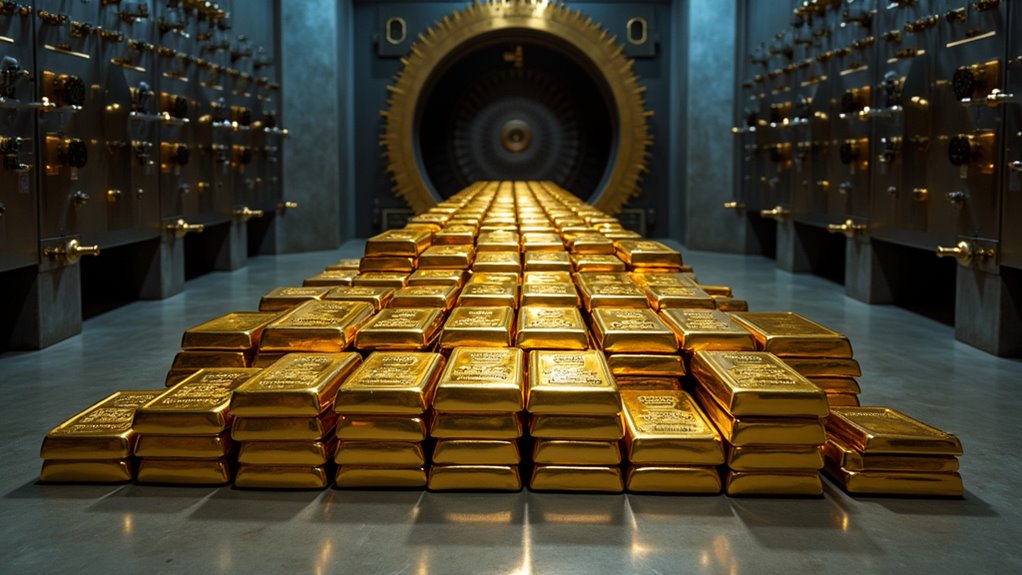
While no longer the direct basis for currency values, gold facilitates cross-border settlements during currency instability. It’s still used to settle some international debts and provides a non-political alternative to dollar-based transactions.
Additionally, gold holdings help central banks maintain credibility and provide emergency liquidity support during financial crises.