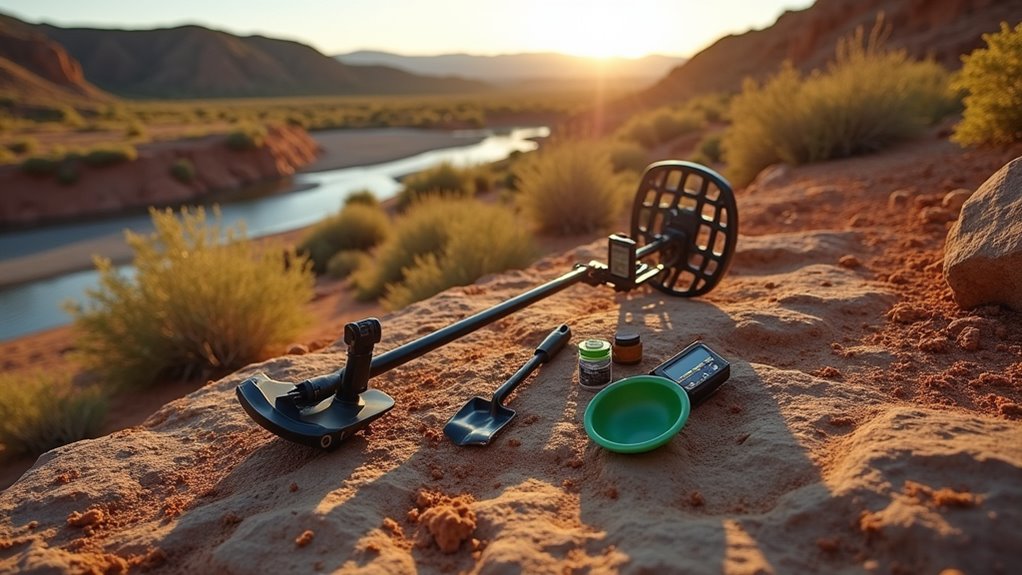
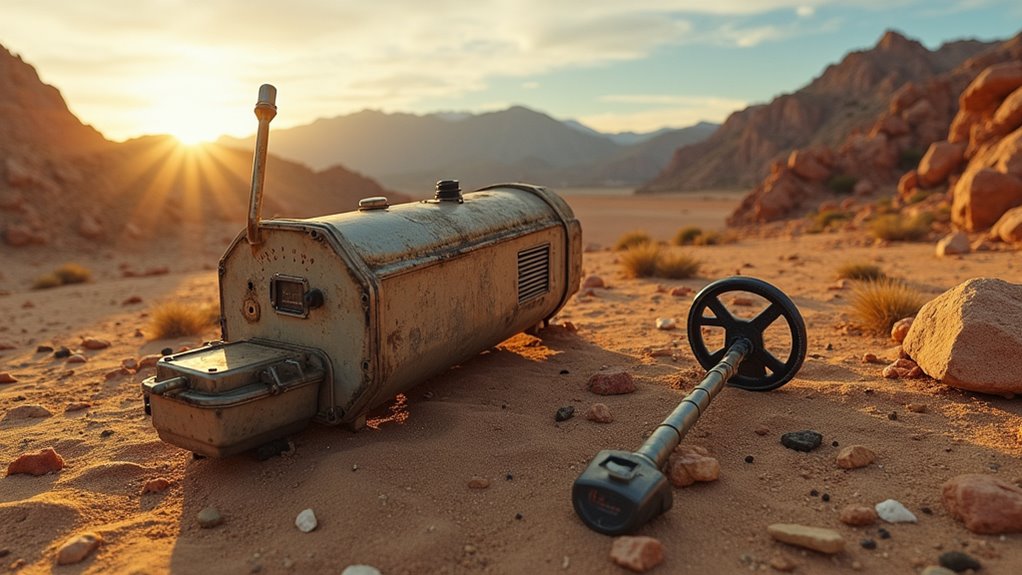
Gold mining’s toxic legacy ain’t pretty – it’s choking both people and planet. Operations spew a nasty cocktail of mercury vapor, sulfur dioxide, and particulate matter that turns pristine air into a hazardous haze. About 10 million artisanal miners worldwide contribute to this mess, while nearby communities suffer chronic respiratory issues and neurological damage. Even with regulations in place, enforcement remains spotty at best. The deeper story of mining’s environmental impact reveals an industry struggling to clean up its act.

While gold mining continues to be a cornerstone of global mineral production, its dark underbelly of toxic emissions and hazardous air pollutants has become impossible to ignore. The mining process releases a toxic cocktail of pollutants that wreak havoc on both human health and the environment, with particulate matter from excavation and ore processing leading the charge in this aerial assault.
The industry’s dirty little secret isn’t just about dust – it’s a full-spectrum assault on air quality. Mercury vapor wafts from amalgamation processes, while sulfur dioxide belches from ore roasting operations. With 10 million artisanal miners globally engaged in these practices, the environmental impact is staggering. Throw in nitrogen oxides from explosives and diesel-powered equipment, and you’ve got yourself a perfect storm of atmospheric contamination that’d make even the most hardened environmental scientist cringe. Furthermore, the extensive land degradation caused by these activities further exacerbates the air quality issues in surrounding areas. Sustainable mining practices are crucial for reducing ecological damage, but many operations still lag behind. Moreover, lessons from environmental disasters in mining highlight the need for more stringent regulations and oversight.
Gold mining’s toxic legacy goes beyond dust – it’s a cocktail of mercury, sulfur dioxide, and nitrogen oxides poisoning our skies.
Let’s get real about the health impacts – they’re brutal. Miners and nearby communities are basically serving as human canaries, dealing with everything from chronic respiratory issues to increased risks of heart attacks. The mercury exposure? That’s a whole other level of nasty, causing neurological damage that doesn’t exactly improve with time. And don’t even get us started on what this stuff does to kids’ development. Long-term ecological harm from these emissions can lead to devastating consequences for both wildlife and human populations.

The environmental fallout is equally grim. Sulfur dioxide emissions transform into acid rain, while mercury decides to take an extended vacation in soil and water bodies. Visibility gets shot to hell from all that particulate matter, and vegetation nearby starts looking like it’s been through a war zone. Oh, and let’s not forget this whole mess is giving climate change a helping hand – because why not?
At least there’s some attempt at control, right? Regulatory frameworks mandate air quality standards and emission limits, though enforcement can be about as reliable as a chocolate teapot in some regions. The industry’s throwing technology at the problem – wet suppression systems, enclosed processing facilities, mercury capture tech – but it’s like trying to catch a tsunami with a fishing net.
The real kicker? Implementation of these fancy control measures costs more than some operations’ entire profit margins. Artisanal miners slip through regulatory cracks like water through fingers, and enforcement in certain gold-producing regions is spotty at best. Plus, trying to manage dust in arid climates is about as effective as trying to herd cats.
The industry’s caught in a classic catch-22: maximize production while minimizing environmental impact. Some operations are making honest efforts with progressive land rehabilitation and cleaner equipment, but let’s be real – we’re still miles away from anything resembling truly clean gold mining. Until we figure out how to extract gold without turning the air into a toxic soup, this’ll remain one of mining’s most pressing challenges.
Frequently Asked Questions
How Do Gold Mining Emissions Affect Wildlife in Surrounding Ecosystems?
Gold mining’s toxic footprint hits wildlife hard across ecosystems.
Animals suffer respiratory damage from dust and particulates, while heavy metals poison food chains from soil to apex predators.

Mining noise drives species from their homes, disrupting essential behaviors like mating and feeding.
Fish populations crash as mercury and cyanide contaminate waterways.
The effects ripple through generations – reduced breeding success means some species might never bounce back.
What Safety Equipment Do Miners Use to Protect Against Dust Exposure?
Miners rely on a multi-layered defense against dust exposure.
They rock PAPRs (powered air-purifying respirators) for heavy-duty protection, while dust masks handle lighter particle loads.

Full-face respirators pull double duty – protecting lungs and eyes simultaneously.
The real MVPs? Personal dust monitors that keep tabs on exposure levels.
And let’s not forget those high-tech ventilation systems that suck dust right outta the workspace.
Safety first, gold second!
Can Local Communities Measure Air Quality Near Gold Mines Independently?

Yes, communities can absolutely track air quality near gold mines independently!
Low-cost PurpleAir sensors and portable PM monitors are making DIY monitoring more accessible than ever. Local groups are deploying these devices to measure dust levels and track pollution hotspots – though it ain’t always easy.
Equipment costs and technical know-how remain hurdles, but citizen science initiatives are proving that grassroots monitoring can generate valuable data to hold mining operations accountable.
How Long Do Air Pollutants From Gold Mining Remain in the Atmosphere?
Air pollutants from gold mining linger in the atmosphere for wildly different durations.
Mercury’s the marathon runner, hanging around for 6-18 months and globetrotting before settling down.

Sulfur dioxide’s more of a sprinter – gone in 2-4 days.
Particulate matter’s complicated, lasting anywhere from hours to weeks.
Nitrogen oxides stick around for about a week, while arsenic typically calls it quits after 7-10 days in the air.
What Are the Economic Costs of Implementing Emission Control Technologies?
Initial costs for emission control technologies vary widely but typically involve substantial capital investments. Studies show implementation expenses ranging from $36-90 billion annually across industries.
While expensive upfront, the benefits often outweigh costs by 30-to-1 or higher. Operating costs include maintenance, inspections, and workforce training.

However, these expenditures create new market opportunities and jobs in environmental technology sectors, contributing to economic growth through innovation and technological advancement.