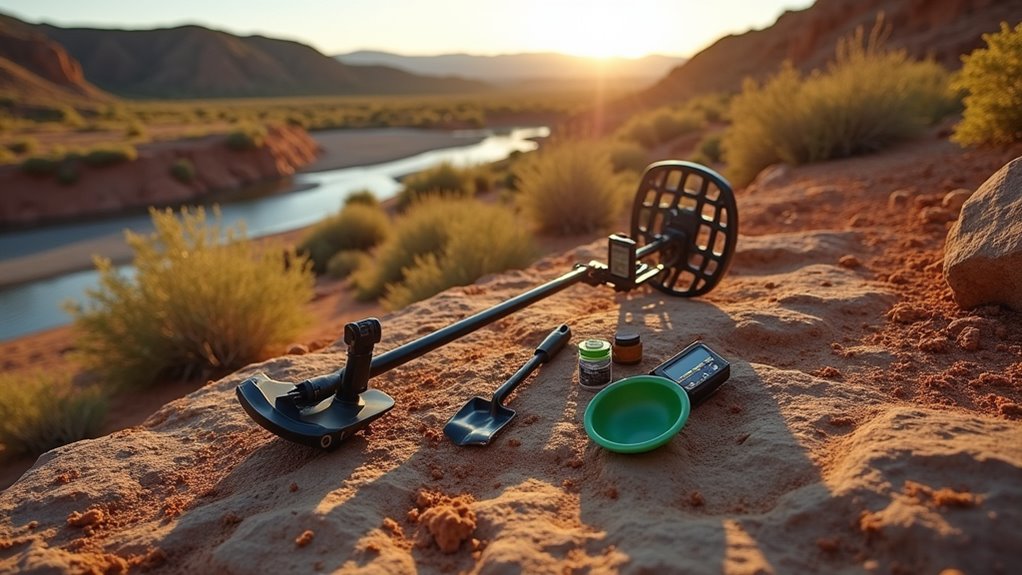
AI and machine learning are flipping the gold exploration game on its head. These smart systems crunch through mountains of geological data, satellite imagery, and dusty old reports to pinpoint promising deposits that human prospectors missed. The tech acts like a supercharged sidekick to geologists, slashing costs and environmental impact while boosting efficiency. It’s not replacing human expertise – just making it exponentially more powerful. The real gold rush? It’s happening in the algorithms.

These smart systems are revolutionizing every aspect of exploration, from initial target identification to the nitty-gritty of drill core analysis. AI-powered prospectivity maps are like having a thousand geologists working simultaneously, spotting patterns in geological, geochemical, and geophysical data that human eyes might miss. And boy, do they miss stuff! Traditional methods are about as efficient as using a butter knife to cut through granite compared to these new digital prospecting tools. Furthermore, advanced technology in gold mining is enabling unprecedented advancements in exploration techniques.
The real game-changer? Machine learning models that can analyze satellite imagery, historical mining data, and even dusty old exploration reports faster than you can say “gold rush.” These systems are identifying promising deposits in places that old-school prospectors wouldn’t have given a second glance. Sure, computers don’t wear hard hats, but they’re becoming the most valuable member of any exploration team. AI and data analytics are also being utilized to enhance decision-making processes in real-time. Furthermore, by adopting sustainable practices, the mining industry can significantly reduce its ecological impact while reaping the benefits of advanced technology.
AI-powered exploration is finding gold where old-timers never thought to look, making computers the new rockstars of mineral discovery.
Environmental benefits? You betcha! AI-driven exploration is like having a green thumb in the mining world. By focusing efforts on high-potential zones, these systems help minimize unnecessary land disruption. No more random drilling holes everywhere like some crazed woodpecker – now it’s all about precision and efficiency. Plus, the reduced environmental footprint keeps those regulatory folks happy, and who doesn’t want that? Additionally, these AI models can optimize open pit vs underground mining strategies by suggesting the most suitable extraction methods based on the geological context.

But here’s the kicker: AI isn’t pushing human expertise out the door. Instead, it’s creating a beautiful (albeit somewhat awkward) dance between silicon and gray matter. Geologists are still calling the shots, using AI as their super-powered sidekick to validate findings and refine strategies. It’s like having a really smart intern who never sleeps and doesn’t drink all the coffee.
The cost savings are nothing to sneeze at either. By streamlining workflows and reducing dependency on extensive field surveys, AI is making gold exploration more competitive than ever. Real-time feedback from AI-processed core analysis means companies can pivot faster than a day trader during market volatility.
And with predictive modeling keeping exploration teams from wasting time in low-potential zones, the industry’s efficiency is hitting new highs – kinda like gold prices after a global crisis!
Frequently Asked Questions
How Much Historical Exploration Data Is Needed for AI Analysis?
Experts suggest a minimum of 10,000 data points for meaningful AI analysis in exploration, though more is definitely better!
Historical drill logs, geochemical samples, and geophysical surveys from at least 3-5 years provide the baseline.

The sweet spot? Around 50,000-100,000 quality datapoints covering diverse parameters.
But here’s the kicker – it’s not just quantity that’s important. Clean, well-organized data beats messy mountains of numbers every time.
Can AI Predict the Exact Depth of Gold Deposits?
While AI has revolutionized gold exploration, predicting exact deposit depths remains a tricky business.
Sure, these smart systems can crunch massive datasets and identify promising locations, but Mother Nature’s got some sneaky tricks up her sleeve!
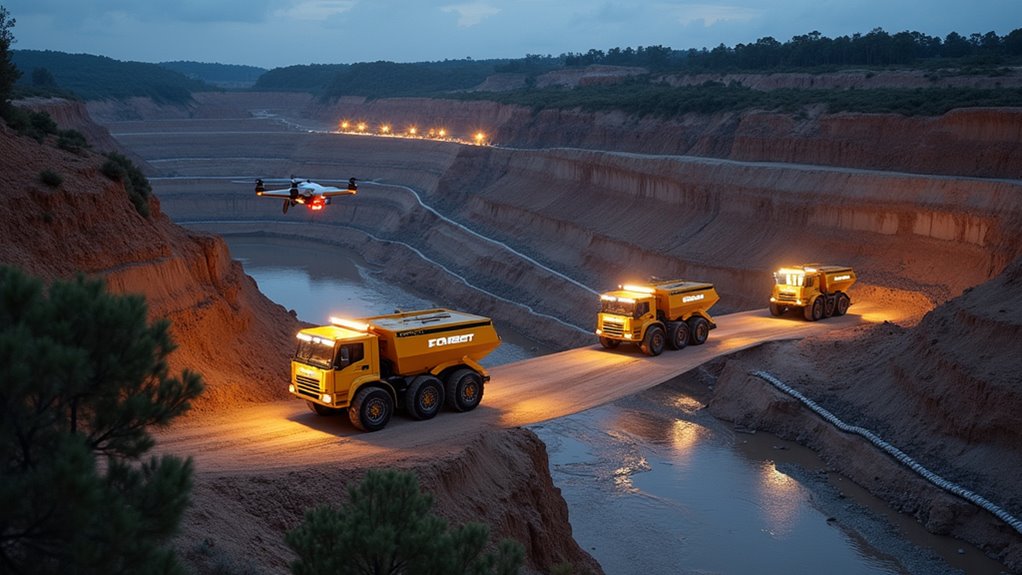
Fractured rocks, complex geological formations, and data limitations mean AI can’t nail down precise depths with 100% accuracy.
It’s more like an educated guess – albeit a pretty darn good one backed by serious computing power.
What Is the Cost of Implementing AI in Gold Exploration?
The price tag for AI in gold exploration? Hold onto your pickaxes! Initial costs hit around $20 million for serious players, but here’s the kicker – it slashes traditional exploration costs by up to 80%.
While big mining corps can stomach the upfront investment, smaller players might need some financial gymnastics.

But with AI reducing discovery costs from $218m to just $2m per find, it’s like trading your gold pan for a treasure map!
How Accurate Are AI Predictions Compared to Traditional Geological Methods?
Studies show AI predictions are crushing traditional methods in accuracy.
ALS Global’s mind-blowing results speak volumes – their AI nailed 86% of gold resources in Abitibi using just 4% of surface data!
While old-school geologists still bring invaluable expertise to the table, AI’s pattern-recognition prowess is off the charts.

But here’s the kicker – AI isn’t perfect. Without quality data, even the smartest algorithm can stumble.
It’s a game-changer, not a miracle worker.
Does AI Technology Work Equally Well in All Geological Terrains?
AI’s effectiveness varies drastically across geological terrains.
It’s a rockstar in data-rich areas like the Abitibi Belt but stumbles in unexplored territories.

Complex geology throws AI for a loop – good luck getting accurate predictions in heavily faulted zones!
Dense vegetation and extreme weather can mess with data collection too.
The tech shines brightest when there’s plenty of historical data and simple stratigraphy, but gets pretty lost in uncharted territory.