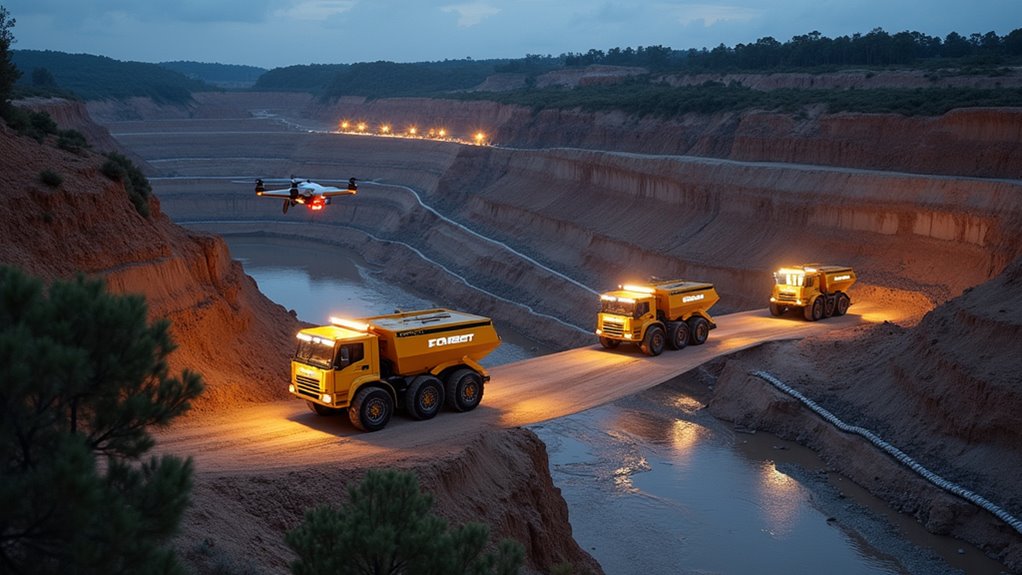
Mining companies are deploying AI-powered sensor armies that transform traditional gold mines into data-driven powerhouses. These smart systems act like thousands of eagle eyes, achieving 85% accuracy in predicting ore levels while slashing operational costs. Virtual monitoring keeps workers safer by minimizing exposure to hazardous areas, while predictive maintenance catches equipment failures before they happen. The integration of IoT, AI, and cloud tech is creating a sophisticated ecosystem that’s reshaping how we extract Earth’s precious metals – and this is just the beginning of the revolution.
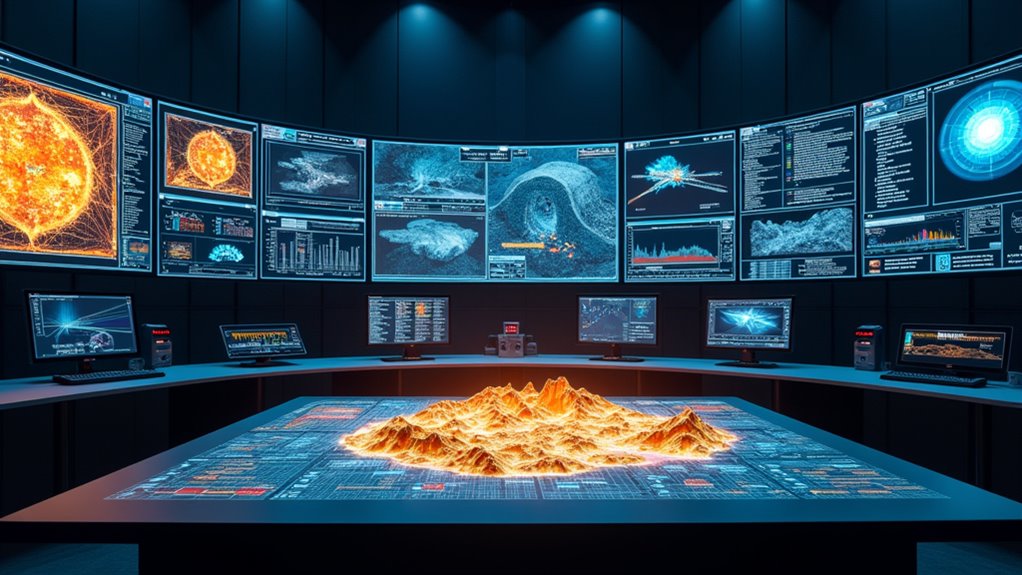
These smart systems are like having thousands of eagle eyes throughout the mine, watching everything from equipment health to ground stability. We’re talking about sensors that can predict ore levels with a whopping 85% accuracy – take that, old-school guesswork! Companies like Sandvik are turning all this raw data into pure operational gold, helping mines slash costs and boost productivity like never before. The integration of automation in gold mining is enhancing these capabilities even further.
Modern mining sensors achieve 85% accuracy in ore prediction, revolutionizing operations and leaving manual estimates in the dust.
The safety gains are absolutely insane (in the best possible way). Instead of sending workers into potentially hazardous areas, these systems keep human presence to a minimum while monitoring everything from tailing pond levels to sketchy ground conditions. It’s like having a safety supervisor who never sleeps, never blinks, and never misses a beat. When something’s off, alerts zip straight to safety personnel’s devices – because danger doesn’t wait for office hours.
But here’s where it gets really juicy: equipment maintenance has gone from reactive panic to predictive zen. These systems can spot a failing component before it actually fails, scheduling maintenance with the precision of a Swiss watch. Mining companies are reporting dramatic drops in downtime, and their accountants are probably doing happy dances in their offices. LoRa technology is making all this possible, delivering long-range connectivity without burning through power like it’s hungry for electrons. This predictive maintenance technology is a key factor in reducing operational costs and increasing efficiency.

The tech integration is where things get properly wild. We’re witnessing a beautiful marriage of IoT, AI, and cloud systems that’s creating a monitoring ecosystem so sophisticated it makes traditional mining look like something from the stone age. Companies like Newcrest are leading this charge, using AI to catch sensor failures and maintain operational accuracy that would make a NASA engineer jealous.
The impact on workforce productivity is nothing short of revolutionary. Operators are getting smarter, faster, and more efficient thanks to data-informed training programs. The whole operation runs like a well-oiled machine, with automated systems handling the grunt work while human expertise focuses on strategic decisions. It’s not just about working harder – it’s about working smarter, and these systems are making it happen with ruthless efficiency.
Remote monitoring in gold mines isn’t just another tech trend – it’s a fundamental shift in how we extract Earth’s most precious metal, with AI and smart technology driving this evolution. And let’s be honest, watching this transformation is almost as exciting as striking gold itself. Almost.
Frequently Asked Questions
How Do Gold Mines Protect Their Virtual Operations Against Cyber Attacks?
Gold mines deploy multi-layered cybersecurity defenses to shield their virtual operations.
They utilize MFA authentication, network segmentation, and real-time AI monitoring systems to detect threats. Encrypted communications protect sensitive data, while RFID tracking secures equipment access.

Regular crisis simulations and employee training strengthen defenses. Virtual patching addresses vulnerabilities without system downtime.
Web application firewalls guard against network attacks, while third-party access remains strictly limited.
What Is the Average Cost Savings When Implementing Remote Monitoring Systems?
Remote monitoring systems in gold mines deliver substantial cost reductions across multiple areas.
Operations typically see a 10-15% decrease in utility expenses, while equipment utilization improves by up to 20%.
Unproductive drilling costs plummet by 30%, and most mines recoup their initial investment within 1-2 years.
The combination of predictive maintenance, optimized energy usage, and reduced labor overhead translates to significant savings that compound over time.
Can Remote Monitoring Systems Detect Potential Equipment Failures Before They Occur?
Remote monitoring systems excel at predicting equipment failures through advanced IoT sensors and AI analysis.
These systems track critical metrics like vibration patterns, temperature fluctuations, and pressure changes – catching subtle deviations that human eyes miss. The data feeds into predictive algorithms that can spot trouble brewing days or weeks ahead.

It’s like having a crystal ball for machinery health, except this one’s backed by hard data and actually works.
How Do Mines Maintain Internet Connectivity in Deep Underground Operations?
Mines maintain deep underground connectivity through multi-layered private LTE and 5G networks, strategically positioned throughout the tunnels.
These systems leverage multiple transmission points and frequencies to bypass those pesky rock formations that love blocking signals.
The real magic happens with specialized fiber-optic backbones and wireless mesh networks that create redundant pathways – because nobody’s got time for dead zones when you’re 2000 meters below ground!
What Backup Systems Are in Place if Remote Monitoring Technology Fails?

Mining operations maintain multiple layers of backup systems for monitoring failures.
They deploy geo-diverse backup sites with redundant T/Mon master stations that sync continuously with primary systems. High-availability networks with automated failover capabilities kick in instantly if main systems go down.
Data gets backed up through hybrid solutions combining local and cloud storage, while disaster recovery protocols guarantee quick system restoration.
Regular testing keeps these backups reliable and ready.