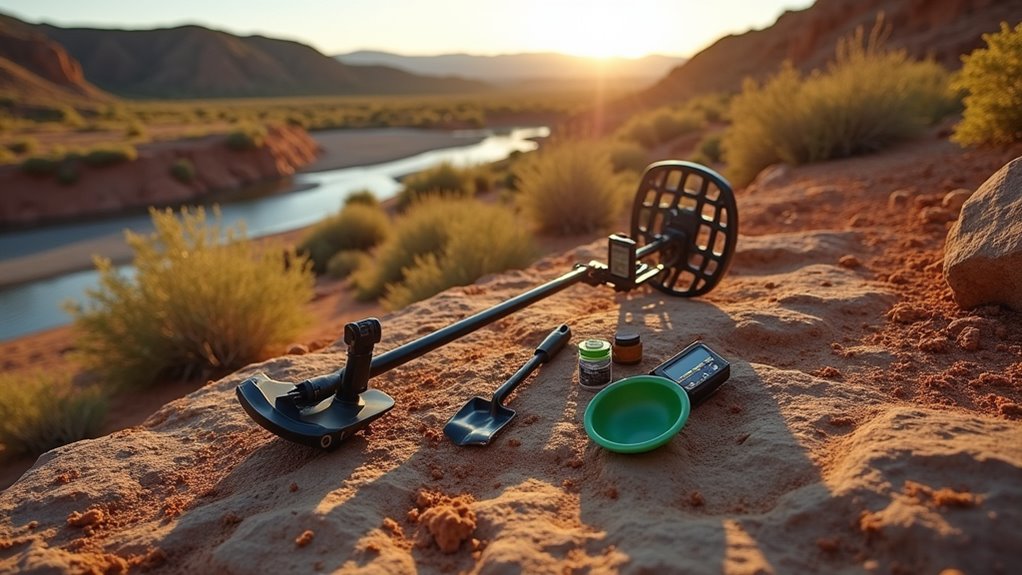
Modern gold recovery‘s gotten wickedly sophisticated, leaving old-school pan-and-shovel methods in the dust. Today’s mines deploy an arsenal of tech – from chemical cyanidation and carbon capture to bioengineered bacteria that literally eat their way to gold. Smart science combines gravity separation, heap leaching, and pressure oxidation to maximize yields while (supposedly) keeping Mother Nature happy. The real magic happens when these methods sync up, and that’s where things get interesting.

While gold may be nature’s most alluring element, getting the shiny stuff out of stubborn ore requires some serious scientific muscle. Modern mining operations have evolved far beyond the simple pan-and-shovel days, deploying an arsenal of sophisticated extraction methods that would make any metallurgist’s heart skip a beat. The game-changer? Cyanidation – yeah, it sounds scary (and it kinda is), but this chemical process has revolutionized how we snag those precious yellow molecules from their rocky prison. Cyanidation equipment plays a crucial role in this process, ensuring optimal gold recovery.
The industry’s gotten pretty clever with its approach to extraction. Take Carbon-in-Pulp (CIP) and Carbon-in-Leach (CIL) – these processes are like gold’s version of a chemical honeytrap, using activated carbon to snatch up dissolved gold particles with impressive efficiency. Modern gold mining techniques have further enhanced these processes, allowing for even greater recovery rates. This innovative approach is crucial for sustainable practices aimed at reducing the environmental impact of mining.
Modern gold mining plays matchmaker with chemistry, letting activated carbon sweep dissolved gold off its feet through CIP and CIL processes.
But here’s where it gets interesting – not every bit of ore plays nice with chemicals. That’s when gravity-based processing struts its stuff, using good old-fashioned physics to separate heavier gold particles from their less-precious neighbors. Shaker tables and spiral separators are essential tools in this gravity separation process, ensuring the efficient recovery of fine gold particles.

For those massive, low-grade deposits that wouldn’t be worth touching otherwise, heap leaching has become the go-to solution. Picture giant ore piles getting a cyanide shower – not exactly environmentally sexy, but when managed properly, it’s actually one of the more cost-effective methods out there.
And speaking of green mining (no, not the color), bioleaching is making waves by letting microscopic organisms do the heavy lifting. These tiny miners oxidize sulfides, making gold more accessible without the environmental drama of traditional methods.
But wait – there’s more! Tank leaching takes the whole process indoors, where finely ground ore gets the five-star treatment in agitation tanks. It’s like a spa day for rocks, except instead of relaxation, we’re after maximum gold liberation.
For those extra stubborn ores that refuse to give up their treasures, autoclave and pressure oxidation methods bring out the big guns – high pressure, high temperature, and zero patience for refractory ores playing hard to get.

The final act in this metallurgical circus is refining and concentrate upgrading. This is where things get hot – literally. Smelting processes purify gold concentrates by melting away impurities, but it’s a delicate balance between recovery rates and concentrate purity.
Too pure? You might leave some gold behind. Not pure enough? You’re paying to process more material downstream. It’s a constant optimization game that keeps metallurgists up at night, calculating and recalculating until they find that sweet spot where efficiency meets economics.
In the end, modern gold processing is less about brute force and more about smart science – proving that sometimes, the best way to get nature’s most precious metal is to outsmart it.
Frequently Asked Questions
What Environmental Impacts Do Advanced Gold Processing Methods Have on Local Ecosystems?
Advanced gold processing methods, while more efficient, still pack a nasty environmental punch.
These techniques dump toxic chemicals like cyanide and mercury into water systems, turning pristine streams into chemical cocktails. Local ecosystems take a brutal hit – fish populations crash, soil becomes contaminated, and groundwater gets poisoned.
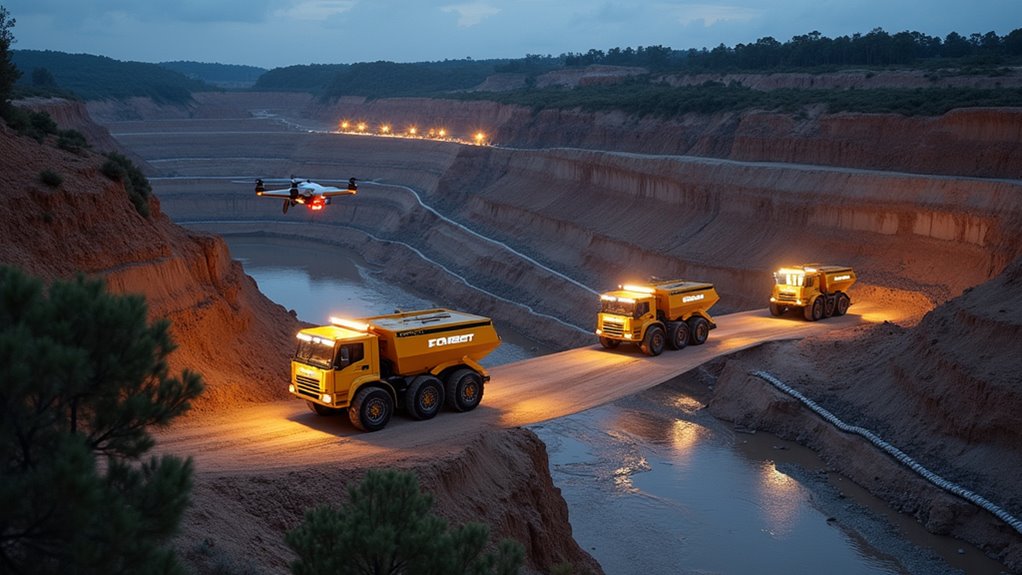
Even with “improved” methods, heavy metal leaching and acid drainage continue to wreak havoc on surrounding habitats and wildlife.
How Much Does It Cost to Implement Advanced Ore Processing Technologies?
Implementing advanced ore processing tech isn’t cheap – we’re talking serious cash!
Initial investments typically range from $1M for basic setups to a whopping $200M+ for complex operations.
The real kicker? Equipment costs are just the tip of the goldberg.

Crushers alone can set you back $2M, while those fancy SAG mills might demand $10M+.
Factor in ongoing costs like energy, chemicals, and maintenance, and you’re looking at a substantial financial commitment.
Can Advanced Processing Methods Extract Gold From Previously Discarded Mine Waste?
Modern processing techniques are absolutely crushing it when it comes to squeezing gold from yesterday’s “worthless” mine waste.
Using bio-oxidation, cyanide leaching, and flash heating methods, miners can now extract precious metal from ore containing just 3-10 parts per million. That’s literally turning trash into treasure!

While some local communities ain’t thrilled about reopening old wounds, the tech’s proven its worth by nabbing up to 72% more gold than traditional methods ever could.
What Safety Measures Are Required When Handling Chemicals in Gold Processing?
Chemical handling in gold processing demands serious safety protocols – no shortcuts here!
Workers must gear up with proper PPE including respirators, goggles, and chemical-resistant gloves.
Ventilation systems better be high-quality to handle those nasty fumes, while spill kits need to stay within arms reach.

Storage areas gotta keep incompatible chemicals separated (unless you’re looking for an unwanted chemistry experiment!).
Regular training keeps everyone sharp and ready for emergencies.
How Long Does It Take to Train Staff in Advanced Ore Processing?
Training staff in advanced ore processing isn’t a quick weekend seminar – it’s a serious time investment.
Most workers need 1-3 months for complex methods like bio-oxidation and pressure oxidation. Entry-level basics? That’ll take 2-4 weeks, depending on previous experience.
Factors like ore complexity and regulatory requirements can stretch these timelines.
And don’t forget those annual refresher courses – they’re mandatory to keep everyone sharp and compliant.