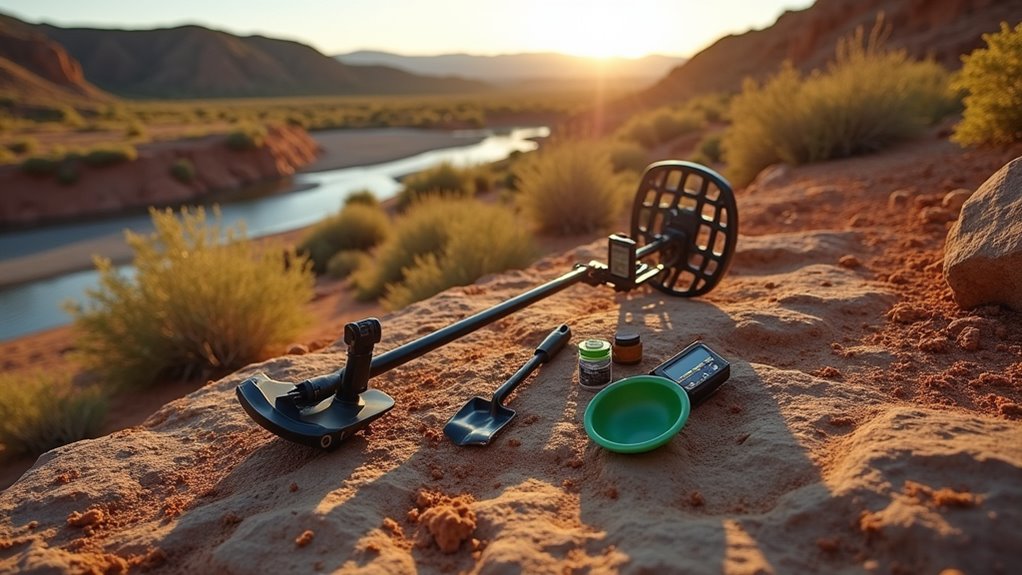
Modern gold mining’s gone from environmental nightmare to eco-warrior status. Mining companies are ditching toxic mercury and cyanide for closed-loop chemical systems, while solar panels and wind turbines power extraction sites. Smart water management keeps local streams pristine, and post-mining restoration transforms barren pits into thriving ecosystems. Companies aren’t just digging for gold anymore – they’re pioneering sustainable practices that benefit both profit margins and planet. There’s more to this golden revolution than meets the eye.

While traditional gold mining has long been criticized for its environmental toll, a seismic shift toward sustainable practices is revolutionizing the industry’s dirty reputation. Mining companies are finally waking up and smelling the eco-friendly coffee, implementing renewable energy solutions that would’ve seemed like sci-fi fantasies just a decade ago. Solar panels and wind turbines are popping up at mine sites like mushrooms after rain, replacing those fossil fuel-guzzling monsters of yesteryear. Additionally, many operations are now utilizing hybrid energy systems to maximize efficiency and reduce reliance on fossil fuels. Furthermore, the adoption of AI and smart technology is helping these companies optimize their energy consumption and reduce waste.
The industry’s getting creative with its chemical romance too. Gone are the days when mercury and cyanide were the only options for extracting that precious yellow metal. Innovative clean-mining processes are proving you don’t need to poison the planet to get your gold fix. Companies are implementing closed-loop systems that recycle chemicals faster than a hipster reuses mason jars, while wastewater treatment‘s become the new non-negotiable. Furthermore, many companies are adopting non-toxic alternatives that have been developed to further mitigate the environmental impact of mining.
Water management’s become quite the showstopper in sustainable mining. These operations are treating H2O like liquid gold itself, recycling every drop possible through advanced systems that would make your local car wash jealous. They’re also getting serious about protecting streams and groundwater – because nobody wants their drinking water with a side of mining runoff, amirite?

But here’s where it gets really interesting – the post-mining cleanup act. Mining companies aren’t just digging and dashing anymore. They’re going full-on landscape artists, replanting native vegetation and creating wildlife corridors that would make Mother Nature proud. Some sites are looking so good after rehabilitation, you’d never guess they were once massive holes in the ground.
The human side of sustainable mining is equally impressive. Workers are getting more than just a hard hat and a prayer – they’re receiving proper training, fair wages, and benefits that actually benefit them. Local communities are getting in on the action too, with mining projects creating jobs faster than a gold rush attracts prospectors.
Perhaps the most radical shift is in habitat protection. Mining operations are now treating biodiversity like it’s made of gold itself. Environmental impact assessments aren’t just paperwork anymore – they’re serious business. Companies are choosing previously degraded areas for new operations, leaving pristine habitats untouched. Some are even conducting operations with surgical precision to minimize their footprint.
The result? Gold mining’s slowly but surely washing off its dirty reputation. While there’s still work to be done (Rome wasn’t built in a day, and sustainable mining won’t be either), the industry’s definitely struck gold with these eco-friendly practices. It’s proof that with the right commitment and technology, we can have our gold and mine it responsibly too. Additionally, sustainable practices help in reducing ecological damage throughout the mining process.
Frequently Asked Questions
How Long Does It Take for Abandoned Mining Sites to Naturally Recover?
Abandoned mining sites take their sweet time bouncing back – we’re talking decades to centuries here, folks.

Natural recovery crawls along at roughly 10% per year under perfect conditions (spoiler: they rarely are). While vegetation might start peeking through within 10-15 years, complete ecosystem restoration is a whole different ballgame.
Water systems need 10-15 years minimum to clear up, and soil? That’s the real patience-tester, requiring centuries to fully regenerate. Yeesh!
What Percentage of Gold Mining Companies Worldwide Follow Sustainable Practices?
According to current industry data, approximately 30% of gold mining companies actively follow thorough sustainable practices.
The big players lead the charge, while smaller operations struggle to keep up.
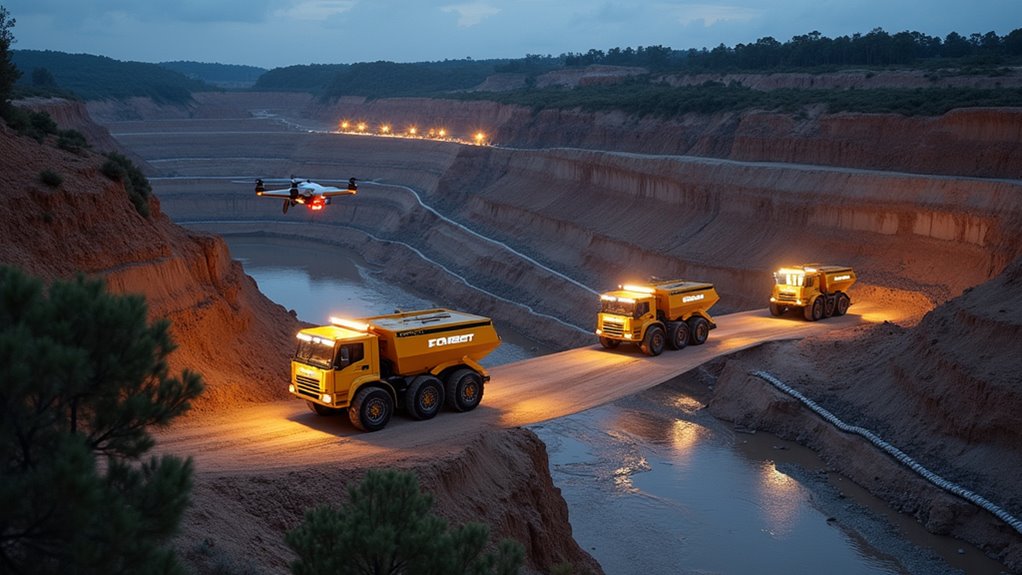
Surprisingly, only a fraction of mining giants maintain full environmental compliance – mostly in developed nations.
The remaining 70% either partially implement green methods or completely ignore them.
The disparity between large and small-scale operations remains a critical challenge in the sector.
Can Mercury-Free Gold Mining Be as Profitable as Traditional Methods?
Mercury-free mining isn’t just cleaner – it’s actually more lucrative.

Studies show it recovers up to 78% more gold than traditional mercury methods, with miners extracting 1.6g vs 0.9g per sample.
Sure, there’s upfront costs for equipment, but higher purity and “eco-premium” prices make up for it.
The real kicker? Companies save roughly $80 mill yearly by ditching mercury-related health expenses.
Clean mining’s not just green – it’s pure profit logic.
How Do Local Communities Benefit Financially From Sustainable Gold Mining?
Local communities see serious financial perks from sustainable gold mining operations.

Workers snag wages up to 6x the national average, while mining companies pump tax revenue into local coffers.
The ripple effect? Each mining job creates roughly six more jobs in the area!
Plus, companies often invest in infrastructure – roads, schools, hospitals – that boost property values and attract more business.
It’s a gold rush that actually sticks around to help the neighborhood.
What Role Does Artificial Intelligence Play in Modern Sustainable Mining Operations?
AI’s revolutionizing modern mining like a tech-savvy prospector on steroids!

It’s crunching massive geological data to pinpoint prime drilling spots, while smart robots handle the dangerous stuff underground.
The real game-changer? AI’s slashing environmental impact by optimizing resource use and predicting equipment maintenance needs.
Even better – those fancy algorithms are monitoring everything from air quality to structural stability, making mines safer than ever.
Talk about striking gold with technology!