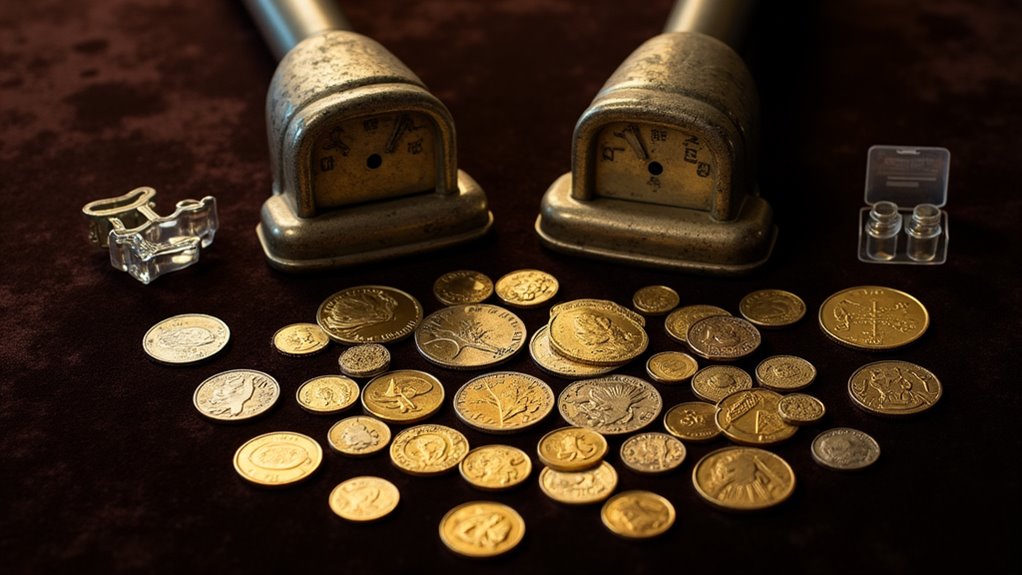
Gold purity comes in three key measures: karats, millesimal fineness, and percentages – each telling you exactly how much actual gold you’re getting. Pure gold (24K) is actually too soft for jewelry, so it’s mixed with other metals. Most people opt for 18K (75% pure) or 14K (58.3% pure) for the sweet spot between bling and durability. Smart buyers know their hallmarks and purity stats – there’s a whole world of precious knowledge waiting to be discovered.

While novice investors might think gold is just gold, the reality of precious metal purity is deliciously complex – and knowing your karats from your millesimal marks could save your portfolio from disaster. The world of gold purity measurements operates on three primary systems: karats, millesimal fineness, and good ol’ percentages. And boy, does it get interesting when you plunge into the nitty-gritty!
Pure gold, that gleaming 24K beauty, is actually too soft to be practical for most uses – it’s basically the diva of precious metals. At 99.9% purity (or 999.9 in millesimal terms), it’s relegated mostly to investment bars and fancy electronics. A gold purity of 999.999 fineness was achieved by the Perth Mint in 1957, marking a historic milestone in refinement. The popular South African Krugerrand stands out with its 22 karat composition. But here’s where things get juicy: start mixing in other metals, and you’ve got yourself a whole new ballgame. Good delivery standards ensure that gold bars meet specific criteria for international trading, providing assurance to buyers.
Pure 24K gold may be perfect on paper, but mix in some metals and watch this precious diva become truly useful.
The real workhorses of the jewelry world are 18K and 14K gold. 18K gold, with its 75% purity, strikes that sweet spot between luxury and durability that makes jewelers weak in the knees. It’s like the goldilocks of gold – not too soft, not too hard, just right for those engagement rings that’ll make your significant other swoon (or your bank account weep). Fire assay is often regarded as the most accurate method for determining gold purity, and it is a technique that separates the gold from impurities using high temperatures. Additionally, assay offices play a crucial role in verifying the purity of gold by conducting tests and issuing certifications.

14K gold is where things get seriously practical. At 58.3% purity, it’s tough enough to handle daily wear while still maintaining that precious cache. No wonder it’s America’s sweetheart when it comes to jewelry! And for those watching their wallets, 10K gold swoops in as the budget-friendly option, though at 41.7% purity, some purists might argue it’s barely gold at all (but hey, it’s still legal in the US!).
Here’s where it gets wild – gold’s got more personalities than a reality TV show. Mix it with different metals, and suddenly you’ve got yellow, white, rose, and even green gold. Each alloy brings its own characteristics to the party, affecting everything from durability to price.
White gold? That’s just yellow gold playing dress-up with rhodium plating. Rose gold? That’s copper making gold blush!
But how do you know what you’re really getting? That’s where hallmarks come in – those tiny stamps that tell you whether you’re holding treasure or trash. And if you’re really paranoid (smart), there’s acid tests, electronic testers, and fancy XRF analysis for the truly obsessed. Though let’s be real, most of us aren’t lugging around a laboratory in our pockets.

The bottom line? Gold purity isn’t just about bragging rights – it’s about understanding exactly what you’re buying. Whether you’re choosing investment-grade bars or picking out wedding bands, knowing these standards is like having a secret decoder ring for the precious metals world. Just don’t forget to double-check those hallmarks, because not everything that glitters is 24K!
Frequently Asked Questions
Why Does Gold Jewelry Sometimes Cause Skin Discoloration or Allergic Reactions?
Gold jewelry reactions occur mainly due to the metal alloys mixed with pure gold.
These alloys – especially nickel and copper – can trigger skin discoloration and allergic responses when they interact with sweat and body chemistry. Even 14k gold contains nearly 50% other metals!
Environmental factors like humidity and chlorine from pools make it worse. Higher karat gold (18k+) reduces these issues since it contains fewer reactive metals.
How Can I Test Gold Purity at Home Without Professional Equipment?
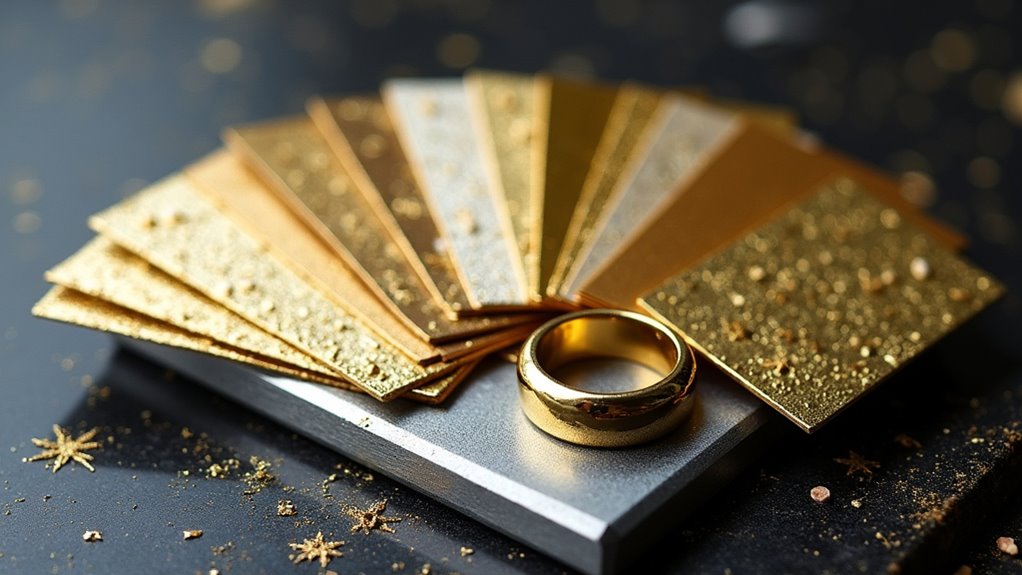
Testing gold at home’s easier than ya think! Several DIY methods can give decent clues about authenticity.
The float test‘s a classic – real gold sinks like a rock in water (thanks to that 19.3 g/cm³ density!).
Unglazed ceramic plates work too – genuine gold leaves a golden streak, not a black one.
For the brave souls, white vinegar or bleach tests work – real gold won’t react after 15-30 mins.

Just don’t expect jeweler-level accuracy!
Does Gold Purity Affect Its Resistance to Scratches and Dents?
Gold purity absolutely affects scratch resistance – but not how you’d think!
Pure 24k gold is actually softer than lower-karat alternatives. It’s kinda counterintuitive, right? The more “pure” the gold, the easier it dents and scratches.
That’s why jewlers mix in other metals – copper, silver, zinc – to toughen it up.

14k gold is way more scratch-resistant than 24k because it’s about 42% other metals.
Science is wild sometimes!
Can White Gold Tarnish Over Time Like Silver Does?
White gold doesn’t actually tarnish like silver does – that’s a common misconception!
What people mistake for tarnishing is actually the rhodium plating wearing away. When this happens, the natural color of the white gold alloy underneath starts peeking through, looking slightly yellower.

It’s not deterioration – just the glamorous mask slipping off! Regular re-plating at your jeweler can restore that icy-white shine we’ve all fallen in love with.
Why Do Gold Prices Vary for Items With Identical Purity Levels?
Gold items with identical purity can vary wildly in price due to several key factors.
Premium costs from minting, refining, and shipping pack a punch – especially for smaller pieces. Brand reputation‘s a major player too; prestigious names command top dollar.
Then there’s craftsmanship – intricate designs ain’t cheap to produce! Market timing and local demand create price gaps, while limited editions and collectible status can send prices soarin’ through the roof.