The millesimal fineness scale packs serious precision into three mighty digits, expressing gold purity in parts per thousand. Gone are the fuzzy karat days – now 999 means 99.9% pure gold, while 750 screams 75% purity (that’s 18k for the old-schoolers). This system’s revolutionized global gold markets faster than you can say “five nines fine.” Testing methods like X-ray fluorescence keep everyone honest, while governments worldwide have embraced these standards. The pure truth about gold awaits in those three game-changing numbers.

While gold buyers have long relied on the traditional karat system, the millesimal fineness scale is rapidly becoming the sexy new standard for precious metal purity – and holy moly, is it precise! This three-digit system measures precious metal content in parts per thousand, making it way more accurate than ye olde karat system. And let’s be real, when you’re dropping serious cash on gold, you want that precision like a banker wants their bonus.
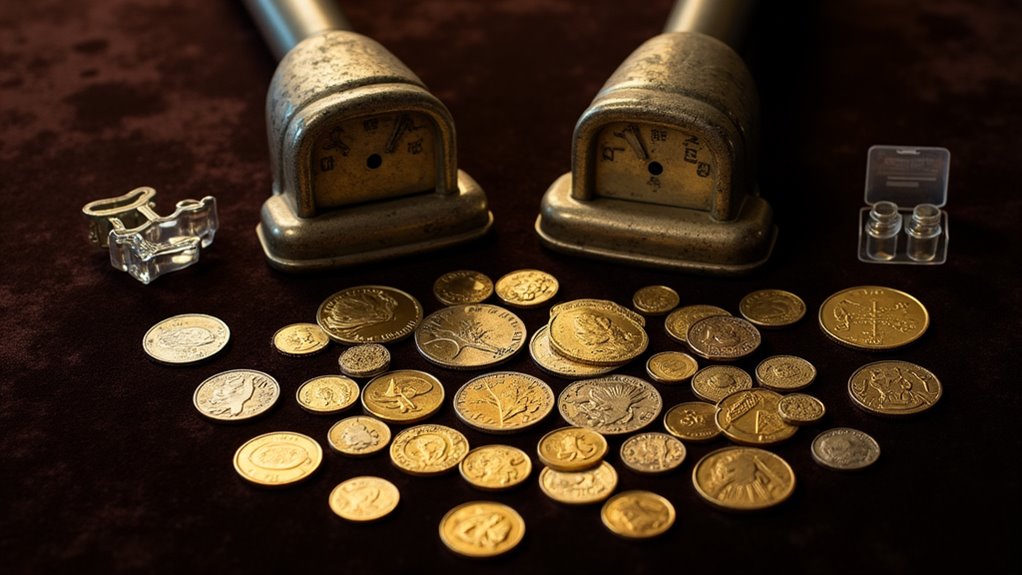
The scale is deliciously simple to grasp – 999 means 99.9% pure gold (that’s 24k for you traditionalists), while 750 translates to 75% pure gold (18k). It’s like a mathematical strip-tease, revealing exactly what you’re getting without any fancy footwork. Want to convert karats to millesimal? Just multiply your karat number by 1000/24. Boom – instant fineness! Though let’s be honest, some people still mess up the math (we’ve all been there). Pure gold is actually too delicate for everyday jewelry use. The Royal Canadian Mint produces gold with an impressive five nines fine purity, which is a hallmark of exceptional quality and meets the high standards of jewelry quality recognized in the market. This commitment to good delivery standards ensures that gold bars retain their value and trustworthiness in the market.
Converting between karats and millesimal fineness is a breeze – until you fumble the math like a rookie gold trader at closing time.
In the high-stakes world of gold trading, millesimal fineness isn’t just some fancy numbering system – it’s the difference between making bank and getting banked. Good Delivery gold bars must hit a minimum 995 fineness, or they’re about as welcome as a hedge fund manager at an Occupy protest. This standardization has revolutionized how gold moves through international markets, though sometimes we wonder if anyone actually counts all those nines. Accurate purity testing methods are critical to maintaining trust in these transactions.

For jewelry manufacturing, the system is pure gold (pun absolutely intended). Different fineness levels determine everything from durability to color – 916 gives you that classic 22k yellow bling, while 585 offers more durability for everyday wear. Manufacturers live and die by these numbers, tweaking alloy combinations like master chefs perfecting a recipe. And trust us, the results can be either magnificent or tragic.
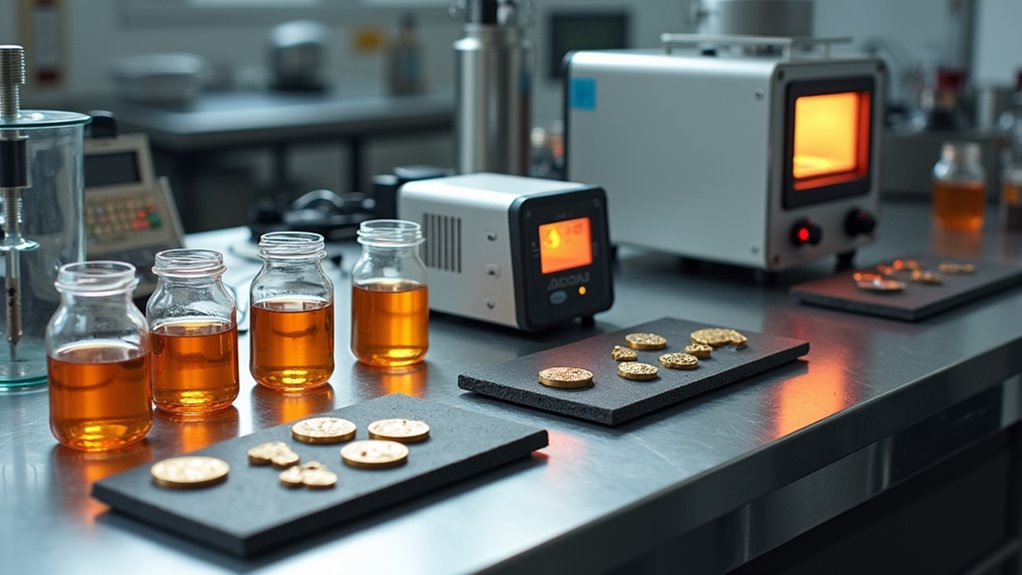
Testing methods have evolved faster than gold prices during a crisis! X-ray fluorescence sounds fancy (and expensive), but it’s the gold standard for non-destructive testing. Fire assay remains the most accurate method, though watching gold melt might give some investors heart palpitations. For quick-and-dirty results, there’s always the trusty touchstone method – old school, but still kicking! The reliability of these methods is crucial for ensuring gold purity verification in the market.
Governments worldwide have jumped on the millesimal bandwagon, making it the backbone of precious metal regulations. From import/export rules to consumer protection laws, these three little digits carry more weight than a vault full of bullion. It’s funny how something so simple can drive international trade agreements and tax policies – though we suspect the bureaucrats just like having extra numbers to play with.
The millesimal system might not be as romantic as karats, but it’s the language that modern gold speaks. Whether you’re a seasoned trader or just window shopping for some bling, understanding these numbers is essential. After all, in the glittering world of precious metals, precision isn’t just nice to have – it’s worth its weight in gold!
Frequently Asked Questions
How Does Gold Fineness Affect Its Resistance to Tarnishing?
Gold’s resistance to tarnishing directly correlates with its fineness – pure 24K gold simply won’t tarnish, period.
As fineness drops, so does that natural shield. 18K gold keeps its shine like a champ, while 14K puts up a decent fight.

But drop to 10K? Now you’re playing with fire – those base metals mixed in are basically sending out invitations to oxidation.
Higher purity means fewer party-crashers trying to dull gold’s natural sparkle.
Can I Test Gold Fineness at Home Without Professional Equipment?
Several DIY methods can help estimate gold fineness at home.
Simple visual inspection checks for hallmarks and color variations, while the float test reveals density differences – pure gold sinks fast!

The trusty magnet test exposes fakes (real gold won’t stick), and a vinegar bath can hint at copper content.
While not as precise as pro testing, these quick-n-dirty methods give decent clues about that shiny piece’s authenticity.
Does the Fineness Scale Apply to White and Rose Gold?
Absolutely – the fineness scale doesn’t play favorites!
Whether it’s traditional yellow, sleek white, or blushing rose gold, the same millesimal system applies across the board. A 750 fineness means 75% pure gold content, period.

The only difference? The remaining 25% is where things get interesting – that’s where the unique alloy metals come in to create those distinct colors.
But the core measurement stays rock-solid consistent.
Which Gold Fineness Is Most Commonly Used in Industrial Applications?
Based on industry data, 24K gold (99.99% pure) dominates industrial applications, especially in electronics and catalysts.
It’s the go-to choice for circuit boards, satellite components, and chemical processing. While some applications use 22K (91.6%) or even 18K (75%), the ultra-pure stuff rules supreme.

Fun fact: some specialized catalysts demand even higher purity – we’re talking 99.999%! That’s basically perfect gold, if such a thing exists.
How Does Storage Temperature Affect Gold of Different Fineness Levels?
Storage temperature impacts gold differently based on fineness levels.
Pure 24k gold shows higher susceptibility to temperature-induced warping due to its malleability. Lower fineness varieties (14k, 18k) typically demonstrate better resilience against thermal stress thanks to their alloying metals.
Ideal storage falls between 4-25°C, with stable temps essential for all types. Higher purities demand extra care – those precious 24k bars aren’t exactly thrilled about temperature swings!