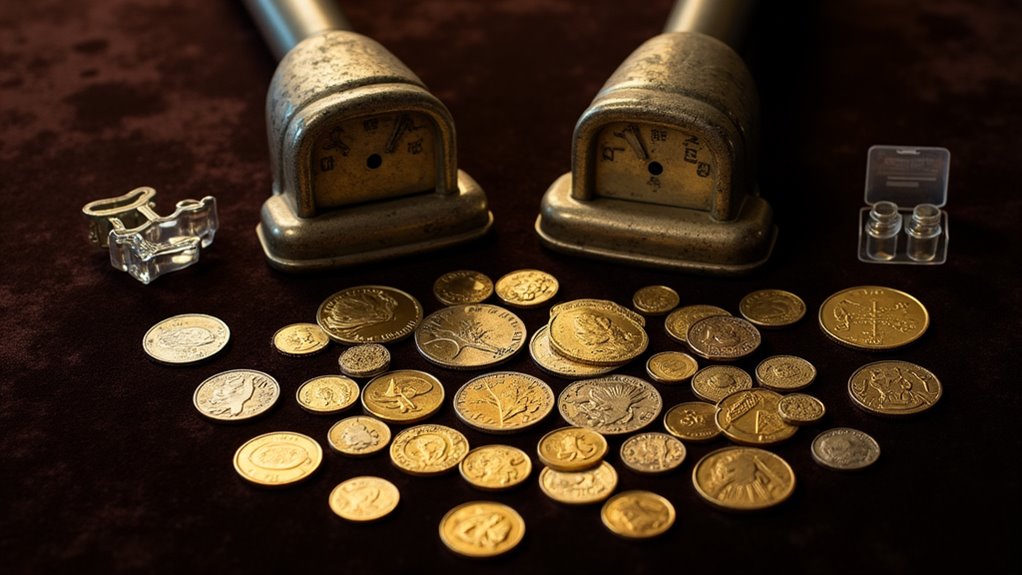
Alloy gold is pure gold mixed with other metals like silver, copper, or palladium to create a more durable and versatile material. This clever combo lets jewelers craft everything from stunning rose gold rings to tough electronic components. The karat rating (14k, 18k, etc.) tells you exactly how much gold’s in the mix – less gold means more strength but a lower price tag. The possibilities with alloy gold are absolutely metal! Stick around to reveal its golden secrets.

Alloy Gold
Metallic alchemy meets modern mastery in the world of alloy gold, where pure precious metal transforms through carefully calculated combinations with other elements. This fascinating fusion merges pure gold with metals like silver, copper, zinc, nickel, and palladium to create something far more versatile than its pure counterpart. The result? A material that’s not just prettier, but tougher and more practical for everything from jaw-dropping jewelry to high-tech components.
Think pure gold’s perfect? Think again! It’s actually too soft for most practical uses – kinda like trying to build a house with butter. That’s where alloying comes in, creating different karats that pack various punches. 22k yellow gold flaunts a whopping 91.67% gold content, while 14k brings it down to 58.5% but cranks up the durability factor. Alloyed gold’s composition impacts both its strength and aesthetic qualities, and it often includes 18k yellow gold alloy which is a popular choice for jewelry.

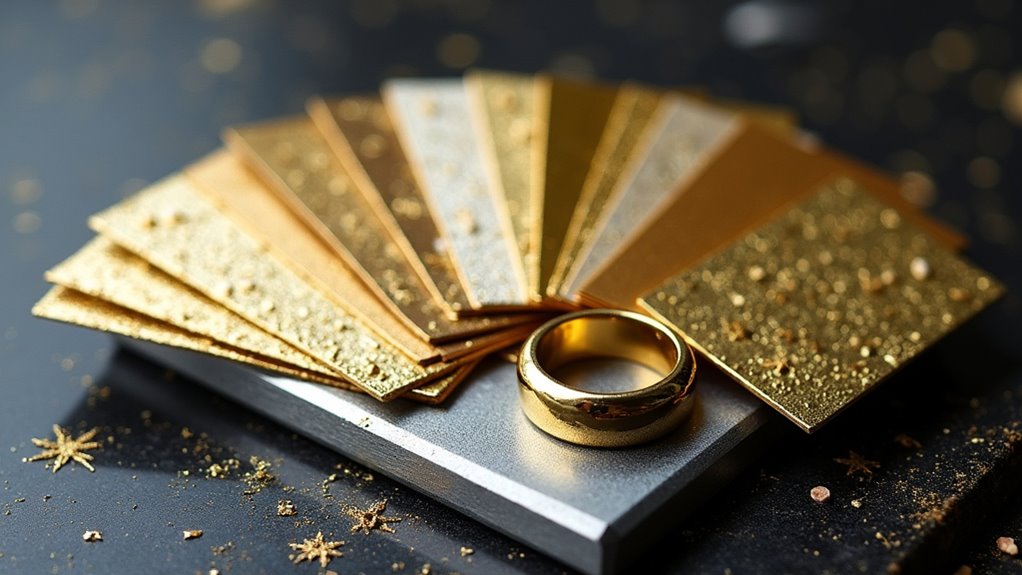
And lets talk colors – cause boy, does alloy gold deliver! Rose gold gets its blushing personality from copper, while white gold goes full-on platinum wannabe with palladium or nickel in the mix. White gold alloy metals offer a range of color tones that can complement various styles and preferences.
The benefits are straight-up impressive. These alloys laugh in the face of wear and tear, while maintaining enough flexibility to be shaped into intricate designs that’d make pure gold cry uncle. Plus, they’re corrosion-resistant – perfect for everything from your grandma’s wedding ring to spaceship components (yes, really!).
And speaking of space-age stuff, alloy gold’s found its way into electronics, medical implants, and dental work because it plays nice with human biology while still being tough enough to last. Additionally, various common gold alloys are engineered specifically for different applications, ensuring optimal performance across industries.
But here’s where it gets really interesting – the economics make total sense too. By mixing gold with less expensive metals, manufacturers can create beautiful pieces that don’t require selling your firstborn to afford. It’s basically like stretching your gold budget without sacrificing that precious metal appeal.

The variety is pretty wild – you’ve got your classic yellow gold vibes, rose gold for the romantics, and white gold for the modernists.
The industry keeps it real with strict standards though. Every piece gets marked with its karat rating, so you know exactly what your getting. 24k means pure gold (aka soft as butter), while 18k gives you that sweet spot of 75% gold content with enough alloy to make it actually useful.
It’s like a report card for your jewelry, except instead of grades, you’re getting gold content percentages.
These golden hybrids have revolutionized everything from jewelry design to aerospace engineering. Whether its creating the perfect engagement ring that’ll survive daily wear or developing components for satellites, alloy gold proves that sometimes the best things in life aren’t pure – they’re perfectly imperfect combinations that work better together than apart.
Frequently Asked Questions
Can Alloy Gold Cause Skin Allergies or Reactions?
Absolutely, alloy gold can trigger skin allergies!

While pure gold rarely causes issues, it’s those pesky alloying metals like nickel and copper that love to stir up trouble.
About 9% of people show sensitivity to gold alloys, with symptoms ranging from itchy rashes to full-blown dermatitis.
Women tend to be more susceptible (thanks, jewelry!).
The kicker? These reactions can take weeks to show up and stick around for months – making diagnosis a real head-scratcher.
How Can I Test if My Gold Jewelry Is Pure or Alloyed?
Testing gold purity doesn’t require a PhD in metallurgy! Several at-home methods can reveal whether that gleaming piece is pure or playing pretend.
The classic vinegar test (pour it on and watch for changes), magnet check (real gold = zero attraction), and touchstone method are solid starting points.
For the truly curious, acid testing delivers knockout accuracy – but leave that to the pros unless you fancy some chemical burns!
Does Alloy Gold Tarnish Over Time?
While pure gold never tarnishes, alloy gold‘s fate depends entirely on its metal wingmen.
Copper-heavy alloys? Yeah, they’ll definitely show their age with some tarnishing.

But mix gold with platinum or palladium, and you’ve got yourself a tarnish-resistant party!
White gold’s particularly high-maintenance – it needs that rhodium plating refreshed periodically to keep its sparkle.
Environmental factors like humidity and chemicals can speed up the party-pooping process.
Which Gold Alloy Is Best for Engagement Rings?
14k gold stands out as the sweet spot for engagement rings, striking that perfect balance between durability and bling-factor.

While 18k flaunts more luxury cred, it’s softer – not ideal for daily wear and tear.
Rose gold’s copper-kissed strength makes it a solid contender, while white gold brings that platinum look without the jaw-dropping price tag.
But 14k? It’s the goldilocks choice – tough enough for forever, yet still maintaining that coveted golden glow.
Can Alloy Gold Be Recycled and Reused Like Pure Gold?
Yes, alloy gold absolutely rocks the recycling game!
Just like its pure cousin, alloyed gold can be melted down, refined, and reborn into new treasures.
Sure, it’s a bit trickier than pure gold recycling – those pesky extra metals need separating – but modern refining processes make it totally doable.
Through processes like aqua regia or the Wohlwill method, refiners can extract that precious yellow stuff and give it new life.
Pretty sustainable, huh?