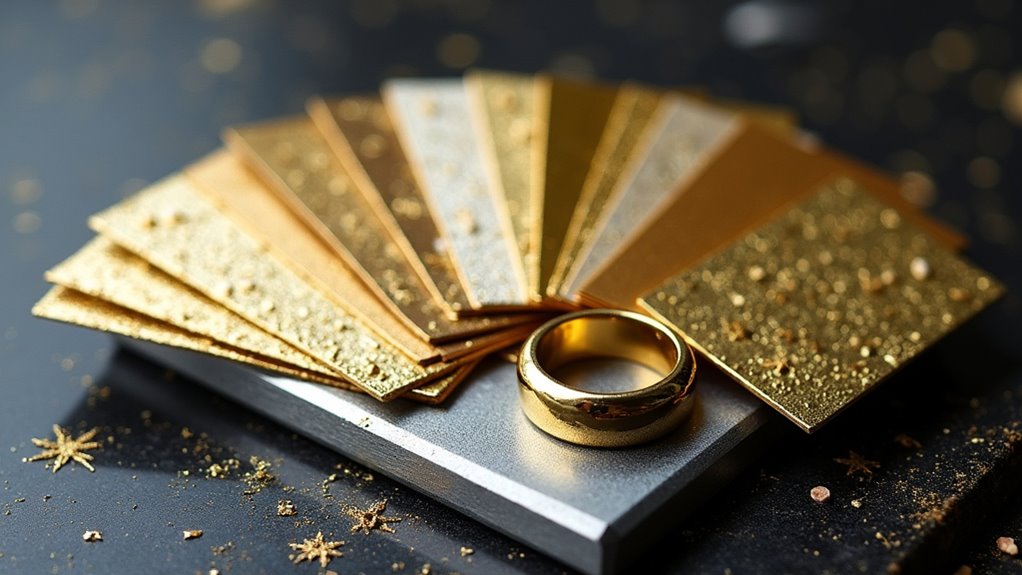

Gold solders come in four main types, each with distinct melting points and uses. Hard solder (800°C+) handles initial structural joints, while medium solder tackles intermediate stages. Easy solder‘s lower melting point makes it perfect for final touches and repairs. Extra easy solder? That’s for ultra-delicate work requiring maximum control. Available in strips, wires, and pastes, these solders match specific karats and colors – yellow, white, or rose gold. There’s a whole world of soldering mastery waiting to be explored.

A goldsmith’s arsenal wouldn’t be complete without the dazzling variety of gold solders that make jewelry creation possible. These specialized materials come in different types, each serving a unique purpose in the intricate dance of jewelry manufacturing and repair. From hard solders melting at blistering temperatures above 800°C to the more delicate extra-easy varieties, the range is truly remarkable. Understanding the importance of investment on gold can also enrich a jeweler’s appreciation for the materials they work with. Additionally, the impact of sustainable gold mining highlights the significance of responsibly sourced materials in the jewelry industry.
Hard gold solder stands as the heavyweight champion in the soldering world, boasting the highest gold content and melting point. This tough guy is perfect for initial joints in complex pieces, guaranteeing that subsequent heating won’t cause earlier work to come undone. It’s like the foundation of a building – you better get it right the first time! Additionally, common gold alloys often influence the selection of solder used due to their varying properties.
Like a fortress’s cornerstone, hard gold solder provides unshakeable strength, setting the stage for every masterpiece that follows.
Medium solder follows suit with a more balanced composition, making it the go-to choice for intermediate steps when multiple soldering stages are needed. Easy gold solder takes the gentle approach, with its lower melting point making it ideal for final touches and repairs. It’s the finishing artist of the bunch, allowing jewelers to work their magic without disturbing previously completed joints.

And for those super-delicate pieces that make even seasoned craftsmen break into a cold sweat? That’s where extra easy solder comes in, offering maximum control with minimal risk of thermal damage.
The world of colored gold solders adds another layer of complexity to the mix. These specialized alloys are designed to match specific karats and colors – yellow, white, and rose gold each demand their own perfectly matched solder. White gold solder, for instance, might contain palladium or platinum to achieve that pristine silvery look, while rose gold solder embraces copper for that signature pink hue. It’s all about creating invisible seams that keep observers guessing.
When it comes to form factor, goldsmiths have plenty of options to choose from. Strips, wires, and pastes each offer distinct advantages depending on the job at hand. Pallions – those tiny pieces cut from strips or wire – allow for precise placement, while paste solder comes pre-mixed with flux for a cleaner application process. Panel solder provides ample material for larger repairs, giving craftsmen plenty to work with.
The hierarchy of melting points creates a fascinating choreography in multi-stage soldering. Starting with hard solder for structural joints, then moving through medium and easy varieties for subsequent steps, jewelers orchestrate a careful balance of heat and timing.

This graduated approach guarantees that each new application doesn’t compromise previous work, resulting in pieces that are both beautiful and structurally sound. It’s a delicate balance that separates the masters from the novices in this ancient craft. Additionally, understanding the various types of gold solders can enhance a jeweler’s skill set, leading to more refined and professional results.
Frequently Asked Questions
How Long Does Gold Solder Typically Last Before Needing Replacement?
Gold solder’s lifespan varies dramatically – we’re talking 15-30 years under ideal conditions.
But let’s get real: environmental factors toss those numbers right out the window! Most pros see 10-15 years of reliable performance before oxidation starts creeping in.
Storage conditions are the real MVP here – keep it cool and dry, folks.

And those industrial pollutants? Total lifespan killers.
The pricey stuff tends to hang tough longer, but nothing lasts forever in this game!
Can Gold Solder Be Used With Platinum or Other Precious Metals?
Gold solder can be used with platinum and other precious metals, but it’s a tricky dance. The considerably lower melting point of gold solder compared to platinum makes it challenging – like trying to glue a volcano to an ice cube!
While it’s doable with specialized techniques and careful heat control, platinum often needs its own solder for best results.

When joining other precious metals, success depends on matching melting points and using appropriate flux materials.
What Safety Equipment Is Required When Working With Gold Solder?
When working with gold solder, safety equipment is non-negotiable. Essential gear includes heat-resistant gloves (leather or wool), safety goggles with side shields, and natural fiber clothing.
A proper ventilation system or fume extractor is vital to handle toxic fumes. Workers need closed-toe shoes and should avoid synthetic materials that could melt.
Having a fire extinguisher and first-aid kit nearby isn’t optional – it’s just common sense for any serious metalsmith.
How Does Temperature and Humidity Affect Gold Solder Performance?

Temperature and humidity pack a serious one-two punch on gold solder performance!
High temps weaken those chemical bonds, causing strength to plummet from 130 MPa at 100°C to a measly 20 MPa at 300°C.
Meanwhile, humidity’s busy creating a corrosion party – not the fun kind! The dynamic duo accelerates oxidation and void formation, especially when they team up.
Smart soldering pros use protective coatings and controlled environments to keep these pesky factors in check.
What Are the Environmental Impacts of Using Gold Solder?

Gold solder’s environmental footprint is pretty brutal, folks. Mining operations leave landscapes scarred and ecosystems wrecked, while toxic chemicals like mercury and cyanide poison water supplies.
It’s a resource-hungry beast – imagine 20 tons of waste for just one gold ring! The manufacturing process ain’t much better, guzzling energy and spewing greenhouse gases.
When it’s time to trash it? Those heavy metals leach into groundwater, creating an environmental nightmare that keeps on giving.