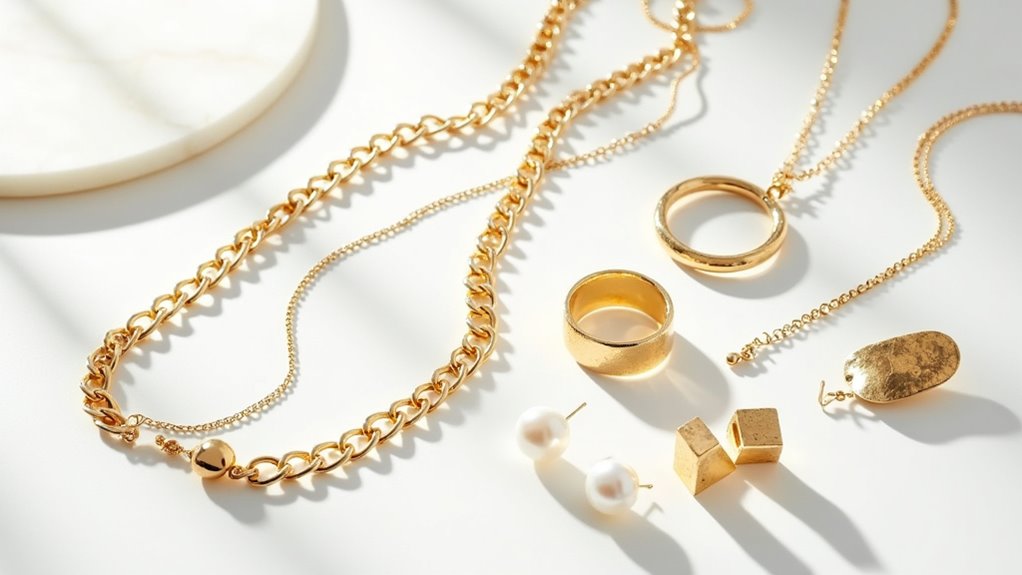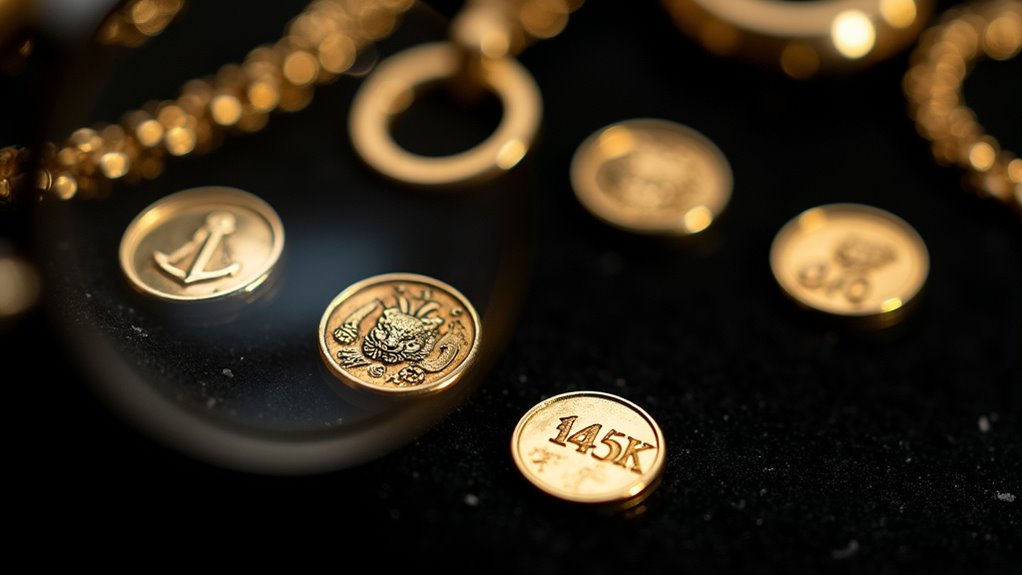

Gold hallmarks are your secret weapon against getting ripped off. Those tiny stamps tell you exactly what’s legit and what’s trash. A “750” mark means 18K gold (75% pure), while “GP” screams cheap plating that’ll wear off before your next birthday. Dating back to medieval times, these marks separate the real deal from fool’s gold. Sure, counterfeiters are getting craftier, but knowing these codes means you won’t be their next sucker.

A tiny stamp can make the difference between scoring real gold and getting totally scammed. Those microscopic markings on your jewelry aren’t just random scratches – they’re actually a sophisticated code that reveals exactly what you’re wearing. And let’s be real, in a world where fake gold is everywhere, knowing how to crack this code is pretty damn important. Dating back to the 1200s, these verification marks have helped protect buyers and sellers alike.
The karat system isn’t rocket science, but plenty of people still mess it up. Here’s the deal: 24K means pure gold (99.9%), while anything less means it’s mixed with other metals. That 18K ring you’re wearing? It’s actually 75% gold. And that 14K chain? Only 58.5% of the real deal. Pawn shop experts can verify these percentages through specialized testing. But don’t get too precious about purity – lower karat gold is actually tougher because those “impure” metals make it more durable. 14k gold is often preferred for everyday wear due to its balance of durability and appearance.
Think 24K gold is always better? Think again. Lower karat gold might have less purity, but those added metals make it way tougher.
Those tiny numbers stamped on your bling tell an even more precise story. A “750” stamp means exactly the same as 18K – it’s just using the millesimal system, which measures parts per thousand instead of karats. Some marks are straight-up red flags though. If you see “GP” or “GE,” congrats – you’ve got yourself some gold-plated costume jewelry. Not that there’s anything wrong with that, just don’t pay solid gold prices for it.

Here’s where things get messy: different countries have different rules about hallmarking. The UK is super strict – anything over 1 gram needs official stamps. Meanwhile, the US is basically like “whatever” about it, only requiring manufacturers to stamp their trademark. And some countries are totally wishy-washy with voluntary systems that basically mean nothing.
The really legit pieces often have assay office marks – like Birmingham’s anchor or London’s leopard head. These marks mean someone actually tested the metal, not just slapped on whatever stamp looked good. But here’s the thing – some perfectly fine gold pieces don’t have any marks at all. Maybe they’re old and the stamps wore off, or maybe they’re from places that don’t require marking.
The most irritating part? Some fake stamps are getting scary good. The days of obvious knockoffs are gone – now you need a jeweler’s loupe and some serious know-how to spot the fakes. And don’t think that magnet test you saw on TikTok is foolproof – plenty of fake gold can pass it.
Bottom line: if you’re dropping serious cash on gold, you better know your hallmarks or have a trusted expert on speed dial. Because in this game, ignorance isn’t just expensive – it’s straight-up embarrassing.
Frequently Asked Questions
How Do I Remove Tarnish From Gold Jewelry Without Damaging Hallmarks?
Those fancy hallmarks need special care, folks.
Skip harsh chemicals – they’ll wreck those precious stamps faster than a toddler with fingerpaints.

Stick to gentle stuff: warm water with mild soap, or a baking soda paste for stubborn spots.
Soft-bristled toothbrush works great, just dont scrub like ur cleaning bathroom tiles.
For really delicate pieces, ultrasonic cleaning‘s the way to go – let the pros handle that mess.
Can Gold Hallmarks Wear off Over Time With Regular Use?
Yes, those fancy gold stamps definitely wear off over time.
It’s basic physics – constant friction from daily wear gradually erodes those marks, especially on rings and bracelets.

Here’s the kicker: higher purity gold (like 22K) actually loses its stamps faster because it’s softer.
The good news? Just cause the stamp’s gone doesn’t mean it ain’t gold.
Smart buyers keep their receipts, and any legit jeweler can test the metal’s content.
Are Antique Gold Pieces Without Hallmarks Worth Less Than Marked Ones?
Not necessarily. While hallmarks can boost confidence, antique gold‘s value isn’t solely about stamps.
Pre-1950s pieces often came without marks due to different regulations back then. What really matters? Craftsmanship, age, and historical significance.
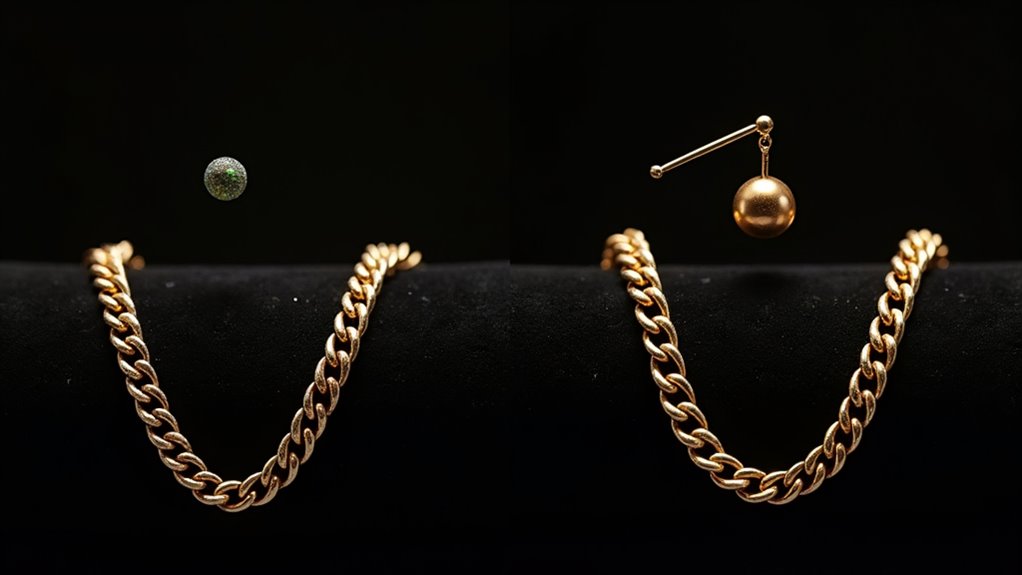
Some of the most valuable Georgian and Victorian pieces never had hallmarks to begin with. Sure, documentation helps – but a killer piece with solid provenance can fetch top dollar, marked or not.
How Can I Identify Fake Gold Hallmarks on Jewelry?
Spotting fake gold marks ain’t rocket science.
First red flag? Those sketchy “GP” or “GF” stamps – dead giveaway for cheap plating.
Watch for wonky karat numbers like 8k or 13k (they dont exist!) and mismatched purity stamps.

Real gold has crisp, clean hallmarks from legit assay offices.
Hit it with a magnet – if it sticks, its junk.
And those blurry, poorly-stamped marks? Yeah, someones trying to pull a fast one.
Do Different Countries Accept Each Other’s Gold Hallmarking Standards?
Gold hallmarking acceptance is a total mess globally.
While 19 countries play nice under the Vienna Convention, using that fancy CCM mark, others just do their own thing.

The EU crowd mostly recognizes each other’s stamps, but the UK’s being picky about it.
USA’s pretty chill – they’ll take documentation instead.
India and China? They’re like “whatever” with voluntary systems.
Bottom line: international gold marks are basically a bureaucratic nightmare.