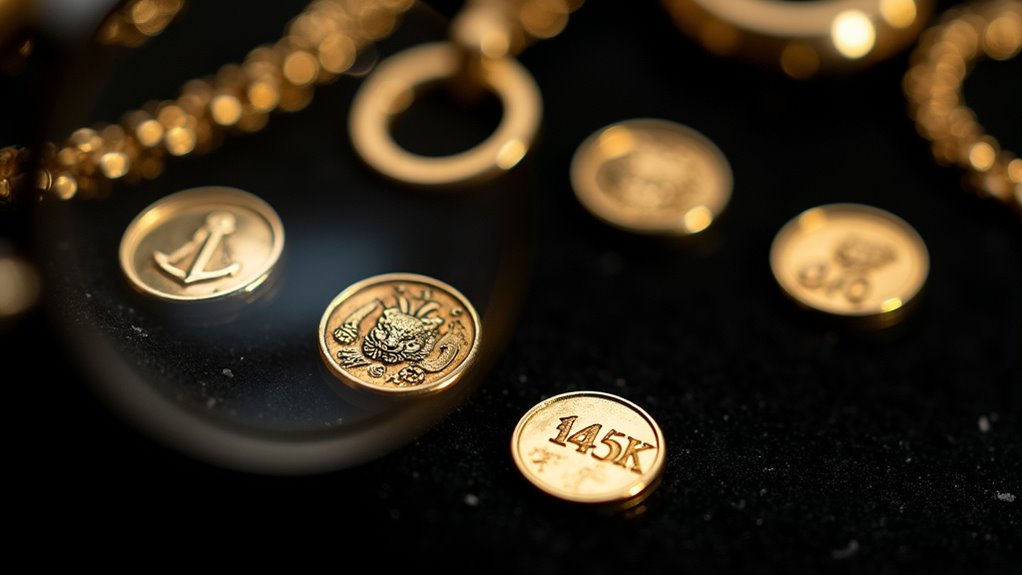
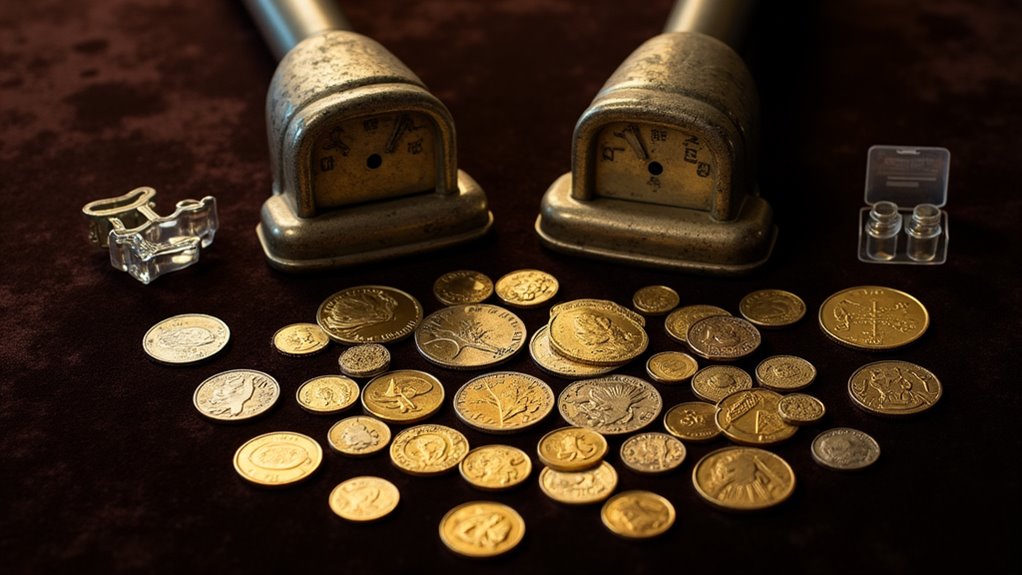
Gold jewelry’s been turning heads since 4400 BCE when ancient Bulgarians first flaunted it.
From Egyptian pharaohs treating it like literal god-flesh to Greeks crowning athletes with it, gold’s always been about showing off.
The Mesopotamians weren’t playing around – they invented techniques like soldering and filigree that still dominate today. While modern designs go minimal and high-tech with 3D printing, the core mission remains unchanged: making others jealous.
There’s way more to this glittering story than meets the eye.


Gold jewelry has been humanity’s ultimate flex since ancient times. When ancient Bulgarians first started crafting gold artifacts around 4400 BCE, they probably had no idea they were kickstarting humanity’s longest-running flex competition.
The Egyptians jumped on the bandwagon around 4000 BCE, turning this precious metal into some seriously over-the-top bling for their pharaohs – cause apparently, you gotta look fresh even in the afterlife. These ancient Egyptians believed gold was the flesh of gods, particularly their sun deity Ra.
The Mesopotamians were the real MVPs of ancient jewelry making. These craftsmen weren’t messing around when they developed techniques like wire making, filigree, and soldering. They literally wrote the book on how to turn a chunk of metal into something worth showing off. Additionally, their innovations laid the groundwork for the resale potential of gold jewelry that we see today.
Mesopotamians were the OG jewelry game-changers, dropping techniques like filigree and soldering that still flex on modern designs today.
And when the granulation technique dropped around 2500 BCE? Game. Changer.

The ancient world was obsessed with gold’s divine qualities, which tbh, was probably just a fancy excuse for hoarding wealth.
The Greeks and Romans weren’t subtle about it either – they straight up used gold jewelry to tell everyone exactly where they stood in society. Like wearing your bank account on your sleeve, but make it fashion. The most prestigious athletes of ancient Greece proudly wore their delicate gold wreaths as symbols of victory.
Speaking of wealth, the Lydians got tired of the whole bartering thing and said “screw it, let’s make gold coins” around 600 BCE. This brilliant idea spread faster than gossip at a royal court, with Greek city-states and eventually the Romans jumping on the bandwagon.
Julius Caesar was like “hold my wine” and dropped the aureus, proving that nothing says “I’m in charge” quite like putting your face on gold currency.
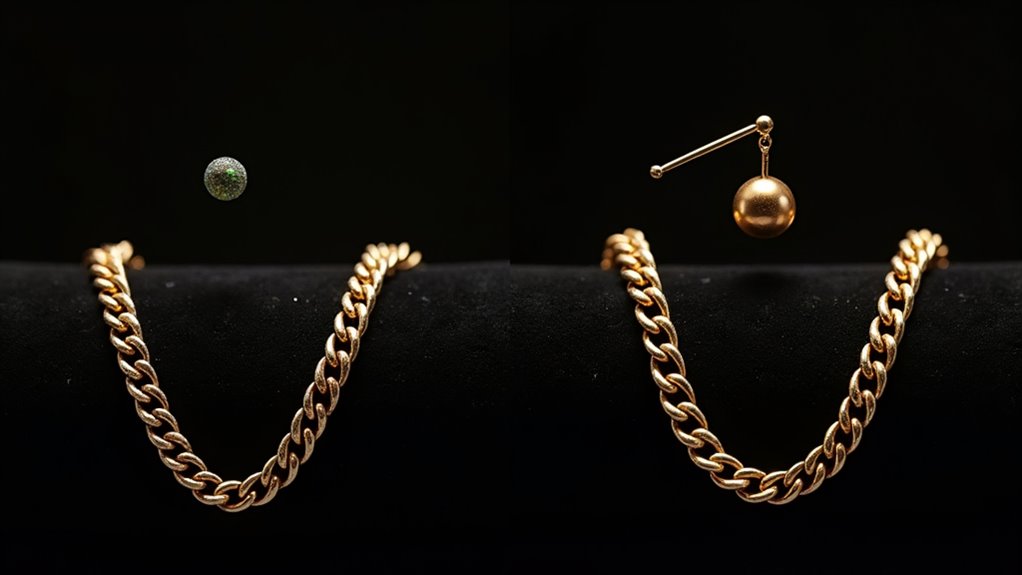
The Middle Ages brought us some seriously extra gold work, with everyone and their feudal lord trying to outdo each other with increasingly elaborate designs. Then the Renaissance rolled in like “remember those classical designs? They’re back in style!” and suddenly everyone was mixing gold with gemstones and enamel like they were making the world’s fanciest cocktail.
Fast forward to the Industrial Revolution, and suddenly machines are doing what artisans spent years perfecting. Talk about a plot twist.
But the real glow-up came in the 20th century with white gold making its debut and technology giving us things like 3D-printed jewelry. Because apparently, the future is now.
These days, gold jewelry’s still doing its thing – just with more attitude. We’ve got minimalist designs for the “less is more” crowd, rose gold making a comeback (again), and cultural fusion pieces that would make ancient goldsmiths’ heads spin.
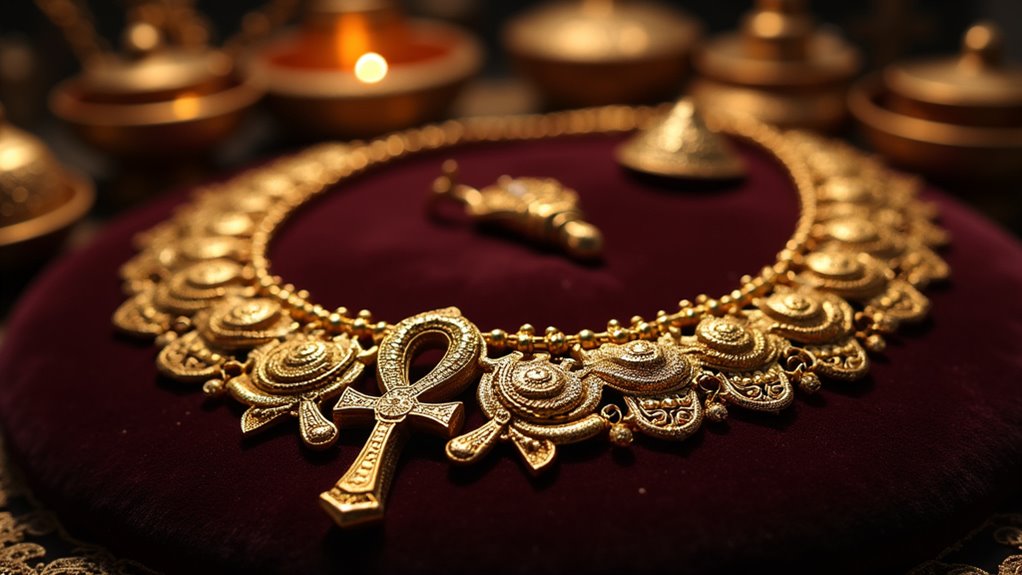
And lets be honest – whether it’s a subtle chain or a statement piece that could blind someone, gold jewelry still serves its original purpose: making everyone else jelous.
Frequently Asked Questions
How Can I Tell if My Antique Gold Jewelry Is Authentic?
Spotting real antique gold isn’t rocket science.
Start with the basics – proper hallmarks, period-appropriate wear, and that sweet patina that only comes with age.
Get a legit gold testing kit and slap a magnet on it (real gold tells magnets to get lost).

Still not sure? Let a pro jeweler or gemologist take a peek. They’ve got fancy tools and expertise to call out fakes.
Just don’t get suckered by sweet talk and shifty dealers.
Why Does Some Gold Jewelry Turn Skin Green?
Here’s the brutal truth – that green skin isn’t from “fake” jewelry. It’s actually the copper in your gold reacting with sweat and oils.
Yeah, even legit gold can do this since most pieces contain copper alloys. Lower karat gold? More copper, more green.
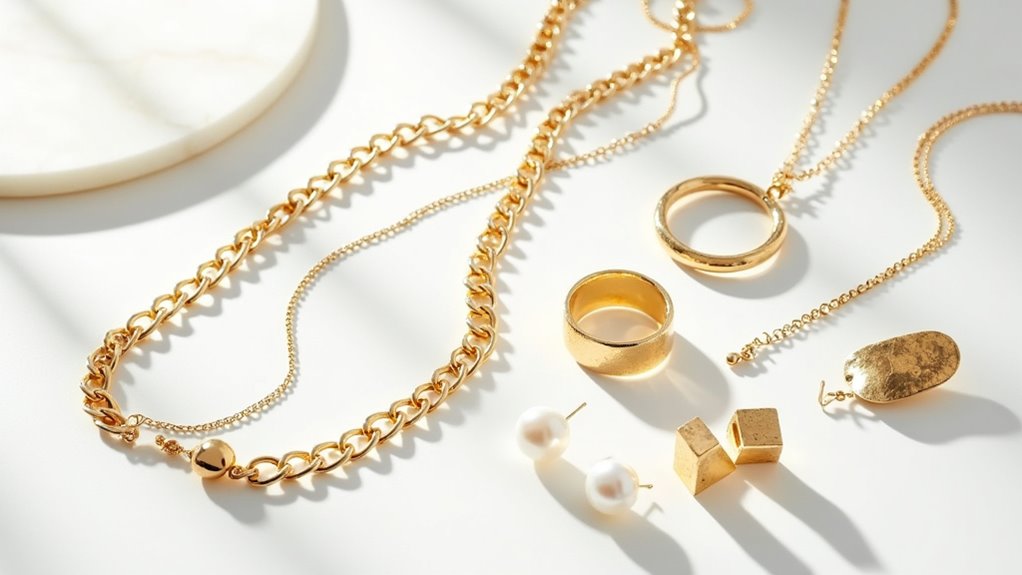
And if you’ve got acidic skin or love swimming in chlorine pools – congrats, you’re basically a human chemistry experiment!
The good news? It’s harmless and washes right off.
What’s the Best Way to Clean and Maintain Gold Jewelry?
warm water and mild dish soap is all you really need. Forget those fancy expensive cleaners – they’re just stealing your cash.
Soak for 15 minutes, scrub gently with a soft brush, and rinse thoroughly. Done.
Want it to last? Take it off before swimming (chlorine’s a killer), store pieces separately, and get it checked by a pro once a year.
And for heaven’s sake, let your perfume dry before putting on that necklace!
Can Gold Jewelry Be Recycled Into New Pieces?
Absolutely – gold jewelry is basically immortal.
While your old necklace might be ugly as sin, its actual gold can be melted down and transformed into something totally fresh.
The process is pretty wild – they heat that stuff up to nearly 2000°F, strip away everything that isn’t gold, and reshape it into whatever’s trendy now.
It’s actually better for the planet too, since we’re not tearing up more land for mining.
Win-win, if you ask anyone with half a brain.
Which Cultures First Developed Techniques for Crafting Intricate Gold Jewelry Designs?
The Sumerians kicked off the gold jewelry game around 3000 BCE – talk about ancient bling!
They nailed those fancy filigree and granulation techniques first.
But let’s be real, the Egyptians weren’t far behind, mastering gold smelting by 3600 BCE.
Then the Etruscans came along in the 8th century BCE and just showed off, perfecting granulation to a whole new level.
Each culture basicly one-upped the previous – ancient flex much?