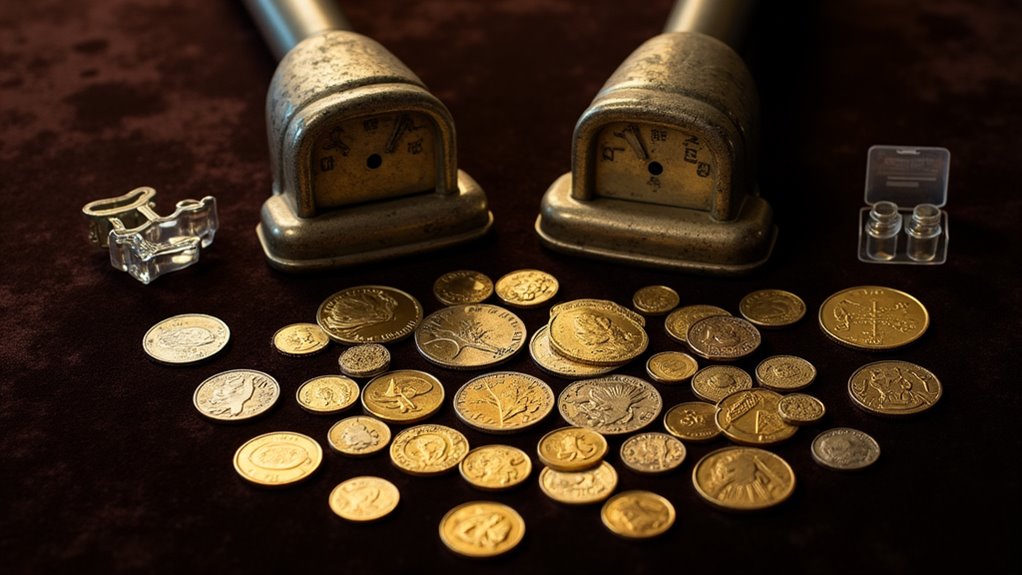
Traditional gold jewelry spans continents and centuries, each region flexing its unique style. Indian craftsmen rock that Meenakari enamel while Italians obsess over perfect chain links. Chinese artisans stick to pure 24K gold like snobs (but they’re right), and African designs tell stories through intricate patterns. Middle Eastern pieces flash those 21-24K evil eyes, while Native Americans mix it up with turquoise overlays. There’s way more to these golden traditions than meets the eye.

Gold jewelry isn’t just about flashing wealth – it’s a centuries-old flex that spans continents and cultures. From the intricate Kundan work of India to the bold statement pieces of African tribes, each region’s got its own way of showing off the yellow stuff. And let’s be real – they’re not just making pretty trinkets; they’re telling stories through metal.
Take India’s obsession with gold – they’ve turned it into an art form that’ll make your head spin. The ancient Mesopotamian influence can still be seen in their gold craftsmanship today. Meenakari enamelwork adds pops of color that’ll put a peacock to shame, while temple jewelry straight-up screams “I’ve got connections to the divine.” And don’t even get me started on Polki – those uncut diamonds set in gold are basically saying “Yeah, I’m fancy, but I’m keeping it real.” The timeless journey of gold jewelry reflects how this art form has been cherished and evolved throughout history.
Indian gold jewelry flexes hard with Meenakari’s rainbow swagger and temple pieces that bring both divine vibes and royal attitude.
The Italians? They’re not messing around either. While India’s going all-out ornate, Italian artisans are like “Hold my wine” with their perfectly engineered chains – Figaro, Spiga, you name it. They’ve mastered that Etruscan revival thing, making new pieces look ancient AF with their granulation technique. And those Arezzo mesh designs? Pure genius.

Meanwhile, Chinese jewelry makers are all about that 24K life – none of that watered-down stuff. They’re throwing dragons and phoenixes on everything because apparently good luck never goes outta style. The whole jade-and-gold combo is basically their version of peanut butter and jelly – it just works. The Tang dynasty marked a period of exceptionally elaborate gold headdresses featuring intricate phoenix motifs.
African goldsmiths though? They’re the real OGs of the game. Those Ashanti gold weights aren’t just pretty – they’re a whole mathematical system wrapped in art. And those Fulani earrings? Big enough to make your grandma’s hoops look like starter jewelry.
Middle Eastern gold game is next level – we’re talking 21 to 24 karats of pure swagger. They’ve got evil eyes staring back at haters and coin necklaces that double as a walking bank account. Some Bedouin pieces are so elaborate they’re basically wearing their dowry on their face.
Native American artisans said “why not?” and married gold with turquoise, creating some of the most distinctive jewelry out there. Their overlay technique is literally cutting through the competition, while European crafters were busy reviving every ancient style they could dig up – Byzantine, Celtic, you name it.

The coolest part? Each region’s basically been doing their thing for centuries, perfecting techniques that modern machines still can’t quite replicate. It’s like a global game of “anything you can do, I can do better,” except everybody’s winning.
And that’s the tea on traditional gold jewelry – it’s not just about the bling, it’s about keeping cultural flexes alive and kicking.
Frequently Asked Questions
How Should I Properly Clean and Maintain Traditional Gold Jewelry?
Proper gold care ain’t rocket science, but people still mess it up.
Skip harsh chemicals – they’ll wreck that shine faster than a bad breakup. Warm water and mild soap is all ya need.

Give it a gentle 15-minute soak, scrub with a soft brush (not that dollar store junk), and pat dry.
Keep it boxed up when not showing off.
And for heaven’s sake, take it off before swimming – chlorine’s a real jewelry killer.
What’s the Average Resale Value of Traditional Cultural Gold Pieces?
Let’s cut through the hype – cultural gold jewelry ain’t your typical investment piece.
Value retention varies wildly, from a measly 20% to a sweet 80% of retail price.
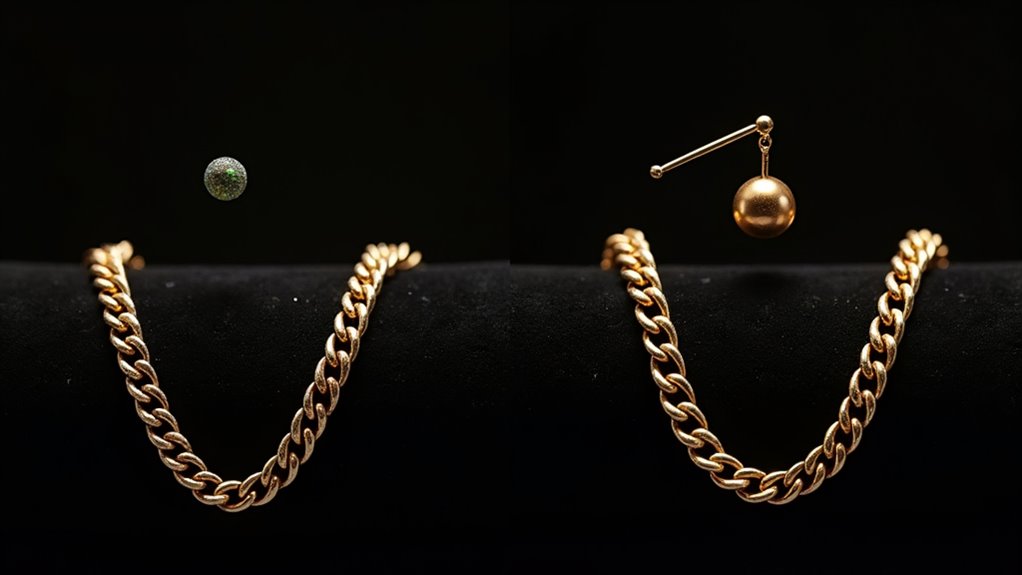
European antiques are the real MVPs, holding 70-85% value, while mass-produced stuff tanks at 15-30%.
Indian gold? That’s sitting pretty at 65-80%.
Pro tip: those fancy certificates and authenticity papers make a huge diff’rence.
Market timing’s everything – sell when gold prices are soaring.
Can Traditional Gold Jewelry Designs Be Customized With Modern Elements?
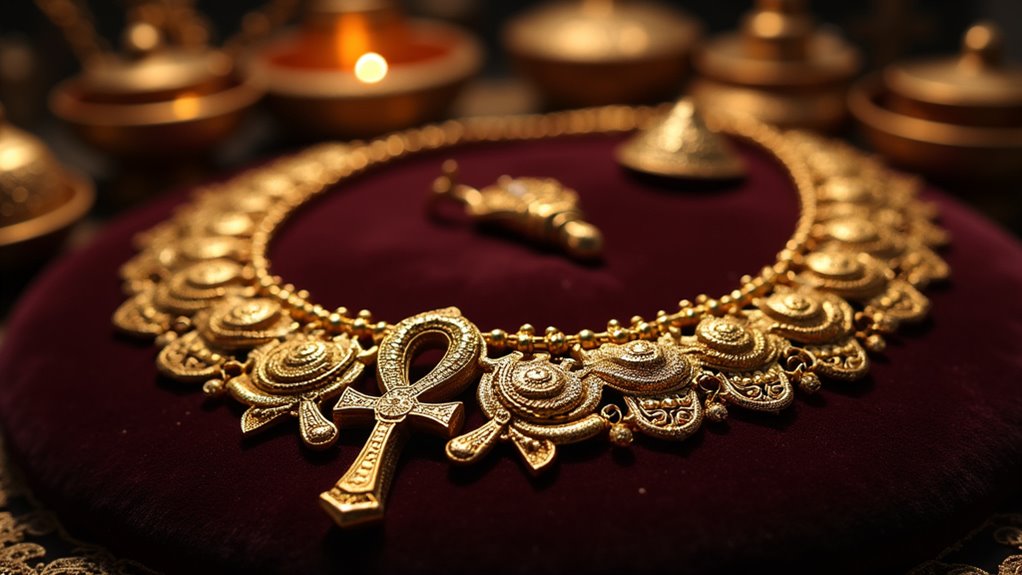
Absolutely.
Traditional gold jewelry designs are getting a major modern makeover these days. Jewelers are mixing ancient techniques with cutting-edge tech like 3D printing and CAD.
They’re swapping traditional gems for contemporary stones, adding smart features, and using eco-friendly materials.
It’s not just about preserving the past anymore – it’s about evolution.
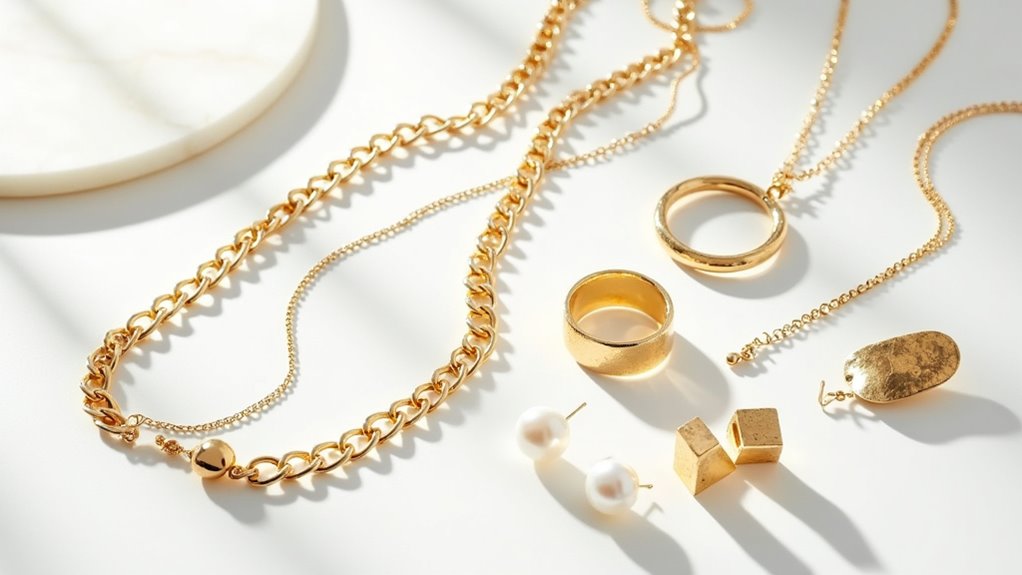
Sure, purists might cringe, but guess what? Tradition doesn’t have to mean stuck in time.
Are There Specific Cultural Ceremonies Required Before Wearing Traditional Gold Jewelry?
Yes – almost every culture takes their gold jewelry rituals dead seriously.
Indians get their bling blessed at temples. Middle Eastern folks have religious leaders sanctify their pieces. African tribal elders perform special ceremonies before anyone can rock that gold.
Even Chinese families won’t let you wear gold jewelry without proper blessings first.
Its not just about looking flashy – these traditions have deep spiritual roots that ain’t going anywhere.
How Can I Verify the Authenticity of Antique Traditional Gold Pieces?
Verifying antique gold ain’t easy – fraudsters are everywhere.
Smart collectors check hallmarks first – those tiny stamps that spill the tea on purity and origin. A jeweler’s loupe reveals the truth about craftsmanship and setting quality.
Real pieces show proper wear patterns, while fakes often mess this up. Pro tip: always get a legit expert’s opinion.
XRF testing and proper documentation separate the authentic stuff from the wannabes.